📖1,000 Greek Words Defy Indo-European Origins
Greek words that stump linguists
TL;DR
Approximately 1,000 Ancient Greek words have no traceable Indo-European roots. These include common terms like 'labyrinth', 'olive', and 'Athena'. Linguists struggle to connect these words to Proto-Indo-European, suggesting extensive borrowing or innovation.
Approximately 1,000 Ancient Greek words have no traceable Indo-European roots. These lexical enigmas include quintessentially Greek terms like 'labyrinth', 'olive', 'Achilles', 'Odysseus', 'Corinth', 'Athens', and 'Athena'. Linguists have long attempted to connect these words to Proto-Indo-European (PIE), but efforts have failed. The Greeks encountered novel foods, plants, and terrain as they migrated, leading to the creation or borrowing of new words. For instance, 'sea' (θάλασσα) has no firm PIE etymology, reflecting the language's adaptation to coastal life. This linguistic puzzle challenges our understanding of language evolution and borrowing.
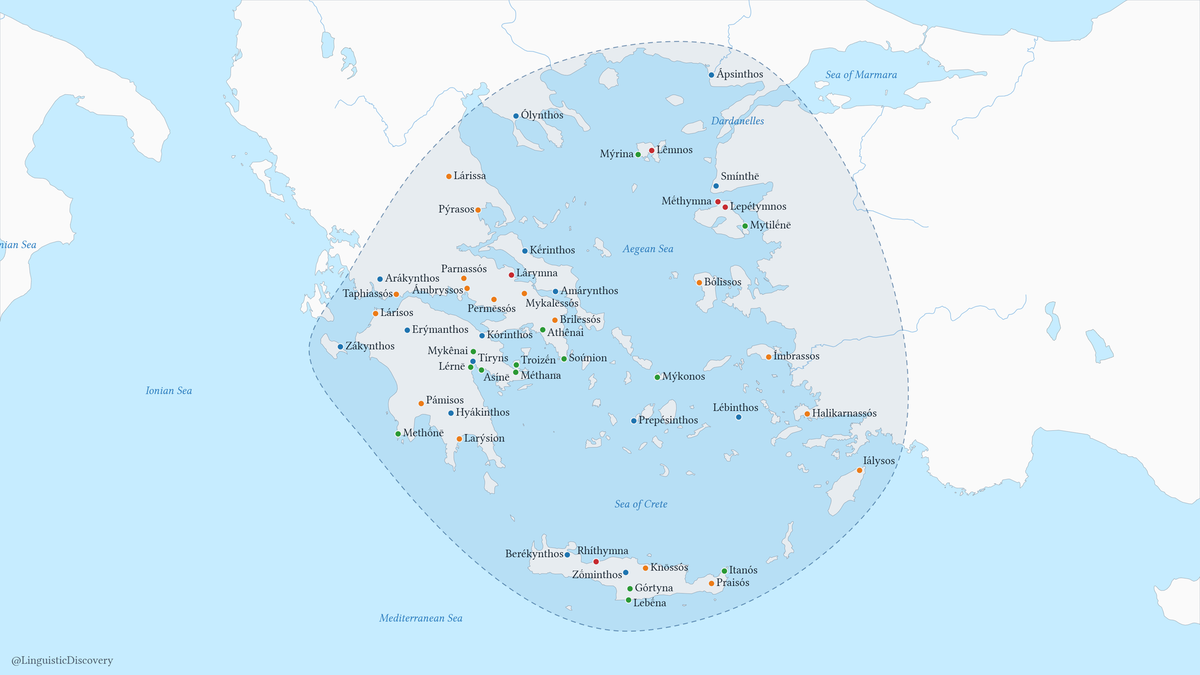
Key Points
Approximately 1,000 Ancient Greek words lack Indo-European roots, including 'labyrinth', 'olive', and 'Athena'.
The primary Greek word for 'sea' (θάλασσα) has no secure PIE etymology, reflecting linguistic adaptation to coastal life.
Linguists have long attempted to connect these words to PIE, but efforts have failed, highlighting the complexity of language evolution.
The Greeks encountered novel foods, plants, and terrain, leading to extensive borrowing or creation of new vocabulary.
This linguistic puzzle challenges our understanding of language evolution and borrowing, particularly in the context of migration and cultural contact.
Why It Matters
If you're studying ancient languages or linguistics, these 1,000 untraced Greek words challenge traditional views on language evolution. They suggest extensive borrowing or innovation, reflecting the Greeks' adaptation to new environments.
Comments
Be the first to comment
Enjoyed this article?
Get it daily. 7am. Free. Reads in 5 minutes.
Join 3,483 builders reading daily.