✨1847: First Tech Disrupted by Space Weather
Space Weather Has Been Messing with Tech Since 1847
TL;DR
The first documented case of space weather affecting technology dates back to 1847 when 'spontaneous electrical currents' disrupted telegraph systems on the Midland Railway. This highlights the long-standing impact of geomagnetic storms on tech.
The first documented case of space weather affecting technology dates back to 1847 when 'spontaneous electrical currents' disrupted telegraph systems on the Midland Railway. This highlights how geomagnetic storms have been impacting tech since the early days of telegraphy. The Carrington Event of 1859, the most powerful geomagnetic storm on record, caused widespread disruptions to telegraph equipment and even sparked fires in telegraph stations. Understanding past events is crucial for predicting and mitigating future impacts on modern technology, especially as reliance on satellites and power grids increases. Scientists are keen to learn more about historical geomagnetic disturbances to strengthen future predictions and mitigate damaging effects.
Key Points
The first documented case of space weather affecting technology occurred in March 1847, disrupting telegraph systems on the Midland Railway.
The Carrington Event of 1859 caused strong auroral displays and disruptions to telegraph equipment, sparking fires in telegraph stations.
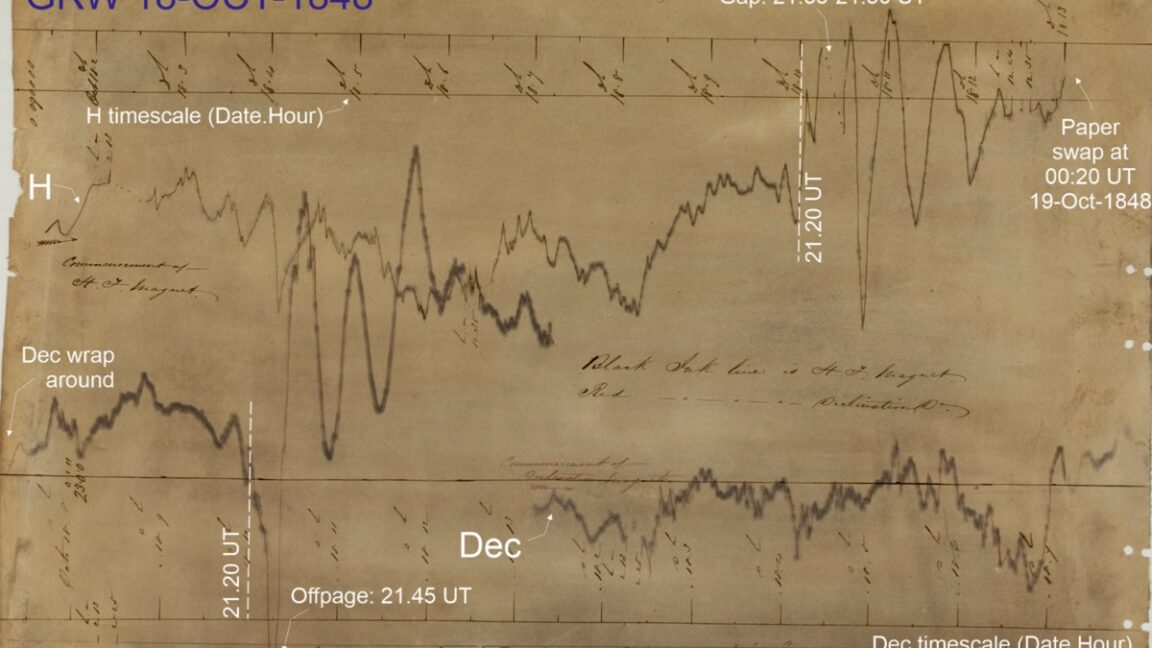
Strong geomagnetic activity was recorded around October 18, 1848, confirmed by contemporary newspaper accounts and sunspot observations.
The earliest magnetograms recorded at the Greenwich magnetic observatory in London show 'extraordinary' observations of a magnetic field in 1840.
Nathaniel John Holmes, a prominent electrical engineer, likely authored the 1871 Nature report describing a magnetic disturbance.
Why It Matters
If you're working with telecommunication systems or power grids, understanding historical geomagnetic disturbances is crucial. The 1847 incident disrupted telegraph systems, and a similar event today could seriously damage modern infrastructure. Scientists are studying past events to predict and mitigate future impacts.
Comments
Be the first to comment
Enjoyed this article?
Get it daily. 7am. Free. Reads in 5 minutes.
Join 3,564 builders reading daily.