🌊Antarctic Ocean Layer Turns Saltier Faster Than Climate Models Predicted
Your climate models are about to look outdated
TL;DR
A new study found a sharp salinity jump in Antarctic Intermediate Water, a layer circling Antarctica, driven by shrinking sea ice. The layer moves heat and carbon toward the tropics, so storm patterns and ocean heat storage could shift within five years. Global climate models still miss this.
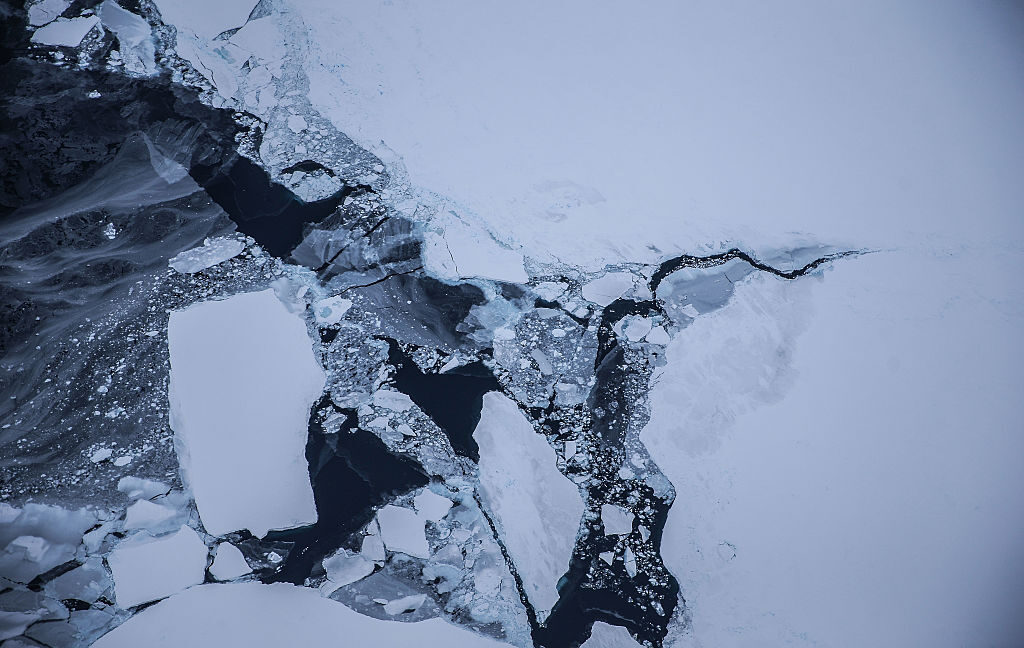
The Southern Ocean just flipped a decades-long trend, and it happened in a few years. A paper published Wednesday shows a sharp salinity increase in Antarctic Intermediate Water, a layer running from 2,300 to 4,000 feet deep around the whole continent. For decades this water was getting fresher. Now it's getting saltier. Why should you care? This layer carries heat, carbon, oxygen, and nutrients north into the Indian, Pacific, and Atlantic oceans, even across the equator. That means changes here can reshape how the ocean stores heat and how much carbon it pulls out of the air. If you build climate models, forecasting tools, or anything that depends on ocean-atmosphere coupling, your inputs just got less reliable. The catch is that the models used to guide policy still struggle to reproduce recent sea ice losses. The numbers: Antarctic sea ice peaked in the satellite record in 2014, then hit a record low just two years later. In 2023 it sat about 1 million square miles below the 1981 to 2010 average. The study pulled together six independent datasets covering 2004 to 2024, with Argo floats doing the heavy lifting by diving to measure density and salinity. Less melt-season freshwater means saltier intermediate water, which changes how heat moves between surface and depth. What to watch: the record is short, so nobody can yet say whether this shift is permanent. Researchers say impacts could show up within five years, including more frequent storms and greater ocean heat loss.
Key Points
Antarctic Intermediate Water sits between 2,300 and 4,000 feet deep and circles the entire continent, spreading north into three major ocean basins.
Keep reading — it's free
Enter your email to keep reading — plus the best of AI & tech, daily. Free, forever.
Already a member? Sign in
Comments
Be the first to comment