✨Astronomers Unveil MoM-BH*-1: A Black Hole Star
A New Black Hole Star Discovered: MoM-BH*-1
TL;DR
Astronomers discovered MoM-BH*-1, a black hole star the size of a large star but producing far more energy than nuclear fusion. This discovery could help solve the mystery of supermassive black hole formation.
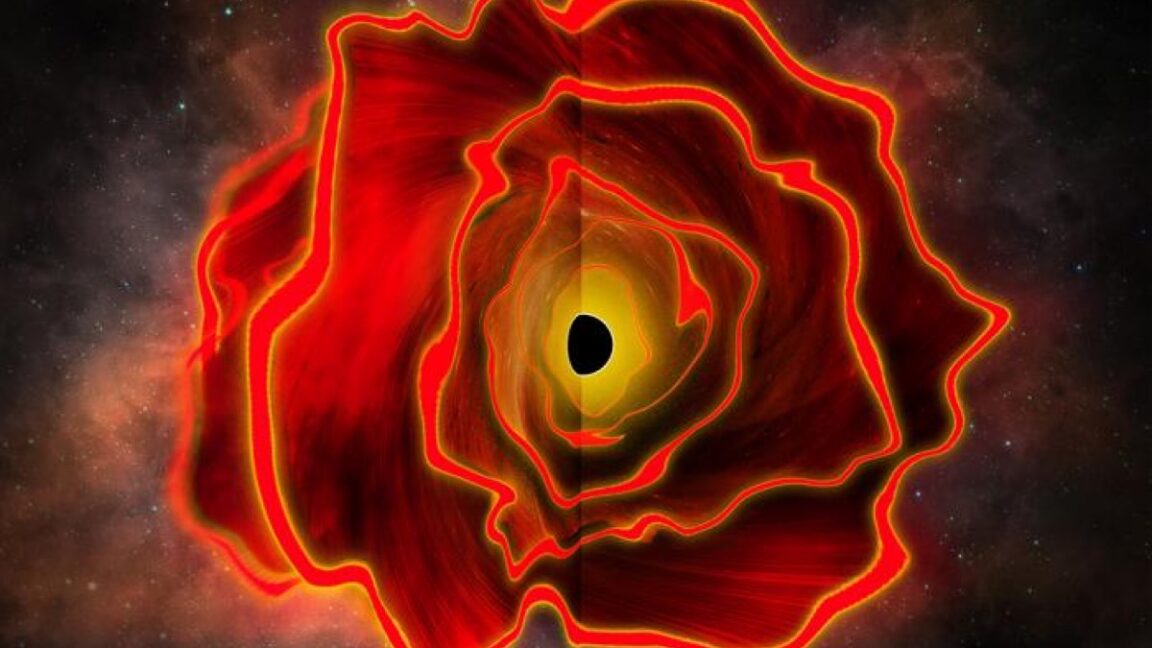
Astronomers have discovered a new celestial object, MoM-BH*-1, which is a black hole star. This star-like object is incredibly dense and produces far more energy than would be possible through nuclear fusion. The object was initially thought to be surrounded by dust, but the light produced disappeared below certain wavelengths, indicating a dense hydrogen cocoon. This discovery could help solve the puzzle of how supermassive black holes formed so soon after the Big Bang. The object, named MoM-BH*-1, is a massive central black hole surrounded by a dense cocoon of hydrogen the size of our solar system.
Key Points
Astronomers discovered MoM-BH*-1, a black hole star, in 2024.
MoM-BH*-1 produces far more energy than nuclear fusion, challenging current theories.
The object is surrounded by a dense hydrogen cocoon the size of our solar system.
This discovery could help solve the mystery of supermassive black hole formation.
The team named the object MoM-BH*-1, a black hole star.
Why It Matters
Astronomers discovered MoM-BH*-1, a black hole star, which could help solve the mystery of supermassive black hole formation. This discovery could lead to new insights into the early universe and the formation of galaxies.
Frequently Asked Questions
Why does this matter?
Astronomers discovered MoM-BH*-1, a black hole star, which could help solve the mystery of supermassive black hole formation. This discovery could lead to new insights into the early universe and the formation of galaxies.
What happened?
Astronomers discovered MoM-BH*-1, a black hole star the size of a large star but producing far more energy than nuclear fusion. This discovery could help solve the mystery of supermassive black hole formation.
Comments
Be the first to comment
Enjoyed this article?
Get it daily. 7am. Free. Reads in 5 minutes.
Join 3,436 builders reading daily.