🛰️Bell-Test Quantum Protocol Pins Location 4.53x Tighter Than Classical Methods
Your location proofs just got a quantum upgrade
TL;DR
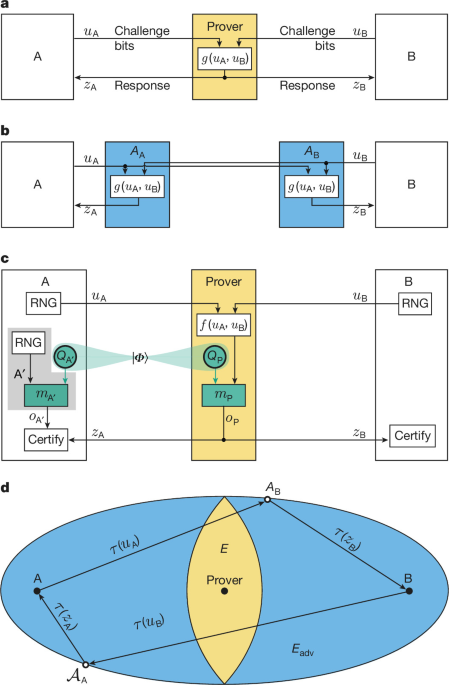
Researchers demonstrated a loophole-free Bell-test protocol that localizes a device 2.47 times tighter in one dimension than the best classical method, with a 4.53x smaller localization volume. Security holds even against adversaries with substantial quantum resources, which matters for anchoring digital authentication to physical places.
Proving where a digital message came from just got a lot harder to fake. Researchers ran a Bell-test quantum position verification protocol across a quantum network and beat the best classical localization method by a measurable margin. Why should you care? Most position proofs today trust hardware you can't fully audit, or assume an attacker can't crack a certain amount of computation. This protocol drops both assumptions. Security comes from observed correlations in a loophole-free Bell test, so it stays sound even if an adversary has serious quantum resources. That opens the door to location-bound authentication for transactions, contracts, and critical infrastructure control. The numbers: one-dimensional localization came in 2.47(2) times smaller than the best non-remote classical protocol. Localization volume shrank 4.53(5) times at identical latencies, which is the certifiable quantum advantage the team was after. The protocol is also loss-tolerant. Experimental data is public at doi.org/10.18434/mds2-4322, though the analysis code is available only on request. What to watch: this is a lab demonstration with adversaries who are weakly entangled before each trial. Scaling it to real networks with harsher noise is the open question.
Key Points
The demonstration achieved one-dimensional localization 2.47(2) times smaller than the best necessarily non-remote classical localization protocol tested.
Keep reading — it's free
Enter your email to keep reading — plus the best of AI & tech, daily. Free, forever.
Already a member? Sign in
Comments
Be the first to comment