💡BESIII Confirms X(2370) as Potential Glueball
Researchers Confirm a Particle Made of Pure Force
TL;DR
The Beijing Spectrometer III (BESIII) team presented evidence suggesting the particle X(2370) is made of glueballs, clusters of gluons. This finding could confirm that gluons can interact with themselves, a key aspect of quantum chromodynamics.
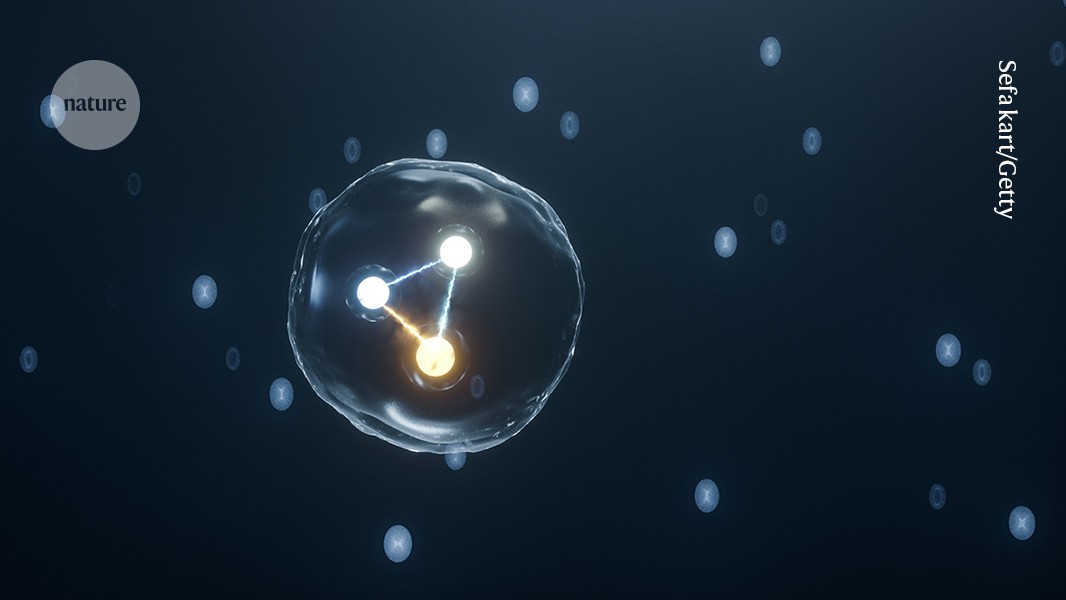
Researchers at BESIII have found compelling evidence that the particle X(2370), discovered in 2011, might be composed entirely of glueballs—clusters of gluons. This is significant because it would provide direct proof that gluons can interact with each other, a cornerstone theory in quantum chromodynamics. The team analyzed data from nearly ten billion J/ψ decays over 13 years to determine X(2370)’s spin parity as 0−+, consistent with predictions for the lightest glueball. While no single smoking gun proves it’s made of glueballs, cumulative evidence is quite persuasive.
Key Points
X(2370), discovered in 2011, has mass consistent with predictions for the lightest glueball (predicted by QCD).
BESIII Collaboration analyzed data from nearly ten billion J/ψ decays over 13 years to determine X(2370)'s spin parity.
Spin parity of X(2370) is 0−+, consistent with predictions for the lightest glueball, confirming its potential as a glueball.
BESIII runs at Beijing Electron–Positron Collider II, studying collisions between electrons and positrons to create short-lived particles like J/ψ mesons.
The discovery of X(2370) as a glueball could validate gluon self-interaction theory in quantum chromodynamics.
Why It Matters
If confirmed, the particle X(2370) being made of glueballs would provide direct evidence that gluons can interact with themselves. This finding is crucial for physicists studying the origin of mass and the fundamental forces at play within particles like protons and neutrons.
Frequently Asked Questions
Why does this matter?
If confirmed, the particle X(2370) being made of glueballs would provide direct evidence that gluons can interact with themselves. This finding is crucial for physicists studying the origin of mass and the fundamental forces at play within particles like protons and neutrons.
What happened?
The Beijing Spectrometer III (BESIII) team presented evidence suggesting the particle X(2370) is made of glueballs, clusters of gluons. This finding could confirm that gluons can interact with themselves, a key aspect of quantum chromodynamics.
Comments
Be the first to comment
Enjoyed this article?
Get it daily. 7am. Free. Reads in 5 minutes.
Join 2,975 builders reading daily.