🛠️Build a Fully Local Coding Agent: A 2026 Walkthrough
TL;DR
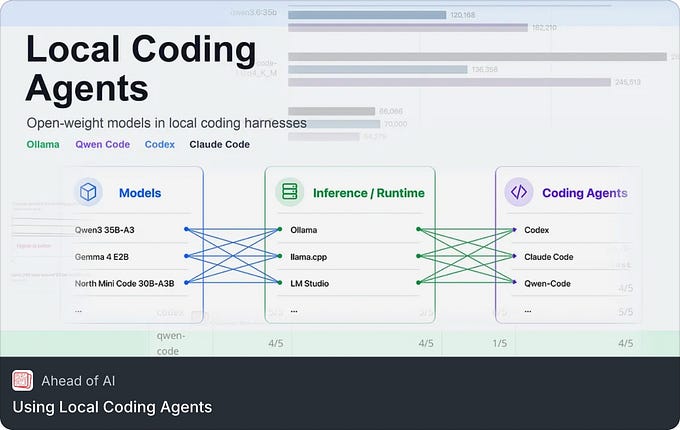
Sebastian Raschka walks through setting up a production-style coding agent on a fully local stack. A locally served LLM pairs with a local harness that reads files, makes edits, runs commands, and verifies its own changes.
Sebastian Raschka walks through setting up a production-style coding agent on a fully local stack. A locally served LLM pairs with a local harness that reads files, makes edits, runs commands, and verifies its own changes.
Key Points
Runs entirely on a self-hosted model, no external API calls
Harness handles file reads, edits, command execution, and verification loops
Covers model choice trade-offs for tool-use reliability and long context
Aimed at engineers who want privacy and cost control over hosted agents
Why It Matters
Local coding agents remove the API bill and data-exfiltration worry that block many teams from adopting agentic workflows, and open models are finally good enough to run them.
Quick Facts
Frequently Asked Questions
Why does this matter?
Local coding agents remove the API bill and data-exfiltration worry that block many teams from adopting agentic workflows, and open models are finally good enough to run them.
What happened?
Sebastian Raschka walks through setting up a production-style coding agent on a fully local stack. A locally served LLM pairs with a local harness that reads files, makes edits, runs commands, and verifies its own changes.
Comments
Be the first to comment
Enjoyed this article?
Get it daily. 7am. Free. Reads in 5 minutes.
Join 2,359 builders reading daily.