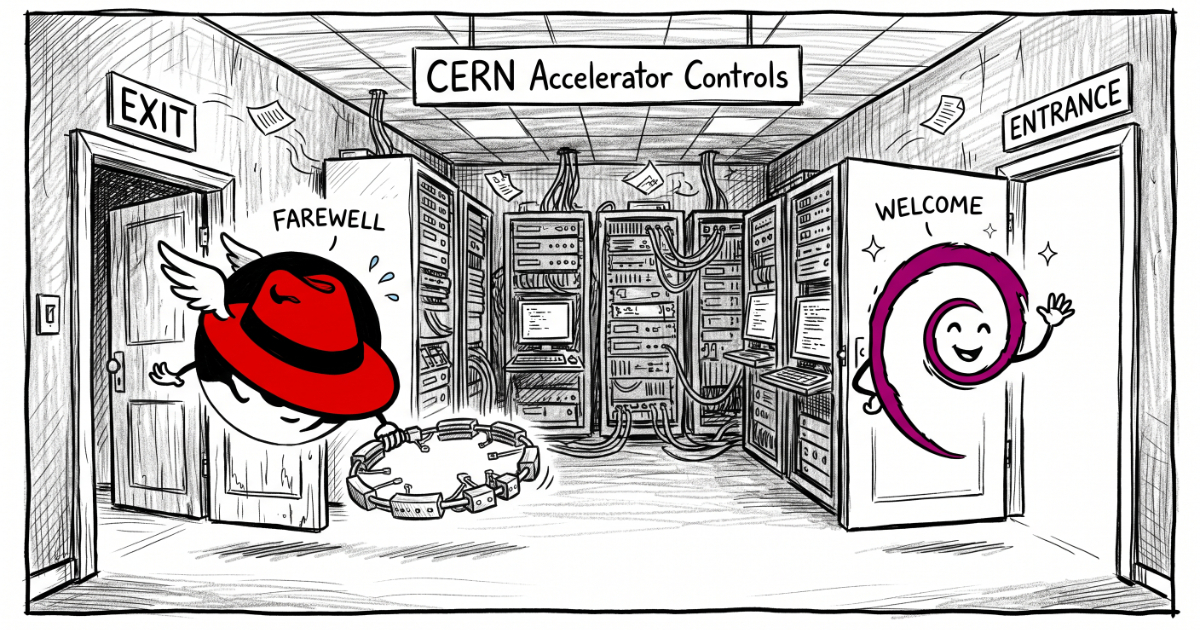
🔄CERN Ditches Red Hat for Debian in Major OS Shift
CERN's 20-year Red Hat run is over
TL;DR
CERN is transitioning its accelerator-control fleet from Red Hat to Debian, marking a significant shift after two decades. The move is driven by technical constraints and maintenance considerations, impacting over 2,200 specialized front-end computers and 17,000 embedded devices.
CERN is swapping out Red Hat for Debian in its accelerator-control fleet, a major shift after two decades of Red Hat usage. This decision is driven by technical constraints, such as Red Hat's tightening compiler microarchitecture baselines, and the need for a more maintainable long-term solution. The transition affects over 2,200 specialized front-end computers and 17,000 embedded devices, with Debian's support for older x86-64 architecture and extensive package repository making it the preferred choice. CERN aims to complete the migration by Q4 2026, targeting Debian 13.
Key Points
CERN's accelerator-control fleet manages over 2,200 specialized front-end computers and 17,000 embedded devices.
Red Hat's progressive tightening of compiler microarchitecture baselines, like x86-64-v2 and v3, forced CERN to rethink its long-term deployments.
Debian's support for older x86-64 architecture and extensive package repository made it the preferred choice over alternatives like CIP and Yocto.
CERN's migration is strictly scoped to embedded accelerator control hardware, with data centers and LHC computing continuing to use RHEL and AlmaLinux.
Transition costs include moving from mature RPM workflows to Debian's packaging ecosystem, introducing substantial tooling friction and complexity.
Why It Matters
CERN's shift from Red Hat to Debian impacts over 2,200 specialized front-end computers and 17,000 embedded devices. The move is driven by technical constraints and maintenance considerations, making Debian the better fit for long-term stability. This transition highlights the importance of choosing OS platforms that align with long-term technical and maintenance needs.
Frequently Asked Questions
Why does this matter?
CERN's shift from Red Hat to Debian impacts over 2,200 specialized front-end computers and 17,000 embedded devices. The move is driven by technical constraints and maintenance considerations, making Debian the better fit for long-term stability. This transition highlights the importance of choosing OS platforms that align with long-term technical and maintenance needs.
What happened?
CERN is transitioning its accelerator-control fleet from Red Hat to Debian, marking a significant shift after two decades. The move is driven by technical constraints and maintenance considerations, impacting over 2,200 specialized front-end computers and 17,000 embedded devices.
Comments
Be the first to comment
Enjoyed this article?
Get it daily. 7am. Free. Reads in 5 minutes.
Join 3,462 builders reading daily.