💡D-Wave Advances Quantum Computing With Dual-Rail Qubits
Quantum Leap: D-Wave's New Qubit Tech
TL;DR
D-Wave demonstrates dual-rail qubits, a key step in practical quantum computing. The tech promises faster operations and easier error detection, setting the stage for more robust quantum systems by 2028.
D-Wave has made significant strides with its new dual-rail qubit technology, showcasing entanglement and fast operations essential for practical quantum computing. This breakthrough is crucial as photon loss errors are easily detectable, making it a game-changer for teams working on error correction in quantum systems. The company aims to reach 181 dual-rail qubits by 2028, with plans to test various surface code schemes for error detection.
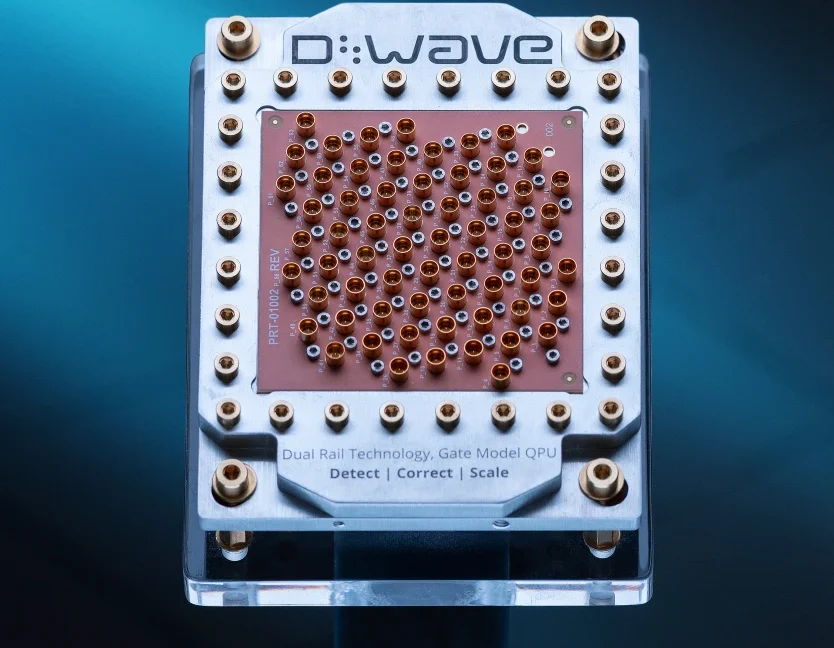
Key Points
D-Wave's paper in Nature outlines validation steps for dual-rail technology
Dual-rail qubits use two linked resonators, entangling without altering key features
Photon loss errors are the most common issue but easily detectable with hardware
Entanglement gate takes 200 nanoseconds; full operation clocks in at 500 ns
D-Wave targets 181 dual-rail qubits by 2028, testing surface code error schemes
Why It Matters
If you're working on quantum computing projects, D-Wave's advancements with dual-rail qubits could drastically reduce errors and improve performance. The faster operations and easier detection of photon loss mean your team can focus more on innovation than troubleshooting.
Frequently Asked Questions
Why does this matter?
If you're working on quantum computing projects, D-Wave's advancements with dual-rail qubits could drastically reduce errors and improve performance. The faster operations and easier detection of photon loss mean your team can focus more on innovation than troubleshooting.
What happened?
D-Wave demonstrates dual-rail qubits, a key step in practical quantum computing. The tech promises faster operations and easier error detection, setting the stage for more robust quantum systems by 2028.
Comments
Be the first to comment
Enjoyed this article?
Get it daily. 7am. Free. Reads in 5 minutes.
Join 2,646 builders reading daily.