🛒DoorDash Cuts AI Grocery Reorder Latency From 16 Seconds to 2
Your reorder button just got 8x faster
TL;DR
DoorDash slashed latency in its AI grocery reorder flow from about 16 seconds to 2 seconds, doubled shopping list views, and lifted order rate roughly 34%. The trick: split slow historical analysis from fast live catalog lookups.
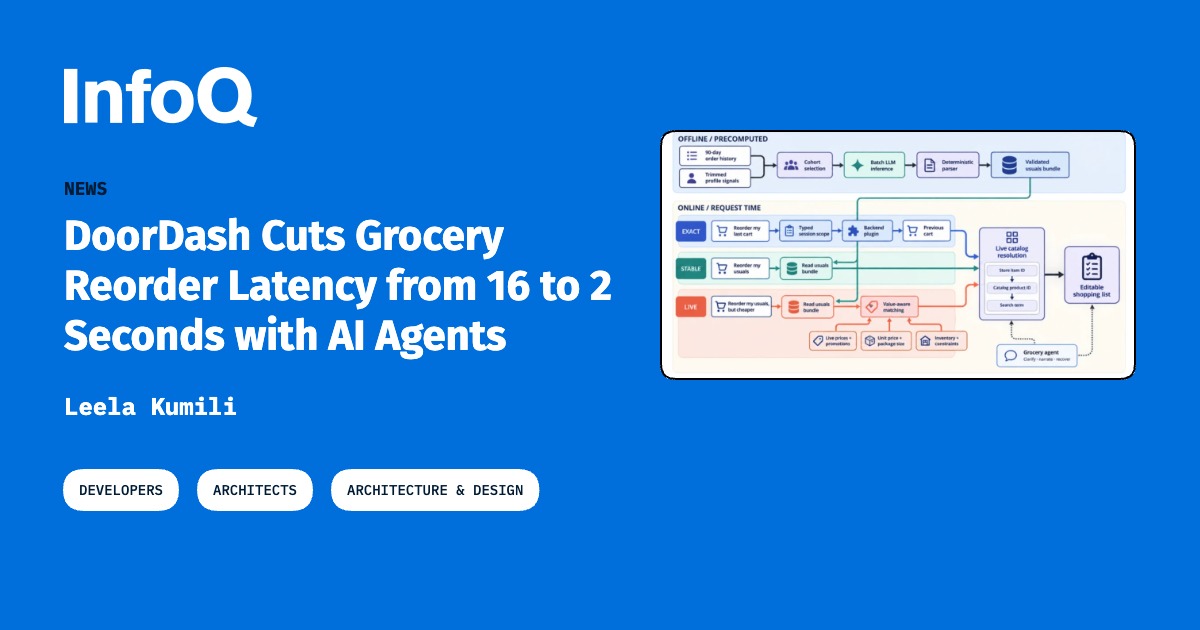
DoorDash just made AI grocery reordering fast enough that people actually use it. Latency dropped from about 16 seconds to 2, and that single change doubled shopping list views and lifted the flow's order rate by roughly 34%. Speed was the bottleneck all along. If you're building anything with LLMs in a user-facing path, this is the pattern to steal. DoorDash stopped asking the model to do everything at request time. Batch LLM inference now identifies likely recurring purchases ahead of time, deterministic validation checks the output, and the serving path only retrieves prepared data and resolves each item against the live catalog. The numbers behind it: 90 days of purchase history plus consumer profile signals feed the batch job. Each item resolves in order: the original store item first, then a catalog product identifier, then a search term as the last fallback. Simple edits like changing quantities or removing products skip the agent entirely and update the list directly.
Key Points
Latency in DoorDash's AI-powered grocery reorder flow dropped from about 16 seconds to roughly 2 seconds after the redesign separated historical analysis from live product resolution.
Keep reading — it's free
Enter your email to keep reading — plus the best of AI & tech, daily. Free, forever.
Already a member? Sign in
Comments
Be the first to comment