🤖DoorDash's Multi-Agent LLM Cleans Up 45 Stale Flags in 50
DoorDash's LLM system tackles stale feature flags
TL;DR
DoorDash's multi-agent LLM system automates the cleanup of stale feature flags, producing usable pull requests for 45 out of 50 evaluated flags. The system averages 13.8 minutes and $4.79 per cleanup, significantly reducing manual effort.
DoorDash has built a multi-agent LLM system to automate the cleanup of stale feature flags across its codebase. This system, which combines live experimentation data, engineer approval, and isolated Git worktrees, has proven effective in reducing manual labor. In an evaluation of 50 stale flags, the system produced usable pull requests for 45, averaging 13.8 minutes and $4.79 per cleanup. Developers and DevOps teams managing large-scale codebases with extensive feature flag usage will benefit from this automation, as it can streamline the process of maintaining clean and efficient codebases.
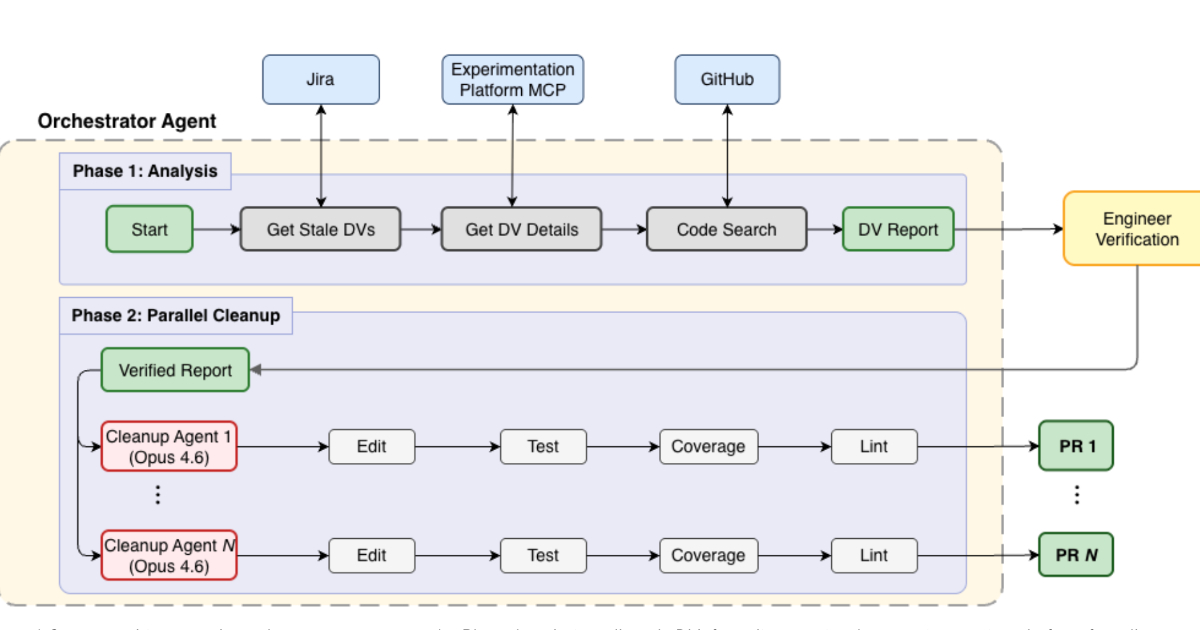
Key Points
DoorDash's system evaluates 50 stale flags, producing usable pull requests for 45.
The system averages 13.8 minutes and $4.79 per cleanup, significantly reducing manual effort.
DoorDash's experimentation platform manages over 60,000 feature flags across 623 repositories.
The company creates about 2,300 new flags each month, highlighting the need for automation.
A flag is classified as stale if it hasn't been modified for 90 days and remains referenced in code.
Why It Matters
If you're managing a large codebase with extensive feature flag usage, DoorDash's multi-agent LLM system can streamline the cleanup process. For example, a team managing 60,000 flags across 623 repositories will see significant time and cost savings. The system's ability to produce usable pull requests for 45 out of 50 evaluated flags demonstrates its effectiveness in reducing manual effort.
Comments
Be the first to comment
Enjoyed this article?
Get it daily. 7am. Free. Reads in 5 minutes.
Join 3,483 builders reading daily.