🔒Drop Sandbox Tech Isolates Agents Without Containers
Run risky code in isolation, no containers needed
TL;DR
Drop sandbox technology isolates coding agents and programs within Linux, preventing them from accessing the host system. This allows developers to run potentially risky code in a safe, isolated environment without setting up containers.
Drop sandbox technology isolates coding agents and programs within Linux, preventing them from accessing the host system. This allows developers to run potentially risky code in a safe, isolated environment without setting up containers. For teams working on security-sensitive projects or experimenting with new tools, Drop provides a quick and easy way to sandbox code without the overhead of container management. Each environment is disposable and isolated, with its own home directory that doesn't affect the original system. Drop supports running programs on gVisor for an additional layer of isolation, significantly reducing the risk of kernel vulnerabilities being exploited.
Key Points
Drop runs agents with --dangerously-skip-permissions, letting OS enforce permissions.
Sandboxed rm -rf ~ command doesn't touch actual home directory.
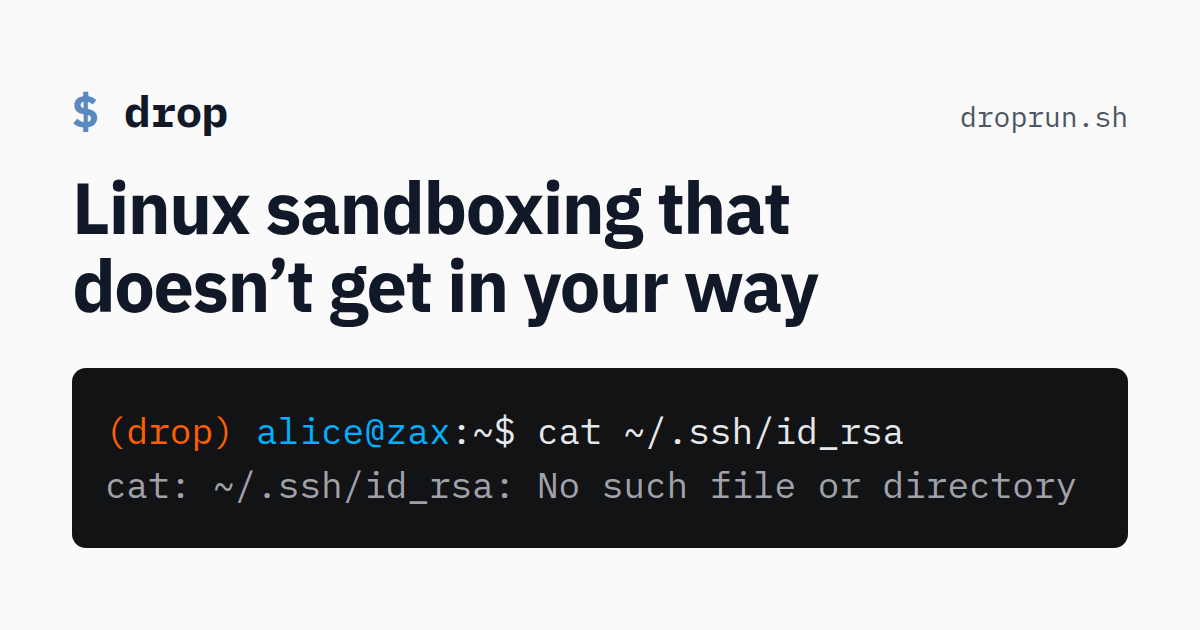
Prompt injection targeting ~/.ssh finds nothing in sandbox.
Drop uses TOML config to specify exposed files, dirs, and services.
gVisor integration provides additional isolation layer, preventing direct kernel access.
Why It Matters
If you're testing new tools or working on security-sensitive projects, Drop's isolation without containers can save time and reduce risk. For example, a team experimenting with a new Python library can sandbox it with minimal setup, preventing any potential issues from affecting the rest of the system. The gVisor option adds an extra layer of security, crucial for teams dealing with sensitive data.
Comments
Be the first to comment
Enjoyed this article?
Get it daily. 7am. Free. Reads in 5 minutes.
Join 3,488 builders reading daily.