🌡️El Niño Signals Strengthening in Pacific Waters
El Niño could hit harder than expected this winter
TL;DR
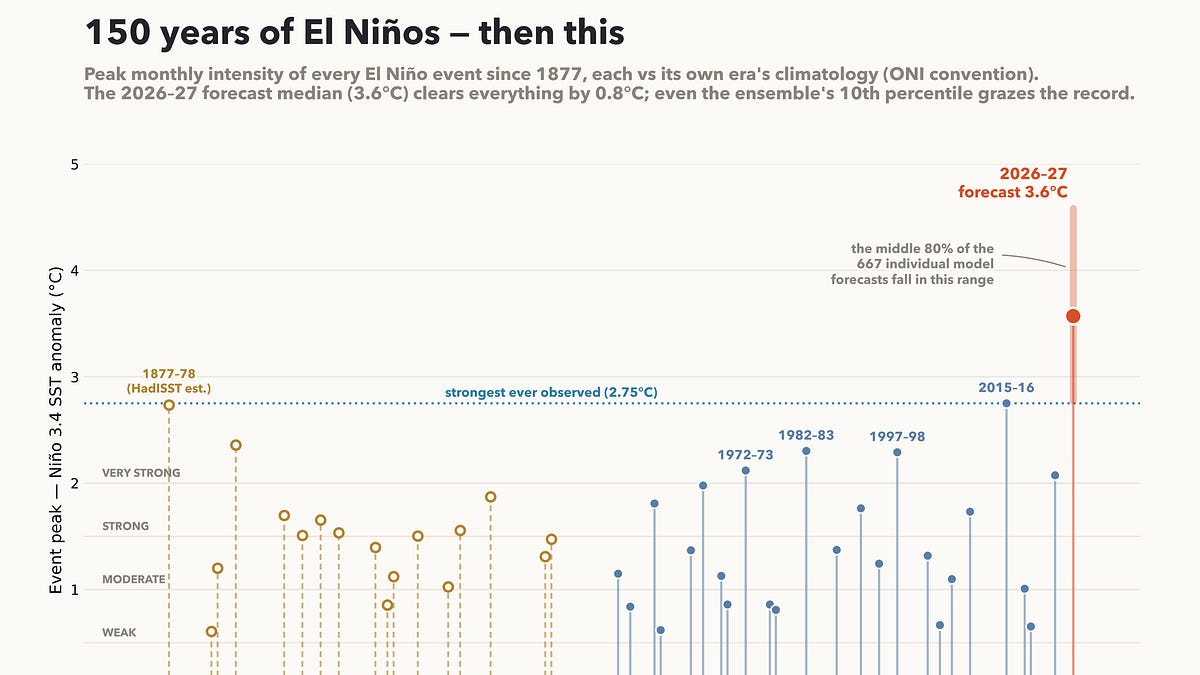
Ocean temperatures are rising in the eastern Pacific, signaling a potential strong El Niño event. This can impact global weather patterns and economies reliant on agriculture.
Ocean temperatures remain anomalously high in the equatorial zone of the eastern Pacific, with warm waters typically found between 165 to 170 W along the equator. These conditions usually extend farther eastwards by October, affecting teleconnections and weather patterns globally. Full Bjerknes coupling between atmosphere and ocean mainly occurs after September when southern hemisphere SSTs begin to rise, suggesting peaks in El Niño centered around December. The biggest influences on teleconnections and warmest conditions typically occur three months later, in February, impacting agriculture and economies worldwide.
Key Points
Warm waters between 165 to 170 W along the equator indicate strengthening El Niño signals.
Full Bjerknes coupling occurs after September when southern hemisphere SSTs rise, affecting teleconnections.
Peaks in EN typically occur centered around December, impacting global weather patterns.
Influences on teleconnections and warmest conditions usually peak three months later, in February.
Models suggest ocean heat won't run out annually, but annual cycle predictions are often incorrect.
Why It Matters
If you're a farmer or work in agriculture, this El Niño could mean unpredictable weather patterns starting December. Economies reliant on seasonal crops should prepare for potential disruptions and higher costs.
Frequently Asked Questions
Why does this matter?
If you're a farmer or work in agriculture, this El Niño could mean unpredictable weather patterns starting December. Economies reliant on seasonal crops should prepare for potential disruptions and higher costs.
What happened?
Ocean temperatures are rising in the eastern Pacific, signaling a potential strong El Niño event. This can impact global weather patterns and economies reliant on agriculture.
Comments
Be the first to comment
Enjoyed this article?
Get it daily. 7am. Free. Reads in 5 minutes.
Join 2,311 builders reading daily.