🤖Food Robotics 2.0 Hits Scale: Chef Robotics Passes 145 Million Servings
Your next drink or shelf scan may come from a robot
TL;DR
Food robotics is pivoting from selling robot-made meals to consumers toward selling robots to food businesses. Chef Robotics has logged 145M+ servings, Botrista is in 6,000+ locations, and Simbe raised $100M+. For operators, the practical question is which manual task you can automate first.
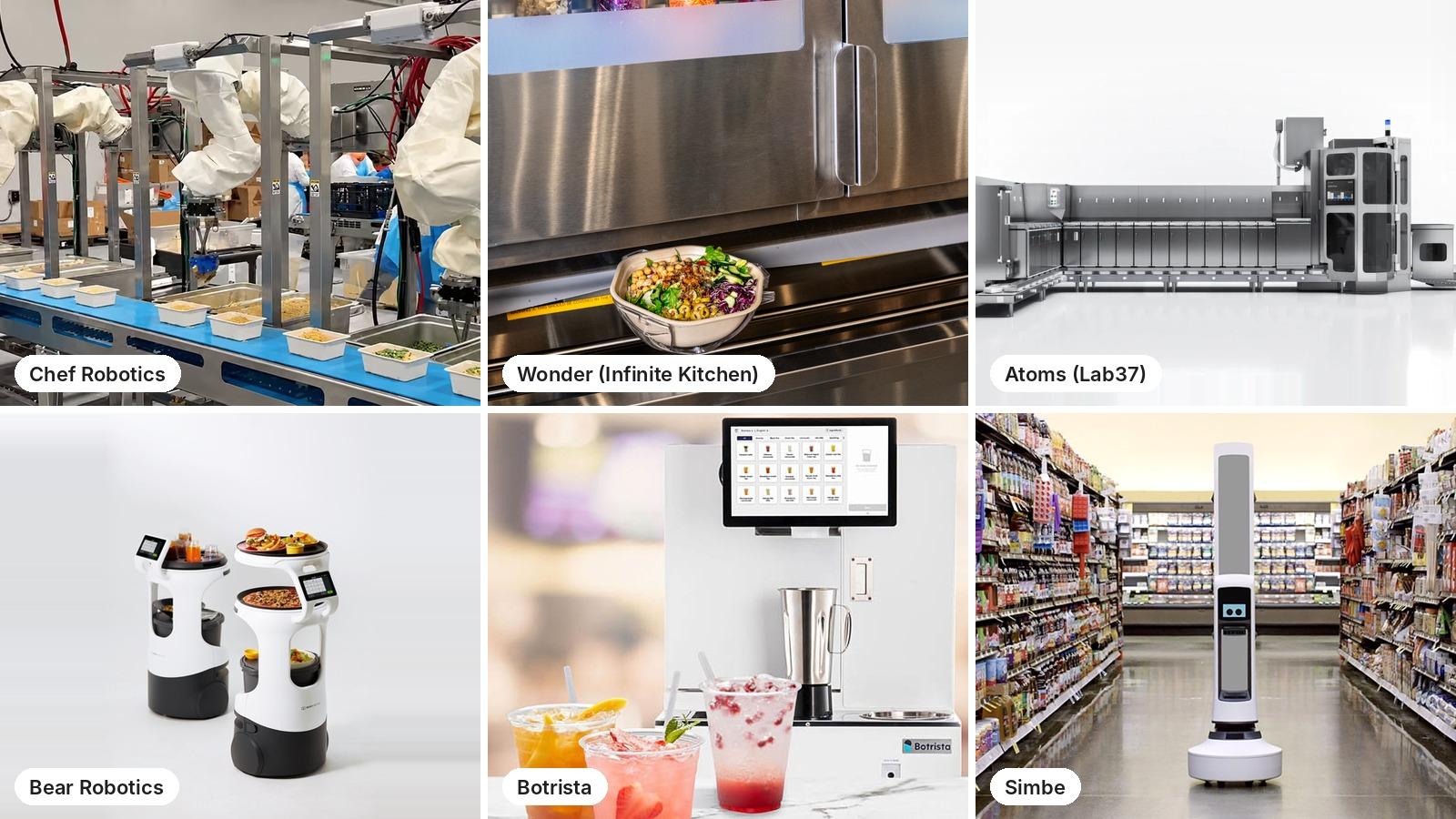
The first wave of food robotics tried to sell robot-made meals straight to customers, and most of those businesses struggled. The underlying problems never went away, though. Manufacturers still need meals assembled, and restaurants still can't staff their shifts. Food Robotics 2.0 is building around those everyday needs, and the money is now flowing to companies that sell robots to food businesses rather than food to consumers. If you build or run ops for restaurants, grocery chains, or food manufacturing, this shift matters. The new generation is aimed at repetitive, hard-to-staff work: assembly lines, drink stations, dining room runners, and store shelf audits. Chef Robotics handles variability on existing assembly lines, Botrista handles drink prep, Bear Robotics' Servi carries food through dining rooms, and Simbe's Tally scans shelves for missing or mispriced items. Each one plugs into a workflow you already have. The numbers are big. ATOMS, co-founded by an Uber co-founder, raised $1.7 billion. Wonder, founded by a Jet.com co-founder, has raised $3 billion. Chef Robotics has deployed at scale across North America and Europe with more than 145 million servings completed. Botrista reports over 6,000 signed locations in 42 states, and Bear Robotics has a $600 million valuation after a $32 million round. Worth watching: whether these robots keep working through a full shift without constant babysitting. A fleet has to survive real shift changes and messy edge cases, and that reliability bar is where most of the next year's winners will be decided.
Key Points
Chef Robotics has deployed robots at scale across North America and Europe, completing more than 145 million servings in production environments, handling assembly-line variability that older automation could not manage.
Keep reading — it's free
Enter your email to keep reading — plus the best of AI & tech, daily. Free, forever.
Already a member? Sign in
Comments
Be the first to comment