🚨HEIF Heist: Remote Attack Exploits Image Decoders
Your image uploads could be a backdoor
TL;DR
HEIF Heist is a class of remote attacks targeting native C/C++ image decoders like libheif and libde265. Vulnerable deployments can be exploited for RCE or data exfiltration. Upgrade to libheif v1.23.2 or later to mitigate risks.
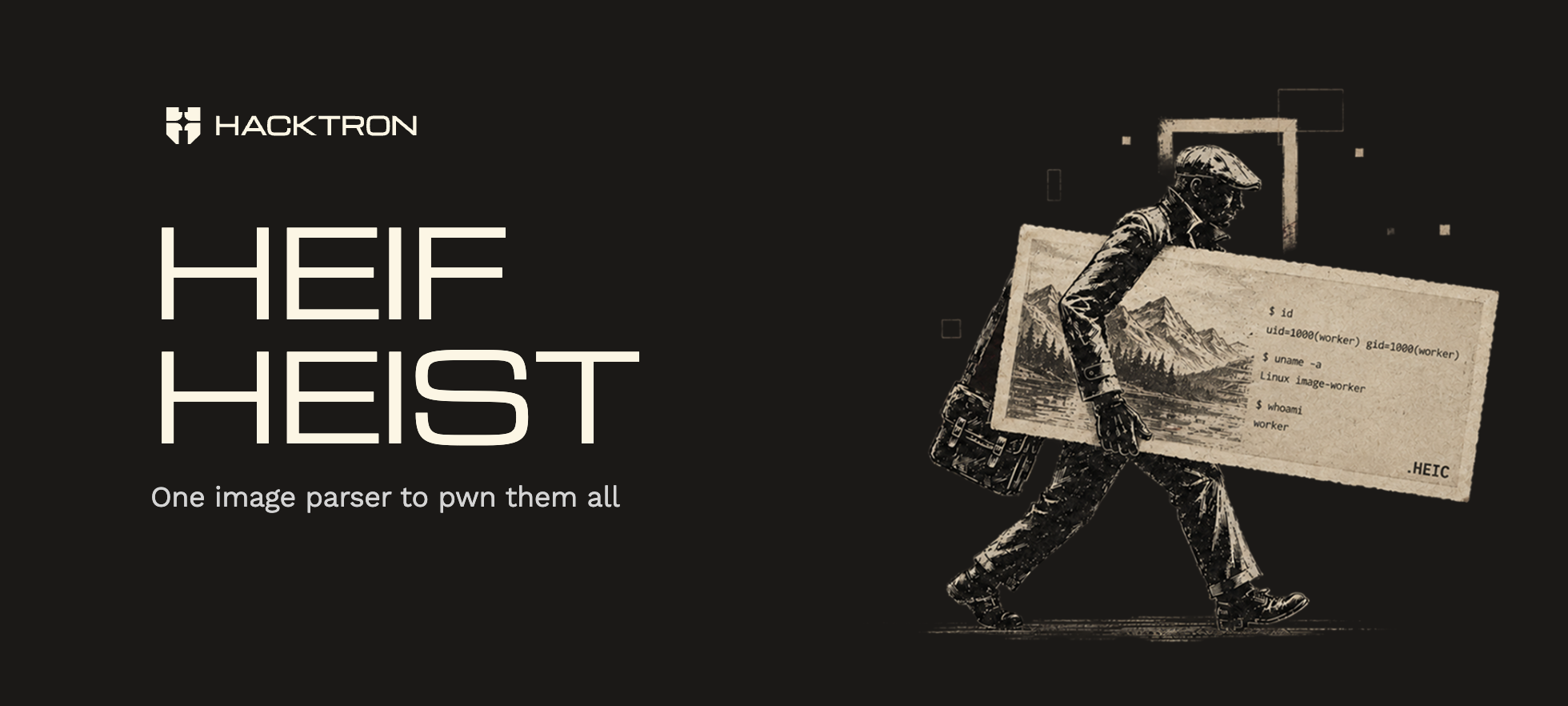
HEIF Heist is a new class of remote attacks targeting native C/C++ image decoders like libheif and libde265. Attackers can bypass application-level defenses to trigger memory corruption, data exposure, or remote code execution (RCE). If you're processing untrusted user image uploads, you're potentially exposed. Upgrade to libheif v1.23.2 or later and the latest libde265 to patch known vulnerabilities. AI agentic approaches like GPT-5.6 Sol can cut exploit development time down to days.
Key Points
HEIF Heist targets native C/C++ decoders like libheif and libde265, making it language and framework-agnostic.
Attackers can fingerprint remote libheif version family by probing upload endpoints with crafted .avif or .heic files.
Once identified, attackers can fire exact version-matched payloads to trigger memory corruption or RCE.
Upgrading to libheif v1.23.2 or later and the latest libde265 is recommended to patch known 0-day and n-day vectors.
AI agentic approaches like GPT-5.6 Sol can cut exploit development time down to roughly 1 to 3 days.
Why It Matters
If you're processing untrusted user image uploads, your deployment is potentially exposed to HEIF Heist. Upgrading to libheif v1.23.2 or later is crucial to mitigate risks. Smaller deployments should isolate image-processing pipelines inside hardened, ephemeral sandboxes.
Comments
Be the first to comment
Enjoyed this article?
Get it daily. 7am. Free. Reads in 5 minutes.
Join 3,483 builders reading daily.