🤖Kimi K3 Architecture Unveiled With 2.8 Trillion Parameters
The Kimi K3 is here, and it's massive — 2.8 trillion parameters
TL;DR
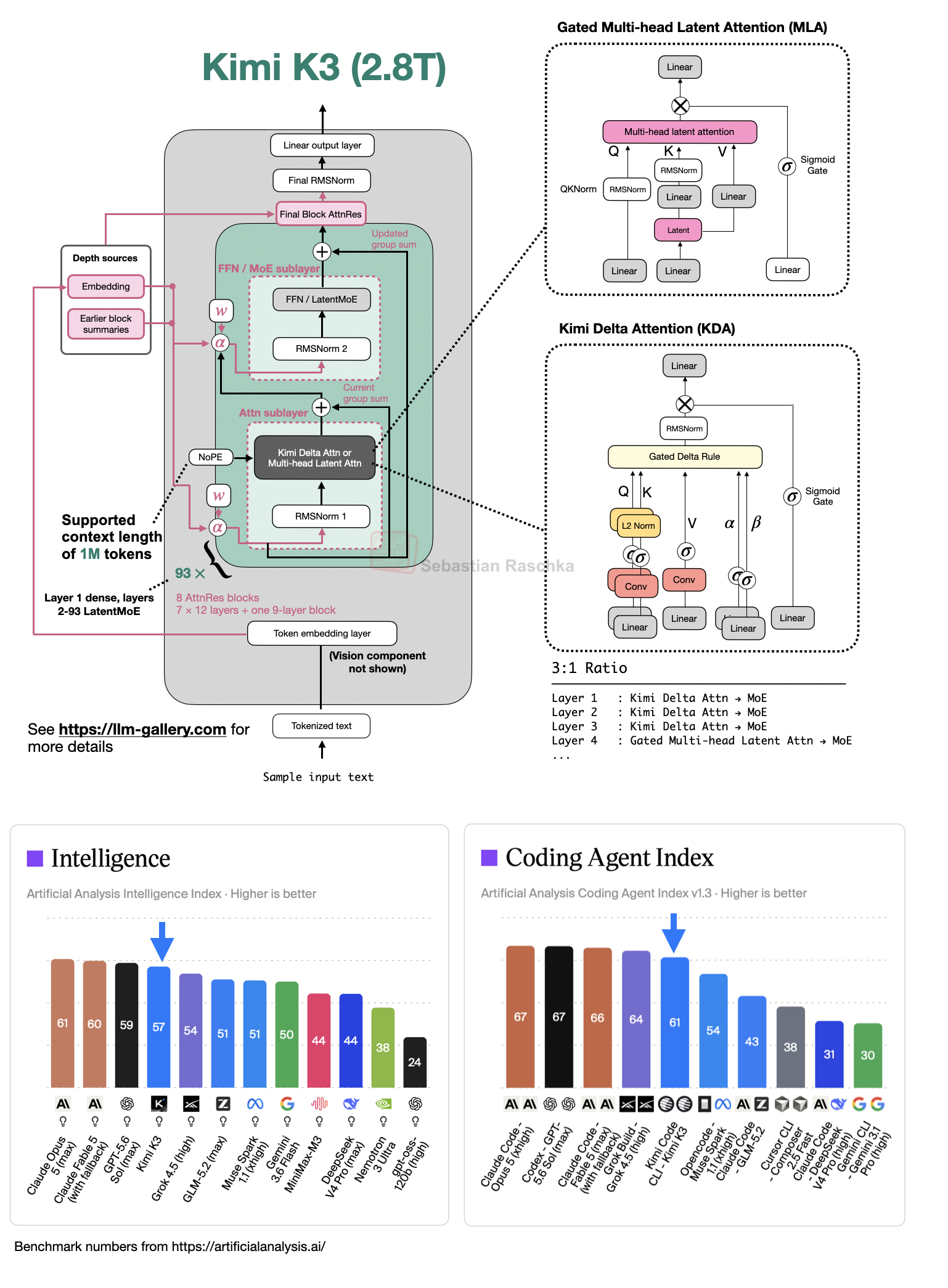
Kimi K3 architecture boasts 2.8 trillion parameters, a significant upgrade from the 48 billion in its predecessor. It introduces LatentMoE and native multimodal support, setting new benchmarks for efficiency.
The Kimi K3 architecture has been unveiled with an astounding 2.8 trillion parameters, marking a leap from the previous model's 48 billion. This massive upgrade includes the addition of LatentMoE, similar to Nemotron 3 Ultra, and replaces regular attention mechanisms with multi-head latent and Kimi Delta Attention for better inference efficiency. The architecture also introduces native multimodal support and NoPE (No Positional Embeddings) everywhere, eliminating RoPE layers. Developers should care because this could redefine the landscape of large-scale AI models, offering significant improvements in performance and efficiency.
Key Points
The Kimi K3 architecture boasts 2.8 trillion parameters, compared to 48 billion in its predecessor
LatentMoE component added, similar to Nemotron 3 Ultra's MoE
Multi-head latent and Kimi Delta Attention replace regular attention mechanisms
Attention residuals connect across layers for improved validation loss and performance
Native multimodal support and NoPE (No Positional Embeddings) everywhere
Why It Matters
If you're working on large-scale AI models, the Kimi K3 architecture's 2.8 trillion parameters and efficiency-focused design could drastically improve your model's inference speed and performance. However, it also adds about 4% in training cost and 2% in inference cost compared to its predecessor.
Frequently Asked Questions
Why does this matter?
If you're working on large-scale AI models, the Kimi K3 architecture's 2.8 trillion parameters and efficiency-focused design could drastically improve your model's inference speed and performance. However, it also adds about 4% in training cost and 2% in inference cost compared to its predecessor.
What happened?
Kimi K3 architecture boasts 2.8 trillion parameters, a significant upgrade from the 48 billion in its predecessor. It introduces LatentMoE and native multimodal support, setting new benchmarks for efficiency.
Comments
Be the first to comment
Enjoyed this article?
Get it daily. 7am. Free. Reads in 5 minutes.
Join 2,390 builders reading daily.