🤖Light-Powered Robot Swims Through Water, 4x Its Length in a Minute
Light-Activated Muscles Pull a Robot Through Water
TL;DR
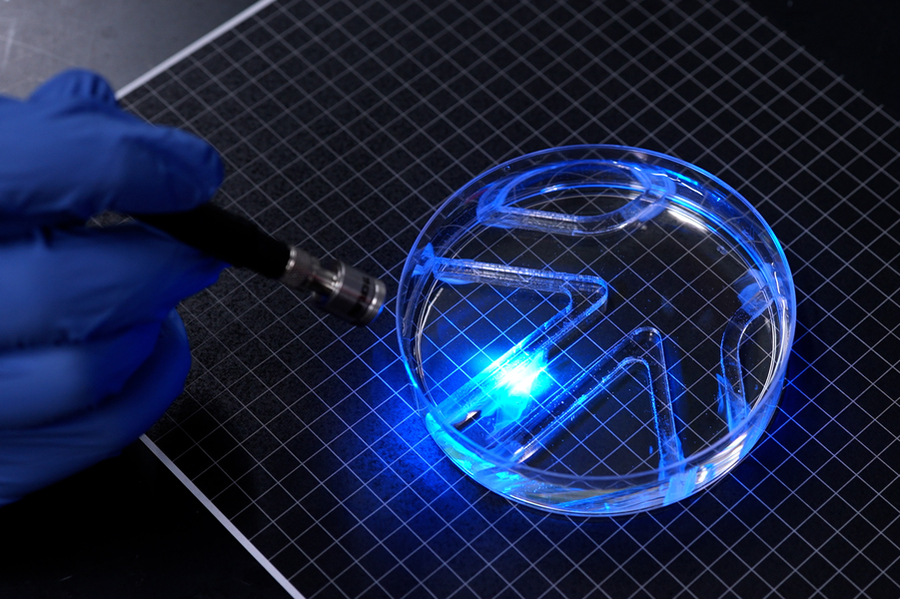
Researchers created a paper-thin robot that swims through water when exposed to light. The robot, made from muscle cells and a gel skeleton, can swim four times its body length in a minute, mimicking the cow shark's speed.
A new paper-thin robot can swim through water in response to light, showcasing the potential of muscle-powered robotics. This robot, about the size of a stick of gum, uses genetically engineered muscle cells to twitch and propel itself. The cells, when exposed to light, cause the robot's fins to flap, pulling it through water at a speed comparable to a cow shark. This marks the first example of a two-dimensional, muscle-powered robot capable of locomotion. The robot's design, using gelatin methacrylate (GelMA) and muscle cells, allows for precise control and optimization of muscle movements. Researchers aim to further enhance the robot's speed and maneuverability in future iterations.
Key Points
Robot uses genetically engineered muscle cells to twitch and propel itself through water.
Gel skeleton made from gelatin methacrylate (GelMA) supports muscle cells and allows precise control.
Muscle cells form a thin layer along grooves stamped into the gel, optimizing movements for force.
Square grooves were found to be optimal for muscle alignment and movement efficiency.
Robot can swim a distance of about four times its body length in one minute, mimicking a cow shark.
Why It Matters
This robot marks a significant advance in muscle-powered robotics, with potential applications in biomedical devices and soft robotics. For researchers working on muscle tissue engineering, this development offers a new platform for studying muscle behavior and optimizing muscle movements.
Comments
Be the first to comment
Enjoyed this article?
Get it daily. 7am. Free. Reads in 5 minutes.
Join 3,567 builders reading daily.