🤖LLaMA-Berry Shifts Reward Modeling to Preference Prediction
Reward models now compare answers, not just score them
TL;DR
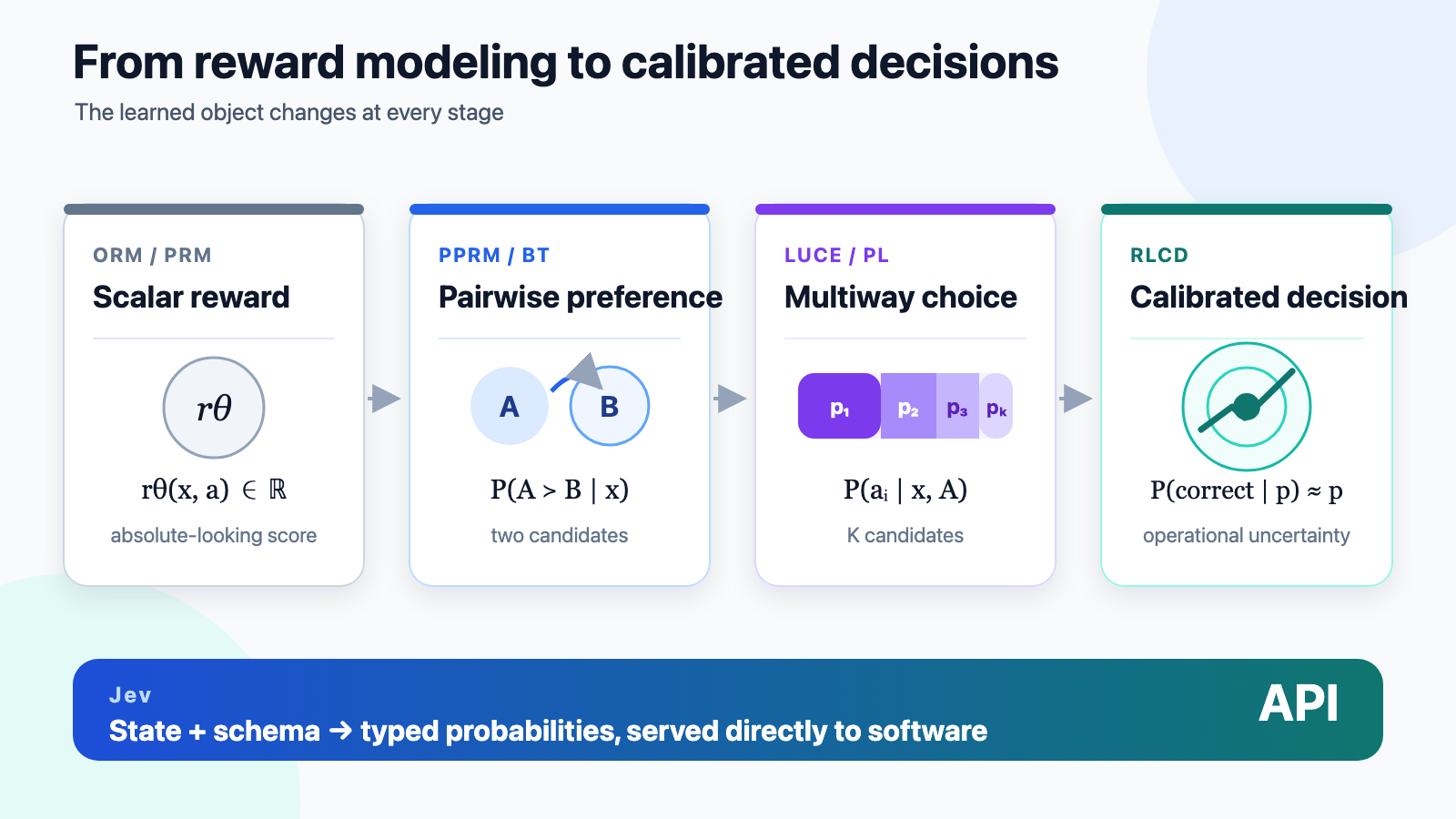
LLaMA-Berry introduces PPRM, a model that compares two answers rather than scoring them. This shift impacts how AI systems evaluate and choose between multiple solutions, enhancing decision-making accuracy.
LLaMA-Berry has introduced PPRM, a model that compares two answers rather than assigning a scalar score. This change shifts the focus from absolute scores to relative preference, making it easier to evaluate and choose between multiple solutions. If you're working with AI systems that need to make decisions based on multiple options, this model could significantly improve accuracy and reliability. LLaMA-Berry trains on 7.8 million mathematical solution pairs, using DPO to enhance pairwise predictions.
Key Points
LLaMA-Berry trains on 7.8 million mathematical solution pairs, enhancing pairwise predictions.
PPRM uses a constrained language-model decision over Yes and No tokens for comparisons.
Calibration ensures higher reported probabilities correspond to higher observed accuracy.
The Brier score decomposes forecast quality and closes the loop for operational decision policies.
Temperature scaling adjusts the sharpness of the distribution, selecting calibration parameters.
Why It Matters
If you're working with AI systems that need to evaluate and choose between multiple solutions, PPRM flips the script from absolute scores to relative preference. This impacts decision-making accuracy and reliability, especially in complex problem-solving scenarios. Calibration and scoring rules like the Brier score ensure that higher probabilities mean higher accuracy, making operational decisions more reliable.
Comments
Be the first to comment
Enjoyed this article?
Get it daily. 7am. Free. Reads in 5 minutes.
Join 3,500 builders reading daily.