💡LLM Benchmarks: What Home Lab Users Need to Know
Why Zero-Shot Tests Aren't Enough for LLMs
TL;DR
Running standard benchmarks on local language models (LLMs) is crucial, but zero-shot tests aren't enough. Long-context tool-calling and domain-specific evaluations are necessary to truly assess performance.
Local language model (LLM) performance varies widely based on hardware generation and benchmark type. Zero-shot tests fail to capture real-world performance for agentic tasks. Running comprehensive benchmarks, including long-context tool-calling and domain-specific knowledge evaluations, is essential. This ensures accurate assessments of an LLM's setup weaknesses. Key considerations include correct sampler settings from model cards, temperature adjustments, KLD divergence direction, vocabulary truncation impact, and evaluation text calibration data.
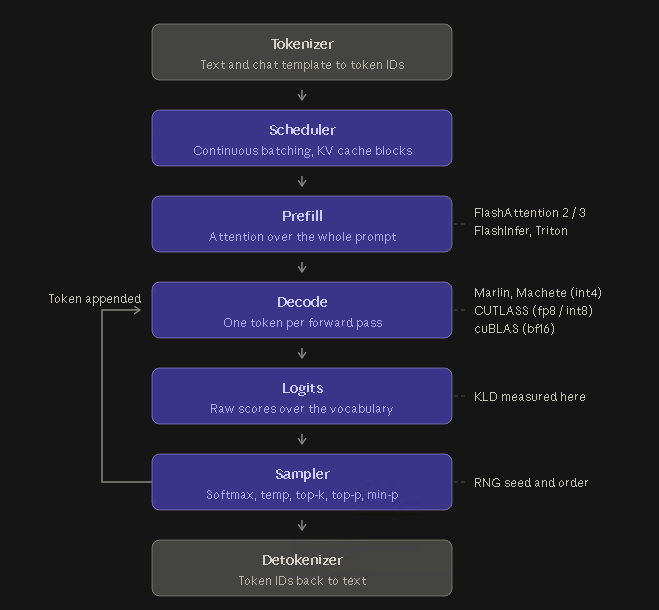
Key Points
Running standard benchmarks on LLMs is crucial for assessing real-world performance (30 words)
Zero-shot tests don't reflect agentic task performance, use long-context tool-calling instead (25 words)
Model cards specify correct sampler settings and chat templates to ensure accurate benchmarking (28 words)
Setting temperature too low can cause model loops; KLD divergence direction matters for evaluation (30 words)
Vocabulary truncation affects LLM performance, consider context lengths and sampled positions in benchmarks (31 words)
Why It Matters
If you're running an LLM on a home lab setup with varying GPU generations, standard benchmarks are essential. Zero-shot tests won't give accurate results for agentic tasks. Comprehensive evaluations like long-context tool-calling ensure your model performs as expected in real-world scenarios. This is critical for developers optimizing their local setups.
Frequently Asked Questions
Why does this matter?
If you're running an LLM on a home lab setup with varying GPU generations, standard benchmarks are essential. Zero-shot tests won't give accurate results for agentic tasks. Comprehensive evaluations like long-context tool-calling ensure your model performs as expected in real-world scenarios. This is critical for developers optimizing their local setups.
What happened?
Running standard benchmarks on local language models (LLMs) is crucial, but zero-shot tests aren't enough. Long-context tool-calling and domain-specific evaluations are necessary to truly assess performance.
Comments
Be the first to comment
Enjoyed this article?
Get it daily. 7am. Free. Reads in 5 minutes.
Join 3,305 builders reading daily.