💻LLM-Powered Remote Dev Environment Built on Coolify
A fully remote dev setup powered by an LLM and self-hosted tools
TL;DR
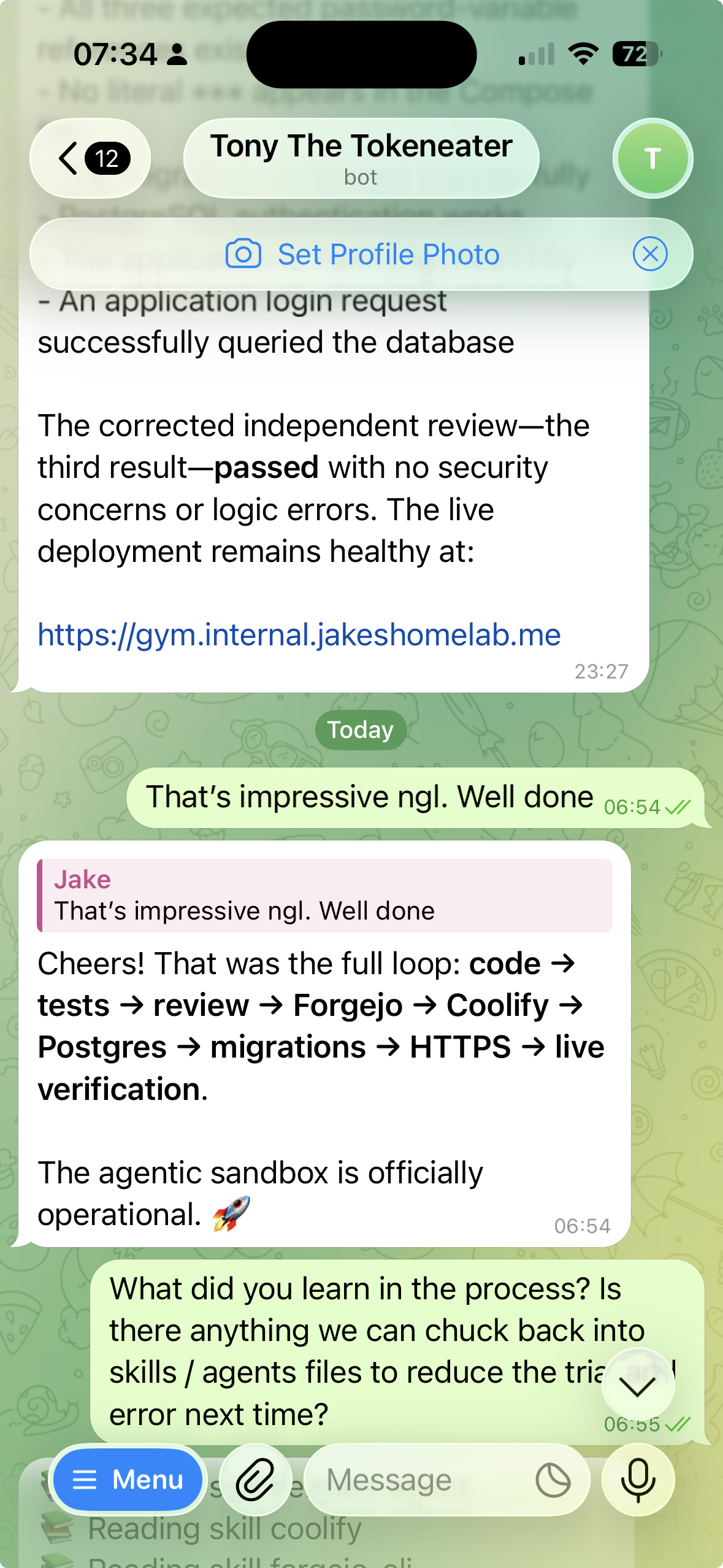
An LLM creates a full-stack remote development environment using Coolify. The setup includes multiple servers, Docker for hosting apps like Postgres and Redis, and integrations with Tailscale and Telegram.
An LLM was used to build a fully self-hosted, remote agentic dev environment. This setup uses Coolify as the core stack, enabling developers to run services on any subdomain dynamically. The environment supports Docker for hosting various apps like Postgres and Redis, and includes integrations with Tailscale for seamless network access and Telegram for agent communication. Developers can now create a robust remote development suite without relying on cloud providers.
Key Points
The core stack is self-hosted with Coolify, enabling dynamic service creation across subdomains
Docker underpins hosting of apps like Postgres (10GB), Redis, and others within the environment
Tailscale integration ensures home network follows user around, enhancing remote dev experience
Telegram allows chatting with the agent from anywhere, integrating seamlessly into workflows
Forgejo serves as durable Git and CI storage, crucial for code versioning and continuous integration
Why It Matters
If you're a developer looking to set up a fully self-hosted remote dev environment, this setup using Coolify and Docker is game-changing. It allows dynamic service creation without cloud provider limitations. However, setting up Hermes and Firecrawl requires careful handling of keys for security.
Frequently Asked Questions
Why does this matter?
If you're a developer looking to set up a fully self-hosted remote dev environment, this setup using Coolify and Docker is game-changing. It allows dynamic service creation without cloud provider limitations. However, setting up Hermes and Firecrawl requires careful handling of keys for security.
What happened?
An LLM creates a full-stack remote development environment using Coolify. The setup includes multiple servers, Docker for hosting apps like Postgres and Redis, and integrations with Tailscale and Telegram.
Comments
Be the first to comment
Enjoyed this article?
Get it daily. 7am. Free. Reads in 5 minutes.
Join 3,303 builders reading daily.