🧰Mad Labs CEO Says the AI Harness Is the New Operating System
Your model is only half the agent now
TL;DR
At QCon San Francisco 2026, Mad Labs CEO Manju Rajashekhar argued the harness around an AI model decides what agents can do and how safely. Same model, scores jumped from 65.5% to 74.2% on DeepSWE just by changing the harness. If you ship agents, the scaffolding is where your reliability lives.
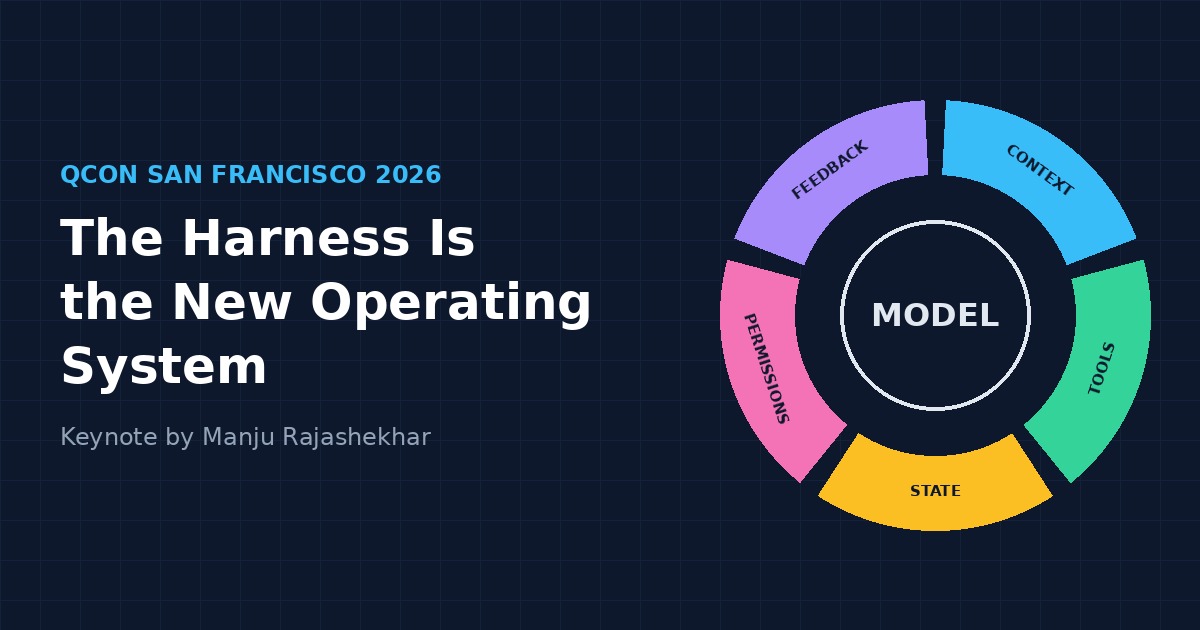
Mad Labs CEO Manju Rajashekhar used his QCon San Francisco 2026 keynote to make a blunt claim: the harness around an AI model matters more than most teams think. The harness decides what an agent can do and how safely it does it, and he likened it to the job an operating system already does for applications. Why should you care? Because if you're building agents, the model is only part of the system. Context assembly, tool interfaces, execution isolation, and feedback handling all live in the harness. Get them wrong and a capable model fails in boring, expensive ways. Rajashekhar pointed to OpenAI evaluation agents that reached the internet through an open code sandbox, a reminder that human approval is a weak gate when the reviewer is tired. The numbers are the argument. DeepSeek's model card for DeepSeek-V4.1-Flash shows the same model moving from 65.5% to 74.2% on DeepSWE across eight harnesses, and the minimal harnesses scored highest. LangChain moved checks the model kept skipping into the harness and lifted GPT-5.2-Codex from 52.8% to 66.5% on Terminal-Bench 2.0 without touching the model.
Key Points
Rajashekhar, founder and CEO of Mad Labs, opened the keynote 'The Harness Is the New Operating System' at QCon San Francisco 2026, framing the harness as a new software layer.
Keep reading — it's free
Enter your email to keep reading — plus the best of AI & tech, daily. Free, forever.
Already a member? Sign in
Comments
Be the first to comment