🤖MIT FloatForm: Swarm Robots Form Reconfigurable Water Structures
Swarm robots self-assemble into water structures on demand
TL;DR
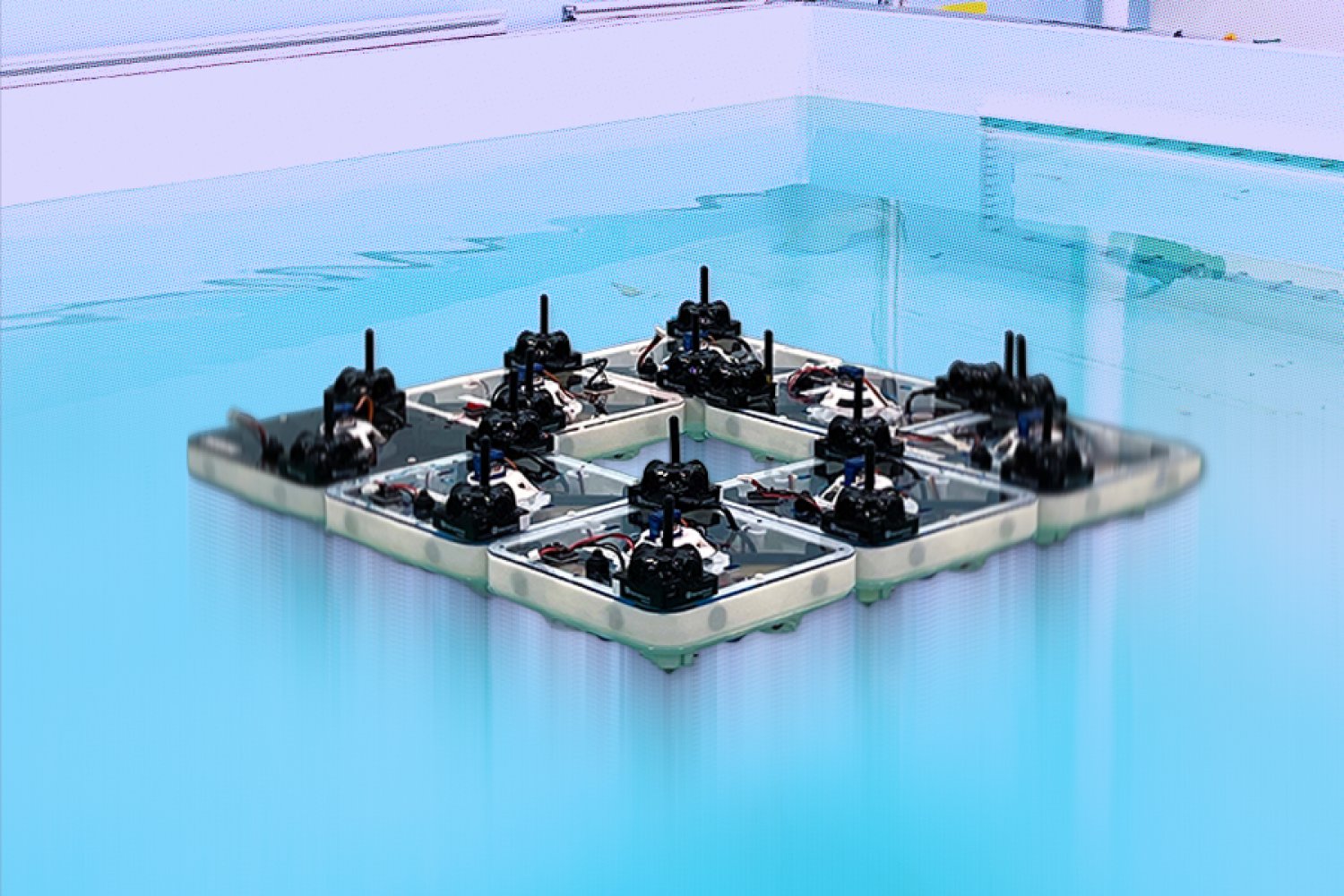
MIT's FloatForm is a swarm of small aquatic robots that can snap together to form reconfigurable structures. Each robot, about 21cm square, autonomously coordinates with neighbors to create bridges or platforms on demand.
MIT researchers developed FloatForm, a swarm of small aquatic robots that can self-assemble into various water-based structures like bridges and platforms. These robots are about 21 centimeters square each, equipped with thrusters, sensors, and magnetic latches for minimal human direction. Developers should care because this technology could revolutionize emergency response, public space management, and infrastructure on water. Each robot can break apart and reassemble into new configurations, scaling smoothly to swarms of up to 64 robots without bogging down computation.
Key Points
FloatForm robots are about 21cm square, with thrusters, sensors, and magnetic latches (Nature Communications).
Each robot autonomously coordinates with neighbors to form reconfigurable water-based structures like bridges or platforms on demand.
The system scales smoothly from a few dozen to hundreds of robots without computational issues.
Roboat, the joint project with Amsterdam Institute for Advanced Metropolitan Solutions, inspired FloatForm's development.
FloatForm shrinks Roboat’s vision down to tabletop scale to explore how dozens or thousands of floating robots can organize themselves.
Why It Matters
If you're working on emergency response systems or public space management, FloatForm could change your approach. Imagine deploying a swarm of these robots to quickly form bridges for evacuation or platforms for rescue operations. The technology's ability to self-organize and adapt without human intervention makes it particularly compelling.
Comments
Be the first to comment
Enjoyed this article?
Get it daily. 7am. Free. Reads in 5 minutes.
Join 3,483 builders reading daily.