🐳Narwhal Tusks: Secret to Remarkable Stiffness and Strength
The narwhal tusk's double helix structure explained
TL;DR
Scientists uncover the secret behind narwhal tusks: a double-helix structure that makes them incredibly strong. The collagen and hydroxyapatite in their tusks form left- and right-handed helices, giving them remarkable stiffness.
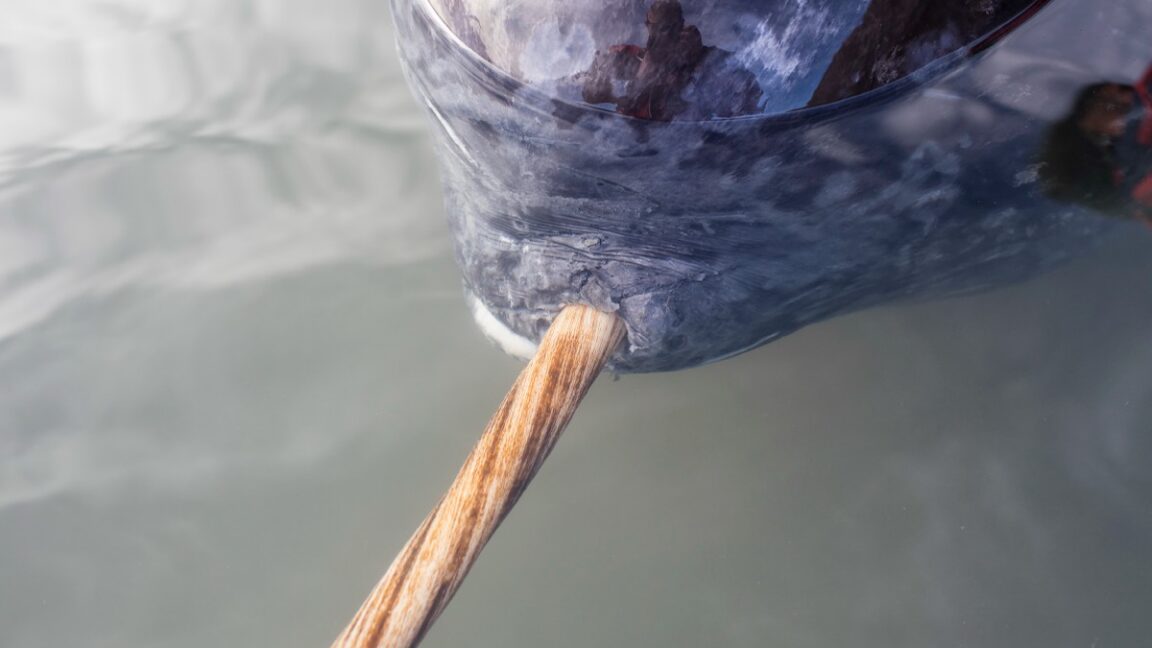
Narwhals are known for their distinctive spiral tusks, but scientists have recently discovered the secret to their strength: a double-helix structure within the tusk's composition. This unique arrangement of collagen fibrils and hydroxyapatite nanoparticles along the longitudinal axis provides exceptional stiffness and durability. For developers working on biomimetic materials or studying natural structures for engineering applications, understanding how narwhal tusks achieve such remarkable properties could inspire new designs in everything from construction to robotics. The tusk's material composition includes a left-handed helix of cementum and a right-handed helix of dentine, creating the double-helix structure. This intricate arrangement allows the tusk to withstand significant bending and twisting forces without cracking. Additionally, narwhals may use their tusks for sensing environmental changes or as weapons in fights, though direct evidence is limited. Narwhal tusks can grow up to 3 meters long and are composed of dentine covered by cementum. They develop two long spiral tusks or none at all, with females rarely developing a tusk. The tusks contain millions of nerve endings, suggesting potential sensory functions.
Key Points
Narwhals develop two long spiral tusks or none at all; females rarely grow a tusk
The tusk is composed of dentine covered by cementum, forming a double helix structure
Collagen fibrils and hydroxyapatite nanoparticles orient along the longitudinal axis of the tusk
Narwhal tusks can withstand strong forces like bending and twisting without cracking
Scientists plan to study further using micro- and nano-beam experiments
Why It Matters
For developers working on biomimetic materials, understanding narwhal tusks' double-helix structure could inspire new designs in construction or robotics. The collagen and hydroxyapatite arrangement provides exceptional stiffness and durability, potentially leading to breakthroughs in engineering applications.
Frequently Asked Questions
Why does this matter?
For developers working on biomimetic materials, understanding narwhal tusks' double-helix structure could inspire new designs in construction or robotics. The collagen and hydroxyapatite arrangement provides exceptional stiffness and durability, potentially leading to breakthroughs in engineering applications.
What happened?
Scientists uncover the secret behind narwhal tusks: a double-helix structure that makes them incredibly strong. The collagen and hydroxyapatite in their tusks form left- and right-handed helices, giving them remarkable stiffness.
Comments
Be the first to comment
Enjoyed this article?
Get it daily. 7am. Free. Reads in 5 minutes.
Join 3,173 builders reading daily.