🚀NASA's SkyFall Helicopters Set for Mars in Late 2028
Mars exploration goes airborne with SkyFall
TL;DR
NASA's SkyFall mission will deploy three helicopters to Mars in late 2028, marking the first use of aerial drones for scientific exploration. Each helicopter will carry advanced cameras and sensors to study the Martian atmosphere and search for buried water ice.
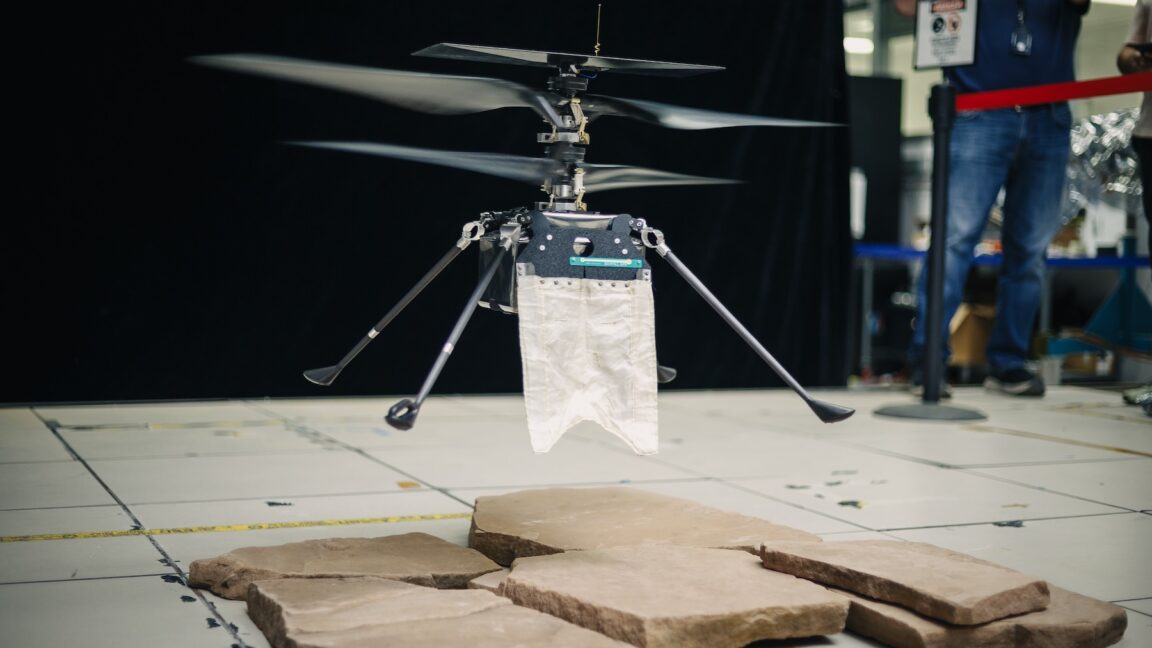
NASA's SkyFall mission will deploy three helicopters to Mars in late 2028, marking the first use of aerial drones for scientific exploration. These drones will carry advanced cameras and sensors to study the Martian atmosphere and search for buried water ice, potentially revealing new insights about the planet's history. The mission, part of the $2.1 billion Space Reactor-1 'Freedom' mission, aims to demonstrate the feasibility of nuclear electric propulsion in deep space and establish a repeatable product line for Mars helicopters. Each SkyFall helicopter will be larger than Ingenuity, with upgraded rotors to handle a heavier payload and larger rotor blades spinning at supersonic speeds in the thin Martian atmosphere.
Key Points
NASA's SkyFall mission will deploy three helicopters to Mars in late 2028, part of the $2.1 billion Space Reactor-1 'Freedom' mission.
Each SkyFall helicopter will carry a suite of cameras and sensors to study the Martian atmosphere and search for buried water ice.
SkyFall helicopters will enter the Martian atmosphere cocooned inside a protective heat shield, then release to autonomously land themselves under their own power.
The mission aims to demonstrate nuclear electric propulsion in deep space and establish a repeatable product line for Mars helicopters.
NASA's Jet Propulsion Laboratory is partnering with AeroVironment to design and build the SkyFall helicopters.
Why It Matters
If you're involved in Mars exploration, the SkyFall mission is a game changer. It marks the first use of aerial drones for scientific exploration, potentially revealing new insights about the planet's history. The mission will also demonstrate nuclear electric propulsion in deep space, a critical step for future Mars missions.
Frequently Asked Questions
Why does this matter?
If you're involved in Mars exploration, the SkyFall mission is a game changer. It marks the first use of aerial drones for scientific exploration, potentially revealing new insights about the planet's history. The mission will also demonstrate nuclear electric propulsion in deep space, a critical step for future Mars missions.
What happened?
NASA's SkyFall mission will deploy three helicopters to Mars in late 2028, marking the first use of aerial drones for scientific exploration. Each helicopter will carry advanced cameras and sensors to study the Martian atmosphere and search for buried water ice.
Comments
Be the first to comment
Enjoyed this article?
Get it daily. 7am. Free. Reads in 5 minutes.
Join 3,429 builders reading daily.