💰New Wage Model Predicts AI Impact on Labor and Housing
AI could slash human task 'edge', changing wages and rents
TL;DR
A new economic model predicts AI could further reduce human task efficiency, impacting wages and housing prices. The model, based on classical economics and input-output recursion, suggests taxing scarce resources to fund consumption.
A new economic model proposes AI could decrease the 'edge' of human tasks, impacting wages and housing prices. This model, developed over several months, uses classical economics and input-output recursion to predict how technology affects wages. It suggests taxing scarce resources like land to fund consumption, a strategy already used successfully in Norway. The model predicts rising housing prices and changing consumption patterns for goods that don't require much land.
Key Points
The model uses opus and fable to gather data, starting as a tax and benefits exercise.
The model adds classical economics and input-output recursion to 'pin' the wage, similar to Acemoglu and Restrepo's work.
Technology's effect on wages is modeled using the rental price of machines (cc) and the 'edge' of human tasks (γ(x*)).
The model predicts that AI might further decrease γ(x*), impacting wages and consumption patterns.
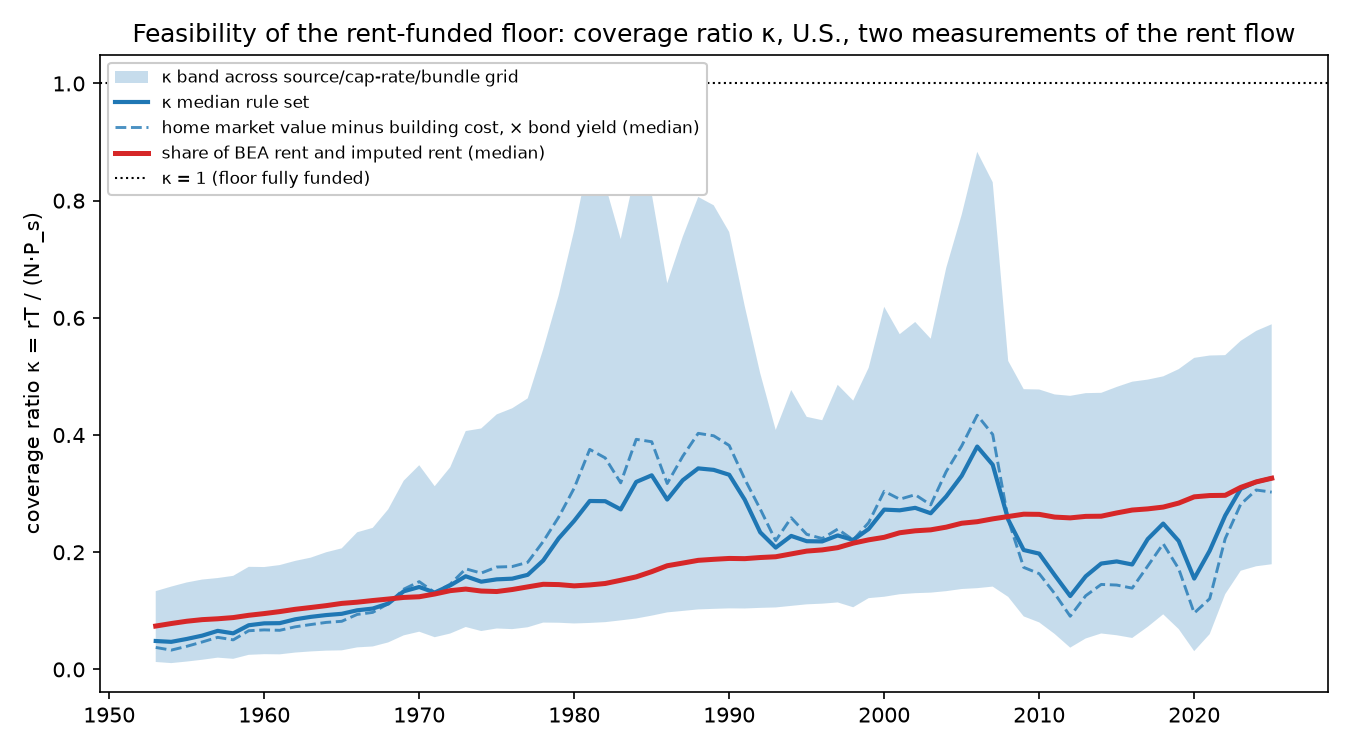
The model proposes taxing land and using a sovereign wealth fund to fund consumption, a strategy used successfully in Norway.
Why It Matters
This model impacts how economists and policymakers understand wage setting and resource allocation. If you're involved in economic policy or resource management, this model could change your approach to taxation and consumption funding. For instance, taxing land to fund consumption could stabilize economies, as seen in Norway.
Comments
Be the first to comment
Enjoyed this article?
Get it daily. 7am. Free. Reads in 5 minutes.
Join 3,484 builders reading daily.