🔭NVIDIA's CUDA-X Libraries Cut Black Hole Analysis From Month to Eight Minutes
Your month-long analysis jobs just got a lot shorter
TL;DR
NVIDIA released cuPhoton, cuPotential, cuSpa and more CUDA-X libraries for scientific computing. Black hole imaging analysis that took over a month now runs in eight minutes. If you run simulations or single-cell pipelines, these speedups change which datasets you can afford to analyze.
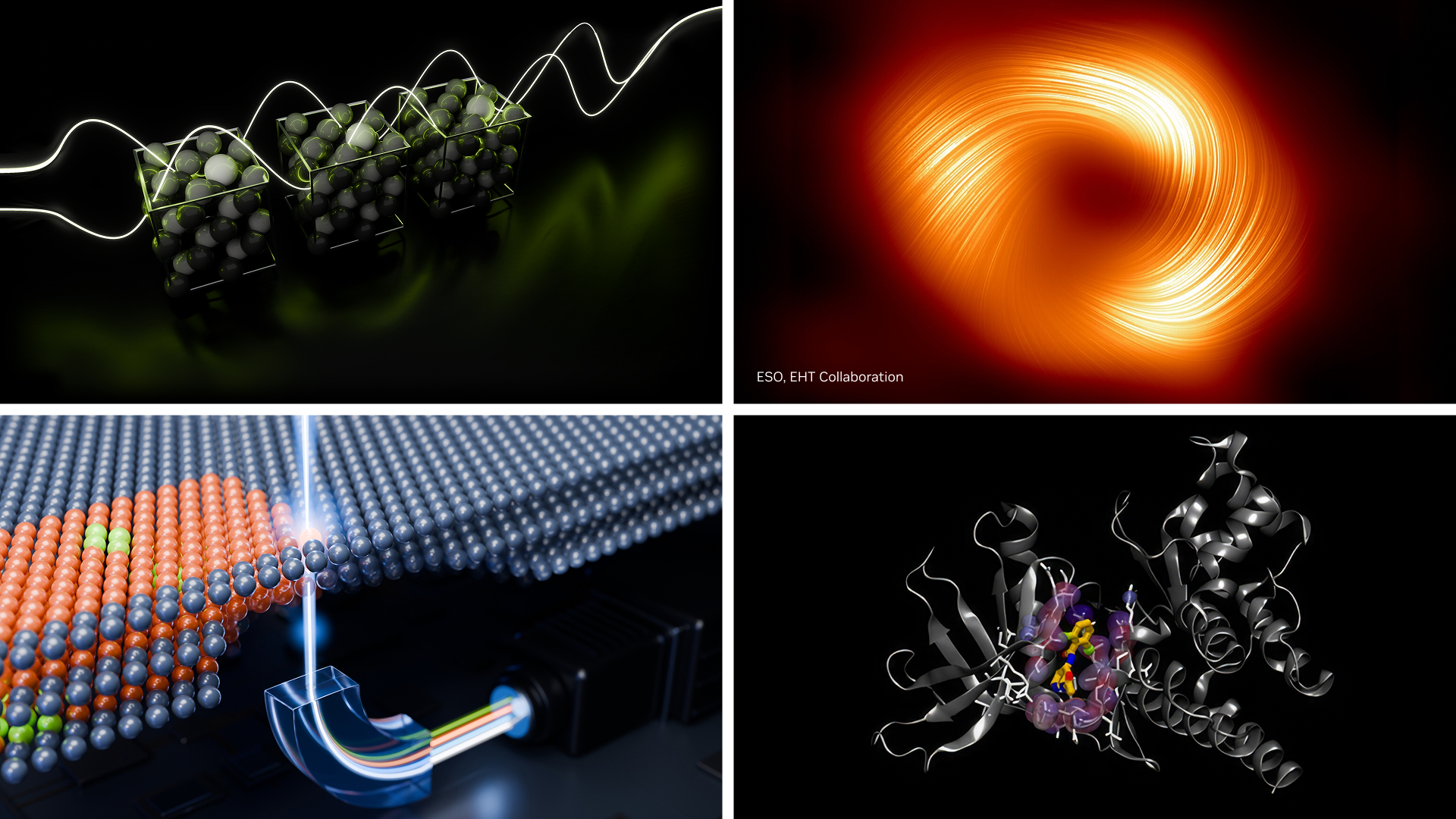
NVIDIA just shipped a batch of CUDA-X libraries aimed at science, and the headline number is wild: black hole observation correlation that used to take over a month now finishes in eight minutes. cuPhoton handles that work for Event Horizon Telescope data, and it also ran on the jets of J1924 and 3C279. If you're doing simulation or drug discovery, this is the part to pay attention to. cuPotential speeds up existing simulation software by up to 3x and improves calculation stability, while Daviator pushes quantum-chemistry runs up to 22x faster for a fraction of the spend. Those gains mean you can model bigger systems without rewriting your stack. The numbers keep stacking. cuSpa hits a 900x speedup over CPUs for cell polygon calculations, and GPU-accelerated HMMER runs benchmark searches up to 84x faster. Therna Biosciences saw 200x faster data processing with rapids-singlecell, and 10x Genomics has already built it into its Sentira platform. What to watch: NVIDIA is still working with the Flatiron Institute and D. E. Shaw Research to bring cuPotential into molecular dynamics engines, so full integration is not here yet.
Key Points
cuPhoton.xBeam correlates Event Horizon Telescope black hole observations orders of magnitude faster, cutting analysis that once took over a month down to eight minutes on distributed multi-GPU systems.
Keep reading — it's free
Enter your email to keep reading — plus the best of AI & tech, daily. Free, forever.
Already a member? Sign in
Comments
Be the first to comment