🔬OpenAI Model Disproves 80-Year-Old Erdős Conjecture
TL;DR
An OpenAI reasoning model independently disproved a 1946 Erdős conjecture in discrete geometry, a first for AI on an open problem central to a field. It found point configurations beating the square grid, and Fields medalist Tim Gowers called the result a milestone.
An OpenAI reasoning model independently disproved a 1946 Erdős conjecture in discrete geometry, a first for AI on an open problem central to a field. It found point configurations beating the square grid, and Fields medalist Tim Gowers called the result a milestone.
Key Points
Announced May 20, 2026 on OpenAI's research blog
Disproves the planar unit-distance conjecture Erdős posed in 1946
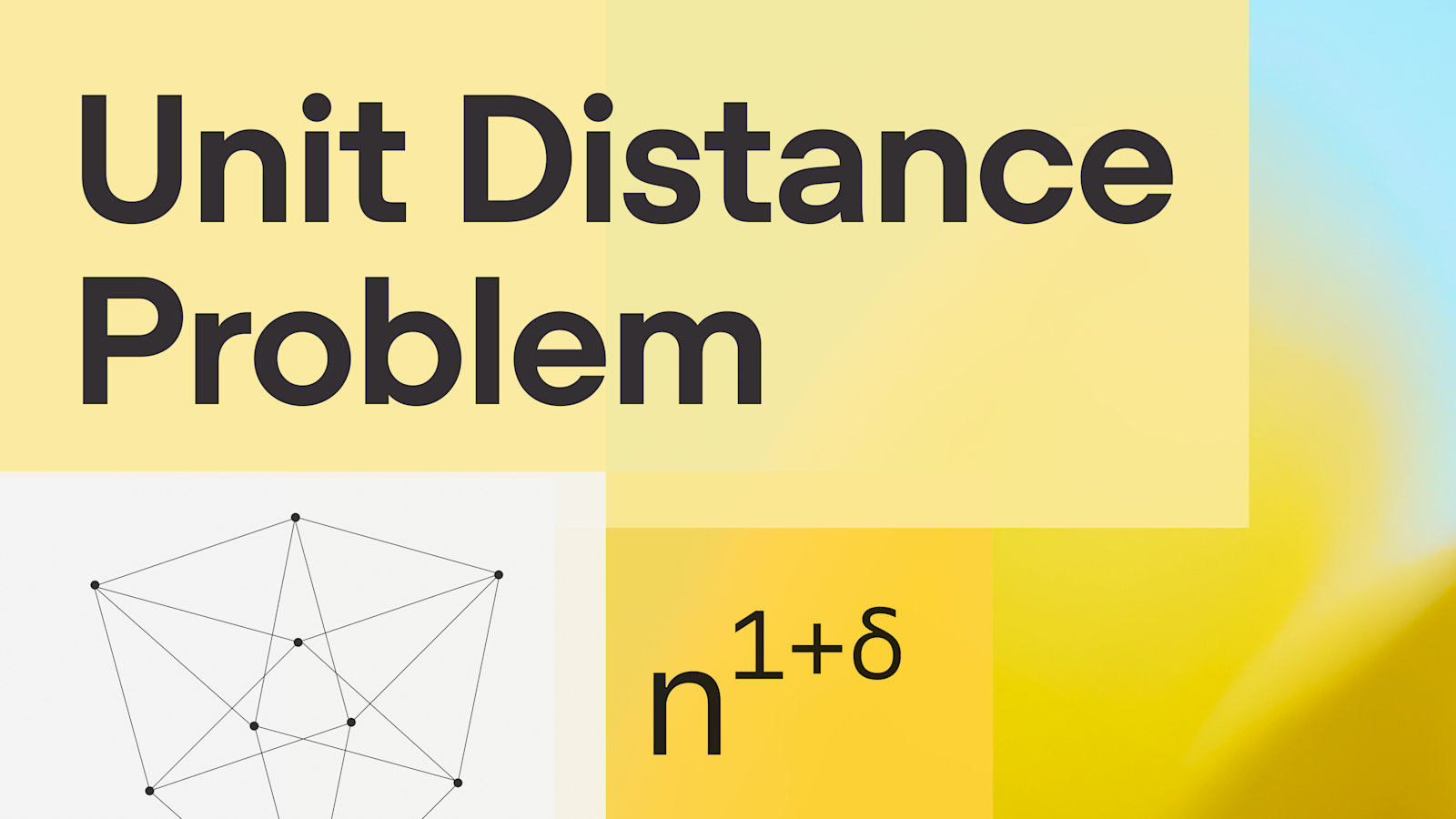
Found an infinite family of n^(1+δ) unit-distance configurations; δ later refined to 0.014 by Princeton's Will Sawin
Model was general-purpose, not trained for the problem, and proved it without step-by-step human guidance
Fields medalist Tim Gowers called it a milestone in AI mathematics
Why It Matters
If a general model can settle a decades-old open problem unaided, AI is shifting from solving known problems to producing genuinely new mathematics.
Quick Facts
Frequently Asked Questions
Why does this matter?
If a general model can settle a decades-old open problem unaided, AI is shifting from solving known problems to producing genuinely new mathematics.
What happened?
An OpenAI reasoning model independently disproved a 1946 Erdős conjecture in discrete geometry, a first for AI on an open problem central to a field. It found point configurations beating the square grid, and Fields medalist Tim Gowers called the result a milestone.
Comments
Be the first to comment
Enjoyed this article?
Get it daily. 7am. Free. Reads in 5 minutes.
Join 3,324 builders reading daily.