🦾Patent Filing Reveals Backpack Robot Arms That Mirror Your Movements in Under 20ms
Your motion capture suit just grew two extra arms
TL;DR
A new patent application describes a backpack-style rig with two seven-axis mechanical arms that copy a wearer's movements with under 20ms latency. It can record demonstrations for training humanoid robots or let a human teleoperate one in near real time. For anyone building robot training data, it's a cheaper route than lab mocap.
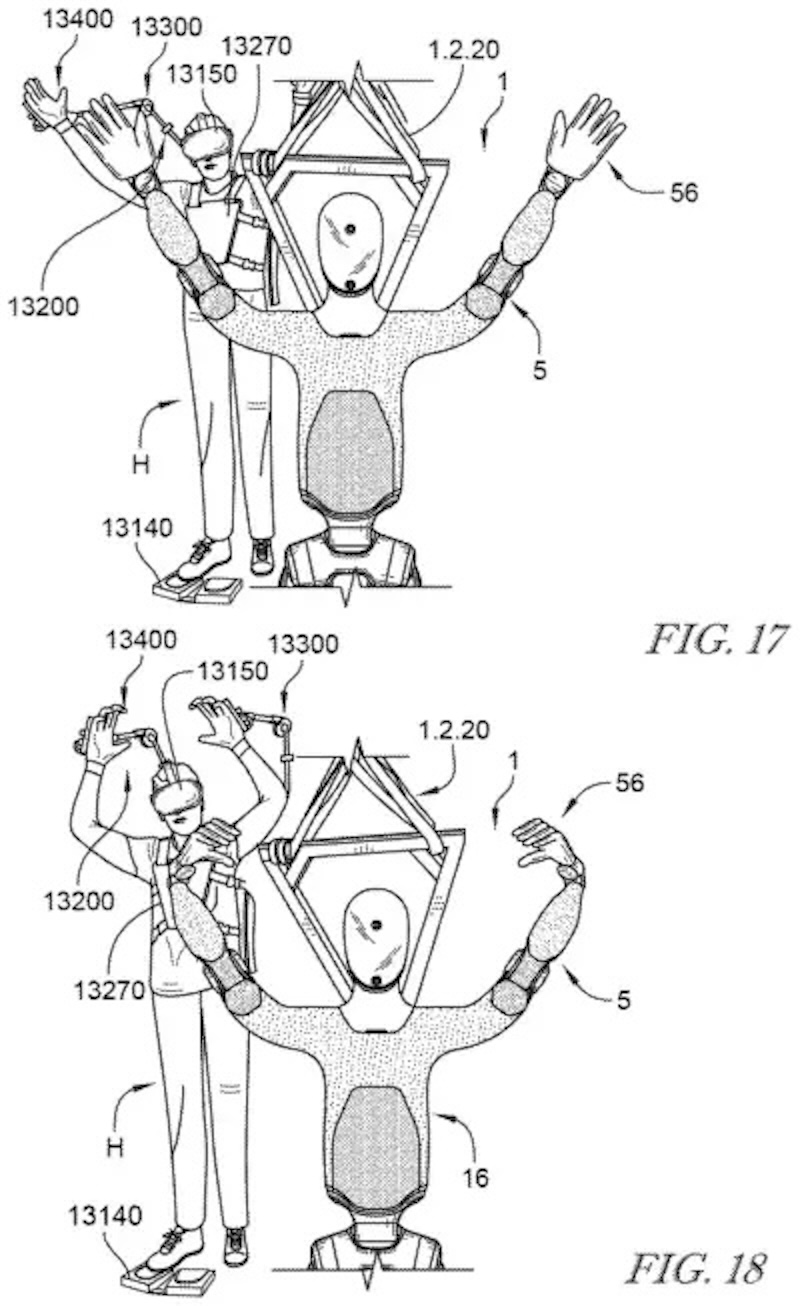
A patent filed June 26, 2026 describes a wearable backpack frame with two articulated mechanical arms that follow your arm movements. Strap it on and the arms track your shoulders, elbows, and wrists, and the glove attachments at the ends tie them to your hands. The pitch: capture real demonstrations from workers doing actual jobs, instead of paying for controlled motion-capture studios. If you're working on humanoid robotics or robot learning, this is the data pipeline problem in hardware form. Training physical robots needs enormous amounts of movement data, and today that usually means specialized rooms and expensive gear. A rig that records demonstrations in the field, or pipes them straight to a robot, changes what your data collection budget buys you. The specs are the interesting part. Each arm offers up to seven rotational axes, joint encoders measure positions, and IMUs track orientation. End-to-end latency from human movement to robot command is under 20 milliseconds. The patent also describes an ML-driven clutch that pauses data transmission during idle moments, and a headset feeding the robot's camera view back to the operator. Claims are fairly broad, covering wearable frames with articulated arms and movement sensors. Whether this becomes a product is anyone's guess, since patent filings don't guarantee shipping hardware.
Key Points
The system offers up to seven rotational axes per arm, letting it capture complex motions while fitting different body sizes across the operator population.
Keep reading — it's free
Enter your email to keep reading — plus the best of AI & tech, daily. Free, forever.
Already a member? Sign in
Comments
Be the first to comment