🚀PgBouncer Fleet Boosts Throughput to 336k TPS
Your PgBouncer setup just got faster and more efficient
TL;DR
Running multiple PgBouncer processes on a multi-core machine can boost transaction throughput to over 300k TPS. This setup also cuts CPU utilization in half compared to single-process configurations.
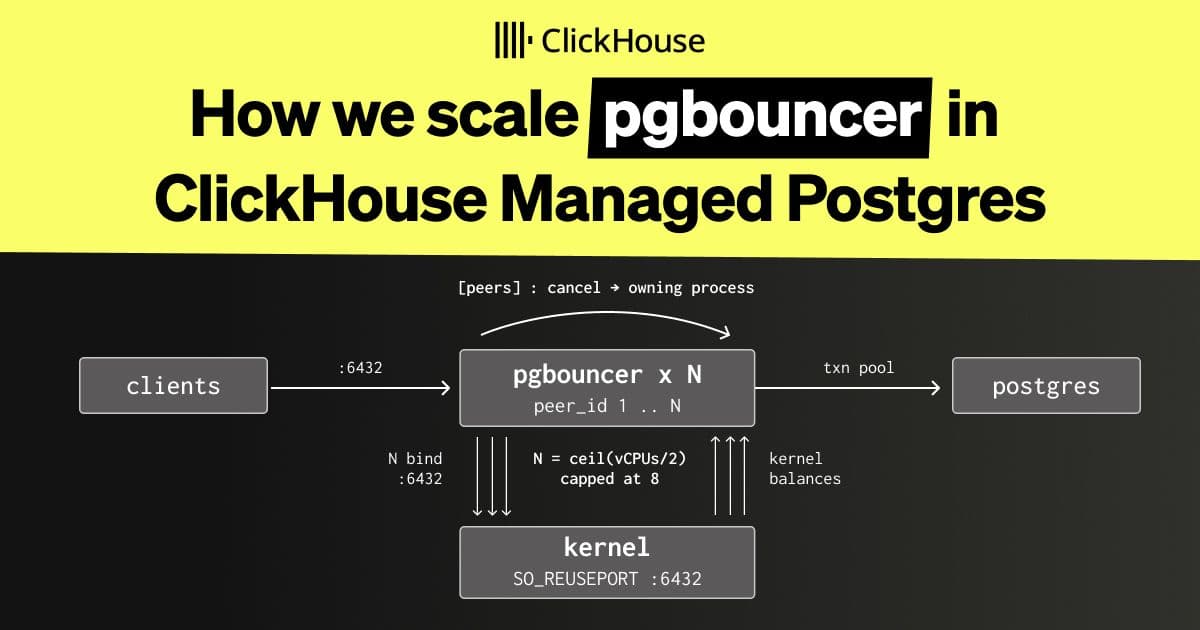
PgBouncer now supports running fleets of processes on multi-core machines, significantly boosting performance and efficiency. Developers should care because this setup can handle up to 336k transactions per second with a fleet of 16 processes, while a single process peaks at around 87k TPS before degrading under load. The key numbers: a single PgBouncer process reaches only 9% CPU utilization, whereas the fleet hits roughly 52%, spreading the load across cores and preventing Postgres oversubscription.
Key Points
A single PgBouncer process peaks at around 87k transactions per second before degrading under load
Running a fleet of 16 processes boosts throughput to roughly 336k transactions per second, using multiple cores efficiently
The CPU utilization drops from 9% for a single-process setup to about 52% for the fleet configuration
Pooling runs in transaction mode, returning server connections to the pool when a transaction commits without oversubscribing Postgres
ClickHouse Managed Postgres ships with this multi-core PgBouncer setup by default
Why It Matters
If you're running high-concurrency workloads on PgBouncer, splitting your load across multiple cores can nearly quadruple throughput. For instance, a fleet of 16 processes reaches roughly 336k TPS compared to the single-process peak of 87k TPS. Smaller databases might not see as much benefit due to overhead, but larger workloads will definitely notice.
Frequently Asked Questions
Why does this matter?
If you're running high-concurrency workloads on PgBouncer, splitting your load across multiple cores can nearly quadruple throughput. For instance, a fleet of 16 processes reaches roughly 336k TPS compared to the single-process peak of 87k TPS. Smaller databases might not see as much benefit due to overhead, but larger workloads will definitely notice.
What happened?
Running multiple PgBouncer processes on a multi-core machine can boost transaction throughput to over 300k TPS. This setup also cuts CPU utilization in half compared to single-process configurations.
Comments
Be the first to comment
Enjoyed this article?
Get it daily. 7am. Free. Reads in 5 minutes.