🤖Simile Hits 85% Accuracy Simulating 1,000 Real People
TL;DR
Joon Sung Park, author of the 2023 Generative Agents paper, explains how Simile builds digital twins that match real human behavior 85% of the time. His argument: simulation is the next scaling law, and survey research is the first casualty.
Joon Sung Park, author of the 2023 Generative Agents paper, explains how Simile builds digital twins that match real human behavior 85% of the time. His argument: simulation is the next scaling law, and survey research is the first casualty.
Key Points
Park co-founded Simile with Stanford collaborators Michael Bernstein and Percy Liang
Digital twins of 1,000 interviewed people reach roughly 85% behavioral accuracy, well above prior persona-prompting baselines
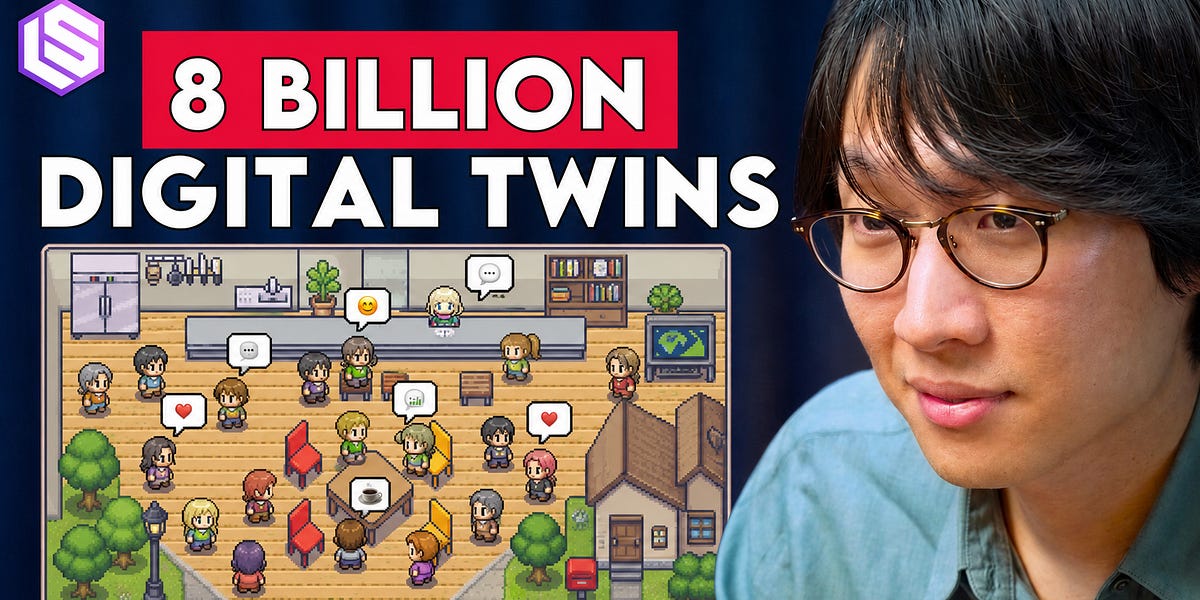
Traces the line from the 2023 Smallville 'Generative Agents' paper and its precursor Social Simulacra
Simile post-trains on randomized controlled trials and replication studies rather than generic web text
Customers run population-level queries and experiments against simulated cohorts instead of fielding surveys
Why It Matters
If simulated populations hold at 85% fidelity, product research, polling and policy testing all get a cheaper substitute before anyone agrees on how to validate it.
Quick Facts
Frequently Asked Questions
Why does this matter?
If simulated populations hold at 85% fidelity, product research, polling and policy testing all get a cheaper substitute before anyone agrees on how to validate it.
What happened?
Joon Sung Park, author of the 2023 Generative Agents paper, explains how Simile builds digital twins that match real human behavior 85% of the time. His argument: simulation is the next scaling law, and survey research is the first casualty.
Comments
Be the first to comment
Enjoyed this article?
Get it daily. 7am. Free. Reads in 5 minutes.
Join 3,315 builders reading daily.