🌍SNO+ Detects 50 Geoneutrinos in November 2025
New Insights into Earth's Mantle Heat Engine
TL;DR
The SNO+ experiment in Canada detected its first geoneutrinos this November, bumping up the global count by about 50. This could hint at non-uniform structures deep within Earth's mantle.
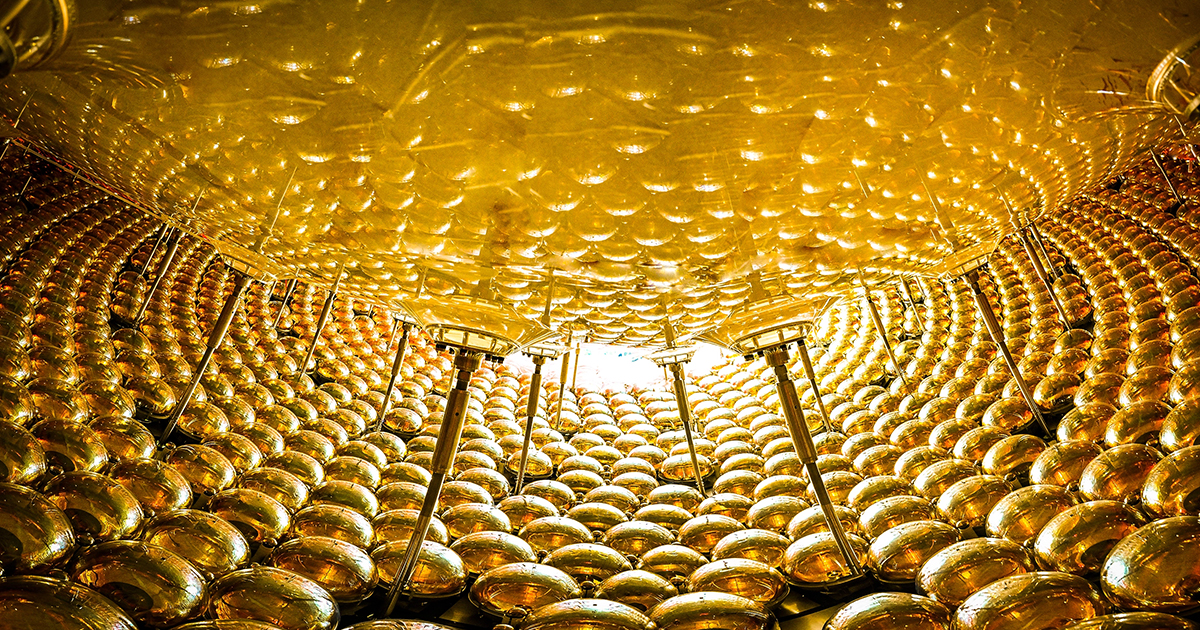
SNO+, a neutrino detector buried deep underground in Canada, reported its first detection of geoneutrinos in November 2025, adding roughly 50 new particles to the global count. Why should you care? These tiny particles offer direct insight into radioactive elements heating Earth's mantle, potentially revealing non-uniform structures deep within our planet. The SNO+ detector itself is an impressive feat of engineering: a sphere lined with nearly 10,000 light detectors and filled with 780 tons of scintillator liquid.
Key Points
The SNO+ experiment reported its first detection of 50 geoneutrinos in November 2025.
SNO+ is located deep underground, shielded from cosmic rays by 2 kilometers of rock.
Each geoneutrino detected provides insight into the radioactive elements heating Earth's mantle.
The SNO+ detector uses nearly 10,000 sensitive light detectors to capture these particles.
Geoneutrinos could reveal non-uniform structures within the mantle that were previously unknown.
Why It Matters
If you're studying geophysics or planetary science, this is a big deal. SNO+ detects geoneutrinos produced by radioactive elements in Earth's mantle, potentially revealing deep structures not seen before. However, uncertainties remain about whether these detections reflect true differences in the mantle or variations in detector sensitivity.
Frequently Asked Questions
Why does this matter?
If you're studying geophysics or planetary science, this is a big deal. SNO+ detects geoneutrinos produced by radioactive elements in Earth's mantle, potentially revealing deep structures not seen before. However, uncertainties remain about whether these detections reflect true differences in the mantle or variations in detector sensitivity.
What happened?
The SNO+ experiment in Canada detected its first geoneutrinos this November, bumping up the global count by about 50. This could hint at non-uniform structures deep within Earth's mantle.
Comments
Be the first to comment
Enjoyed this article?
Get it daily. 7am. Free. Reads in 5 minutes.