🚀Starship's 14th Flight Reaches Orbit with 26 Starlink V3 Satellites
Starship finally reaches orbit, hauling next-gen Starlink
TL;DR
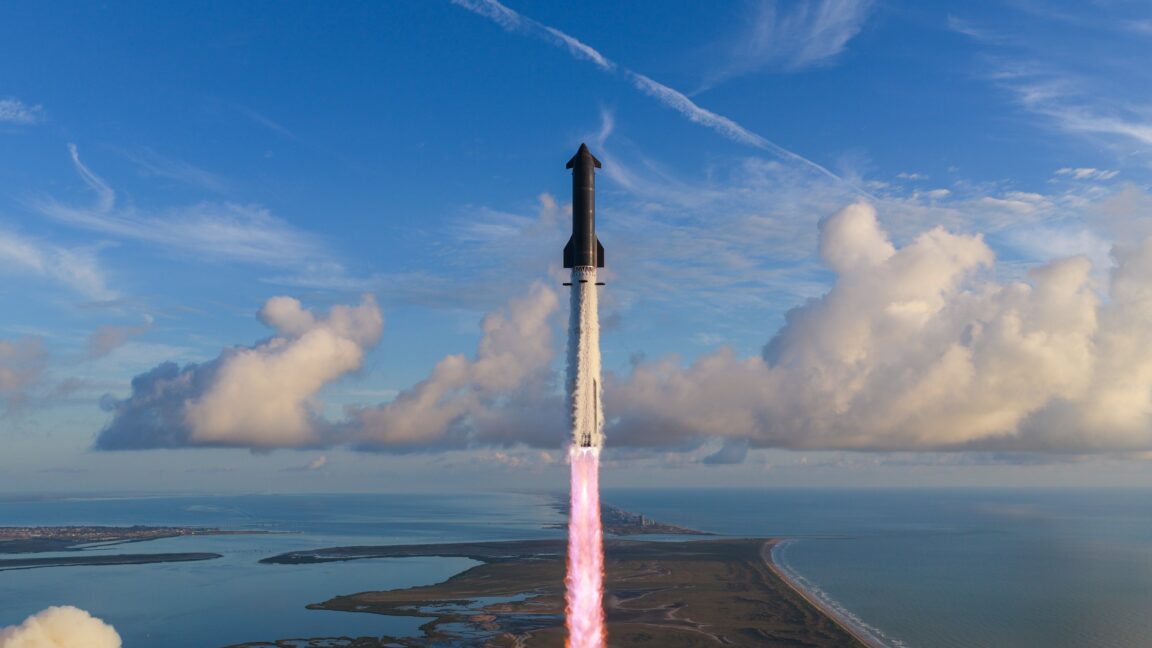
SpaceX's Starship rocket successfully reached orbit for the first time, deploying 26 Starlink V3 satellites. Each satellite adds 1 Tbps of capacity to the network, marking a significant upgrade to the constellation.
SpaceX's Starship rocket reached orbit for the first time on its 14th flight, deploying 26 next-gen Starlink V3 satellites. This marks a major milestone for SpaceX's ambitious space program. The Starlink V3 satellites bring significant upgrades, including larger solar arrays and improved antennas, adding 1 Tbps of capacity to the network. With this success, SpaceX can now launch up to 60 Starlink V3 satellites per flight, accelerating the expansion of the Starlink constellation. The rocket's Raptor engines showed resilience, compensating for a premature shutdown and two booster engine failures, demonstrating the system's robustness.
Key Points
Starship's 14th flight reached orbit on Monday, deploying 26 Starlink V3 satellites.
Each Starlink V3 satellite weighs 2 metric tons and adds 1 Tbps of capacity to the network.
Starship's Raptor engines compensated for a premature shutdown, demonstrating system resilience.
Two of the 33 Raptor engines on the Super Heavy booster failed during the booster's return maneuvers.
SpaceX expects to launch Starship into higher-inclination orbits as it gains flight experience.
Why It Matters
The successful orbital flight of Starship with 26 Starlink V3 satellites marks a significant milestone for SpaceX's ambitious space program. Each Starlink V3 satellite adds 1 Tbps of capacity to the network, significantly enhancing the Starlink constellation's capabilities. This upgrade is crucial for regions with limited internet access, as it enables faster and more reliable broadband services.
Comments
Be the first to comment
Enjoyed this article?
Get it daily. 7am. Free. Reads in 5 minutes.
Join 3,518 builders reading daily.