💡Tiny Crystal Defect Reveals Quantum Surprise
A small flaw could lead to big advances in quantum tech
TL;DR
Researchers discovered a new energy-loss pathway in quantum materials, potentially improving quantum computing and sensing. The findings, published in Physical Review Letters, could help design better materials for quantum technologies.
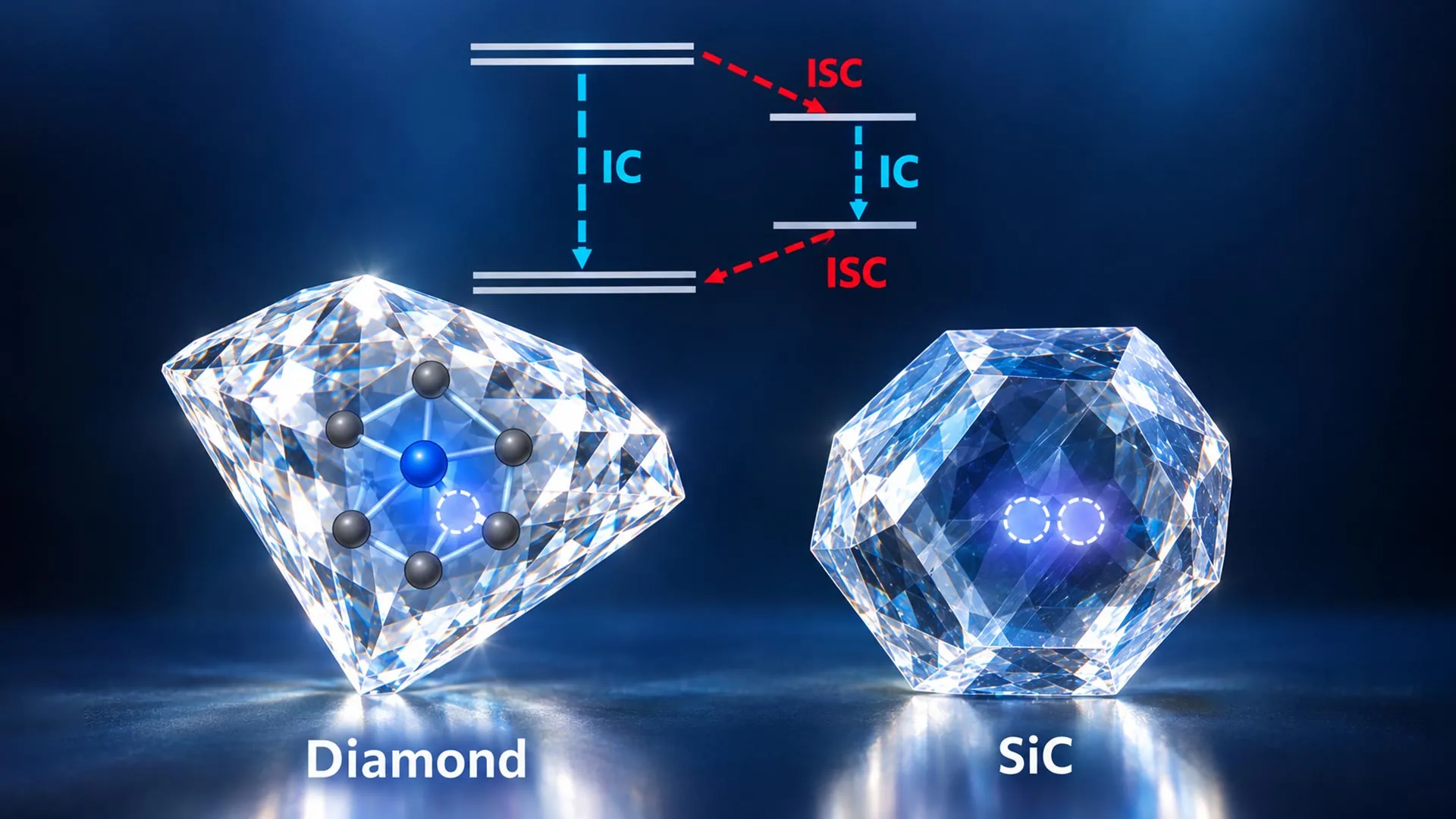
Researchers have uncovered a surprising energy-loss mechanism in quantum materials, revealing a new pathway for energy transfer in spin defects. This discovery could lead to better materials for quantum computing and sensing. The computational method, which simulates the entire optical cycle including internal conversion, can predict how energy changes over time in these defects. The findings could help scientists design more efficient quantum technologies, including sensors and qubits. The method is now available through WEST, an open-source simulation program optimized for GPUs.
Key Points
Tiny defects in materials like diamond and silicon carbide reveal unexpected energy-loss pathways, published in Physical Review Letters.
The computational method uses many-body wavefunctions to represent excited states of spin defects, providing a more complete picture.
The method simulates the entire optical cycle, including internal conversion, a particularly difficult process to study.
The researchers tested their approach on nitrogen-vacancy centers in diamond and divacancy defects in silicon carbide.
The new framework is now available through WEST, an open-source simulation program optimized for GPUs.
Why It Matters
If you're designing quantum sensors or qubits, this discovery could help you predict the behavior of silicon carbide defects more accurately. The computational method provides a more complete picture of energy transfer in spin defects, potentially improving the efficiency of quantum technologies. The findings could also impact renewable energy conversion and storage.
Comments
Be the first to comment
Enjoyed this article?
Get it daily. 7am. Free. Reads in 5 minutes.
Join 3,567 builders reading daily.