🔍Uber Eats Cuts Search Latency by 50% with Agentic Workflow
Uber Eats slashes search time, here's how
TL;DR
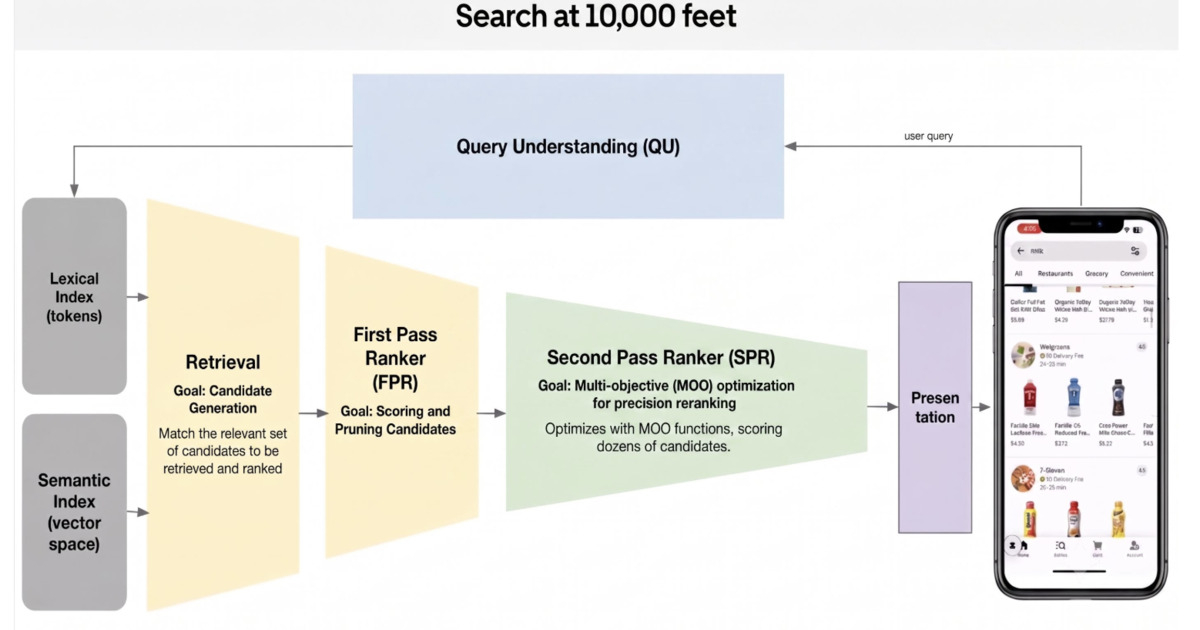
Uber Eats improved its search pipeline, reducing latency by 50% through a series of incremental optimizations. The company used an agentic coding workflow to identify and validate optimizations, focusing on reducing unnecessary work rather than speeding up existing processes.
Uber Eats just cut its search latency by 50% through a series of incremental optimizations. The company used an agentic coding workflow to identify and validate optimizations, focusing on reducing unnecessary work rather than speeding up existing processes. This approach has drawn attention from engineers discussing the work publicly, highlighting the effectiveness of doing less work and avoiding unnecessary waiting. Key optimizations included pagination with server-side caching, asynchronous rendering, and product-level embeddings that reduced data lookups by more than 100 times.
Key Points
Uber Eats reduced end-to-end search latency by 50% using an agentic coding workflow.
Above-the-Fold latency improved by more than 200 milliseconds.
Product-level embeddings reduced data lookups by more than 100 times.
Separating ranking hydration from presentation data reduced latency by more than 100 milliseconds.
Early product-based search testing produced more than a 50% reduction in p99 latency.
Why It Matters
If you're building a search pipeline, Uber Eats' approach to incremental optimization can significantly reduce latency. By focusing on doing less work and avoiding unnecessary waiting, developers can improve user experience without major architectural changes. This is particularly relevant for teams using Apache Lucene, Spark-based indexing, Kafka-based streaming updates, and a distributed serving layer.
Comments
Be the first to comment
Enjoyed this article?
Get it daily. 7am. Free. Reads in 5 minutes.
Join 3,564 builders reading daily.