📉UC Irvine Study Finds AI Boosts Coding Activity But Not Shipped Outcomes
Your AI coding stats might be lying to you
TL;DR
A UC Irvine seminar on October 30, 2026 argued AI coding tools raise activity metrics without improving shipped outcomes. Backed by 30 interviews and an NBER working paper, it's a warning for teams measuring productivity by commits and PRs.
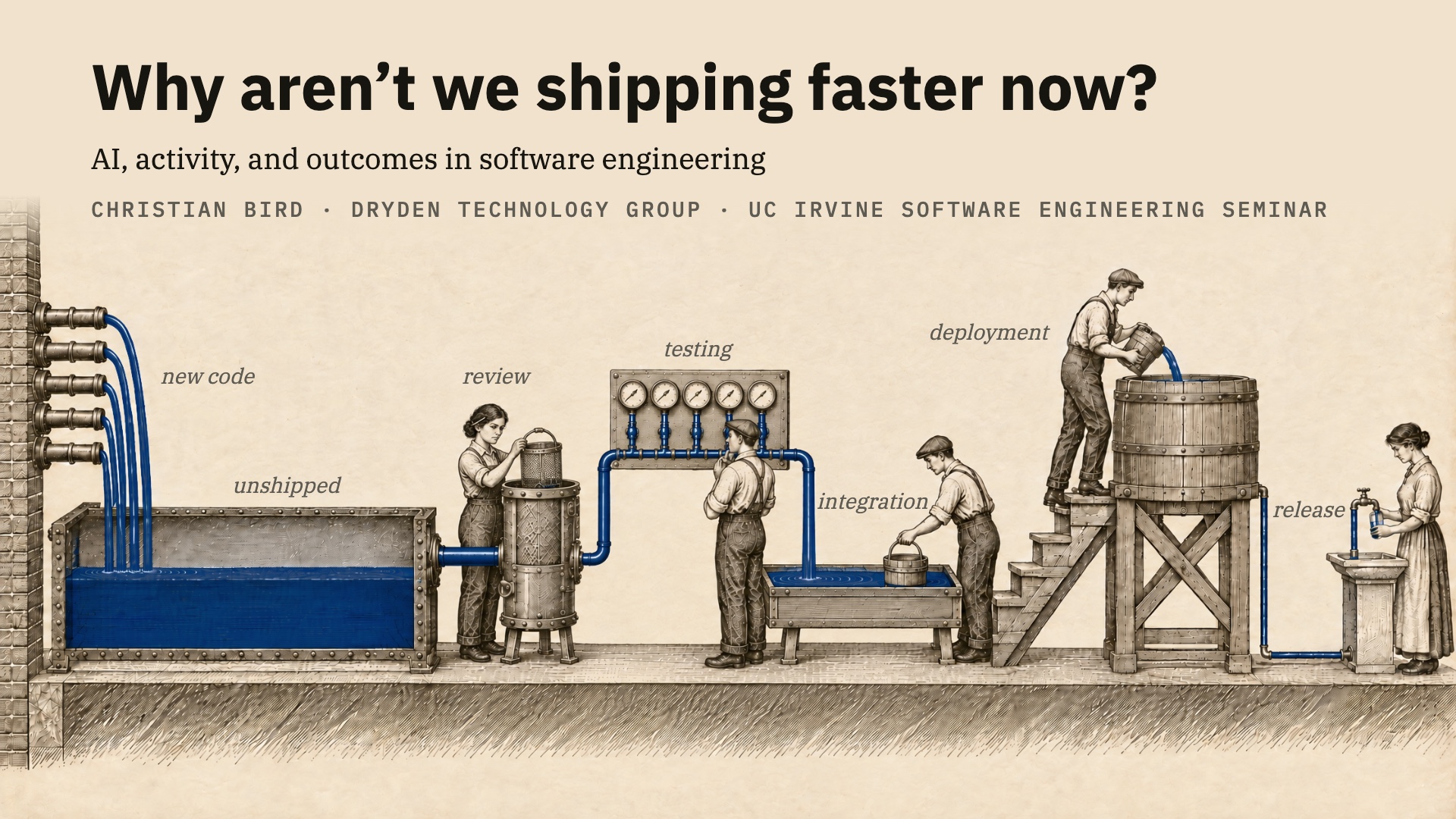
AI coding tools make you busier. They don't make you ship faster. That's the core argument from a 21-minute UC Irvine software engineering seminar held October 30, 2026, and the evidence behind it is more interesting than the headline. If your team tracks commits, PRs, or lines of code as productivity, this should bother you. The research centers on what it calls the activity-outcome gap: activity goes up with AI assistance, but features reaching users don't follow. Engineering managers using activity dashboards to justify tool spend are the ones most exposed here. The numbers come from several papers. The Activity-Outcome Gap paper draws on 30 interviews. An NBER Working Paper (35275) compares productivity across generations of AI coding tools, separating writing code from shipping code. The slides run 19 pages, and a 41-page full deck is also available. The seminar is on YouTube with captions. Watch the follow-up work on code review agents. A separate paper benchmarks review agents on bug detection and asks when a software factory should run lights-off. That's the next bottleneck once generation gets cheap.
Key Points
The seminar, titled Why aren't we shipping faster now, was held October 30, 2026, as part of the UC Irvine software engineering seminar series.
Keep reading — it's free
Enter your email to keep reading — plus the best of AI & tech, daily. Free, forever.
Already a member? Sign in
Comments
Be the first to comment