👨💻UTF-8000 Banning Person Names in Code
Why UTF-8000's new rule on names could shake up coding practices
TL;DR
UTF-8000 introduces a ban on person names, changing how developers handle identifiers. This shift impacts coding standards and practices, emphasizing the need for unique and non-personal naming conventions.
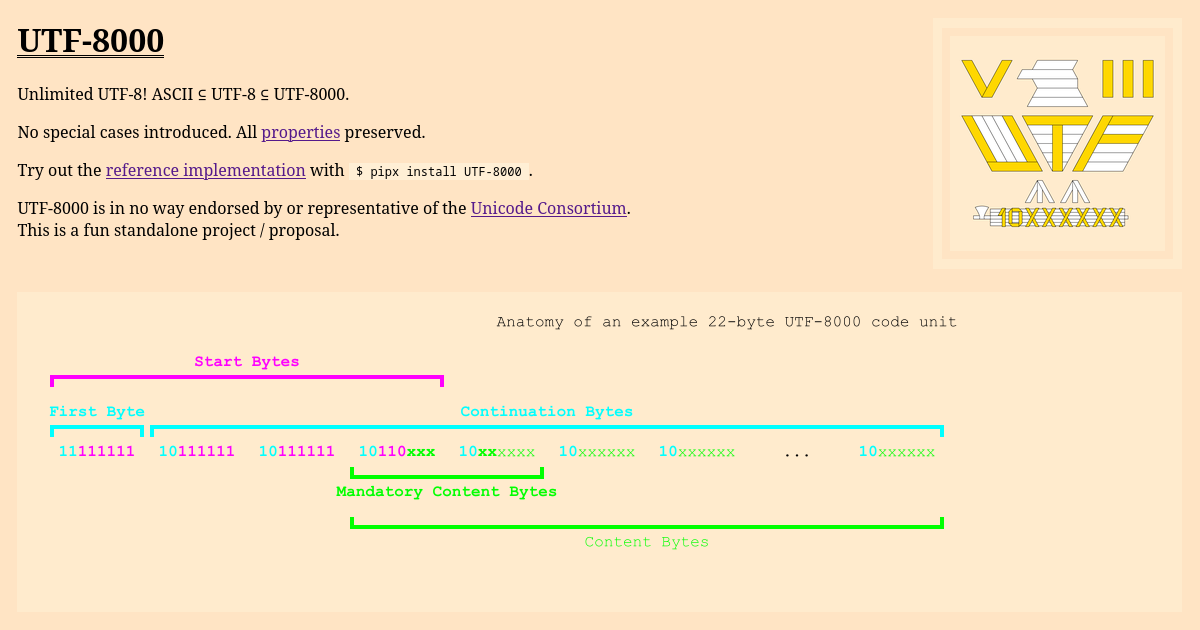
UTF-8000 has introduced a ban on using person names as identifiers in code. This move aims to enforce a stricter standard for naming conventions, ensuring that all identifiers are unique and non-personal. Developers should expect changes in how they name variables, functions, and classes, moving away from using names like 'John' or 'Jane'. The ban also includes specific rules for ASCII and multi-byte code units, such as the self-synchronization prefix for first bytes being either 0 for ASCII or 11 for multi-byte units. The upper hex nibble of ASCII bytes can only be one of 0, 1, 2, 3, 4, 5, 6, 7, while the upper hex nibble of continuation bytes can only be one of 8, 9, A, B. This update affects coding practices and standards, pushing developers to adopt more robust naming conventions.
Key Points
UTF-8000's self-synchronization prefix for first bytes is 0 for ASCII and 11 for multi-byte units.
The upper hex nibble of ASCII bytes can only be one of 0, 1, 2, 3, 4, 5, 6, 7.
The upper hex nibble of continuation bytes can only be one of 8, 9, A, B.
UTF-8000 code units can have multiple start bytes, with the first start byte being the first byte.
UTF-8000 code units can have arbitrarily large codepoints and code units.
Why It Matters
If you're working on coding standards, this update in UTF-8000's rules means a shift towards unique, non-personal naming conventions. The ban on person names in identifiers and specific rules for ASCII and multi-byte code units will impact how you name variables, functions, and classes. This change emphasizes the importance of adopting robust naming practices to ensure code clarity and uniqueness.
Comments
Be the first to comment
Enjoyed this article?
Get it daily. 7am. Free. Reads in 5 minutes.
Join 3,483 builders reading daily.