🤖WorMa Robot Climbs Slopes and Swims with Water Balloons
A robot that climbs and swims by shifting water
TL;DR
WorMa, an amphibious robot, climbs slopes up to 19.5 degrees and swims faster by shifting water between two balloons. It's controlled externally but aims for autonomy.
WorMa, an amphibious robot, climbs slopes up to 19.5 degrees and swims 26% faster by shifting water between two latex balloons. This mechanism allows it to adapt to both land and water environments, making it a versatile tool for terrain-challenged applications. Developers working on robotics and amphibious vehicles should pay attention to WorMa's innovative weight-shifting technology, which could inspire new approaches in autonomous navigation. The robot, measuring 50 cm long and weighing 1 kg, uses a pump to move water between its head and tail, shifting its center of mass for better grip and stability. It can climb steps up to 15 cm high and get out of water by shifting water to its head.
Key Points
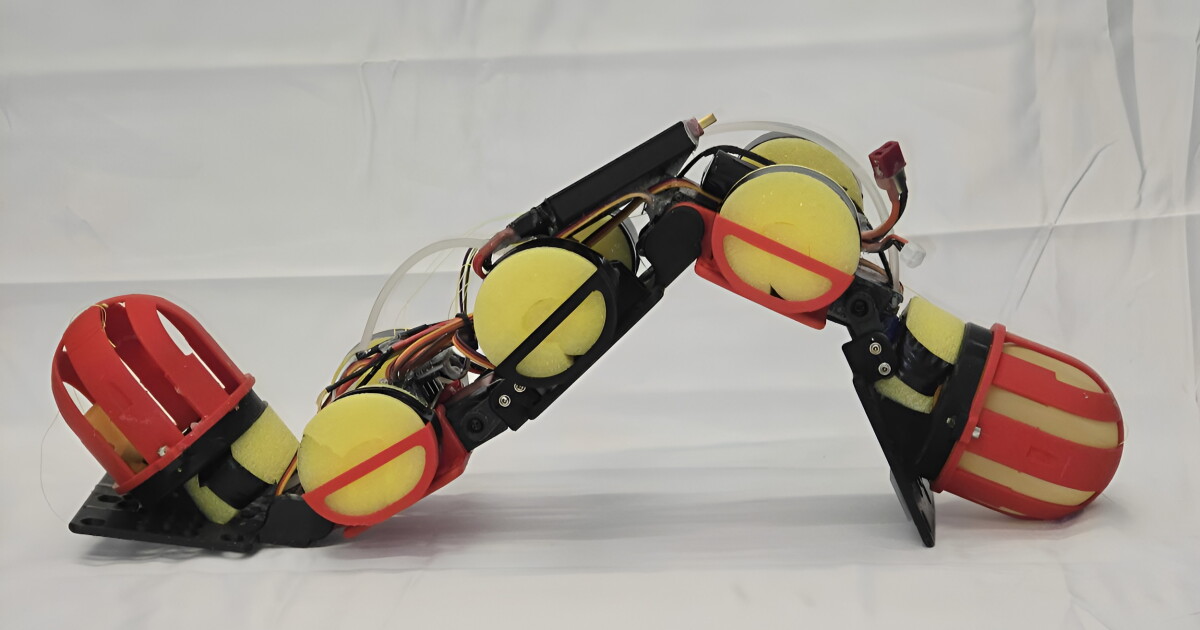
WorMa robot has five connected segments and four joints, measuring 50 cm long and weighing 1 kg.
Two latex water balloons, one in the head and one in the tail, weigh 300 grams and help the robot shift its center of mass.
A pump in the middle section moves water between the head and tail, shifting the robot's center of mass for better grip and stability.
WorMa can climb slopes of up to 19.5 degrees and steps up to 15 cm high using its weight-shifting mechanism.
In water, the robot swims 26% faster by shifting water to its tail, and it can get out of water by shifting water to its head.
Why It Matters
If you're working on robotics and amphibious vehicles, WorMa's innovative weight-shifting technology could inspire new approaches in autonomous navigation. The robot's ability to adapt to both land and water environments makes it a versatile tool for terrain-challenged applications. However, its current reliance on external control limits its practicality.
Comments
Be the first to comment
Enjoyed this article?
Get it daily. 7am. Free. Reads in 5 minutes.