StoriesxAI
Judge refuses to dismiss NAACP Clean Air Act suit over xAI's Southaven turbines
Judge Debra Brown rejected both the Justice Department's and xAI's attempts to end the NAACP's Clean Air Act case, and the 'temporary turbine' loophole took the hit.
ContentBuffer · Built from 13 sources · Updated · 5 min read
TL;DR
A federal judge in Mississippi refused to dismiss the NAACP's Clean Air Act suit over xAI's Southaven gas turbines. She rejected the "mobile source" exemption, standing and constitutional arguments. The ruling doesn't decide liability. The turbines keep running until the court rules on the pending injunction request.
Timeline
The gap between what's running and what's alleged
Mississippi told xAI it could run the turbines without a permit. A federal judge now says the Clean Air Act disagrees. That gap is the whole case.
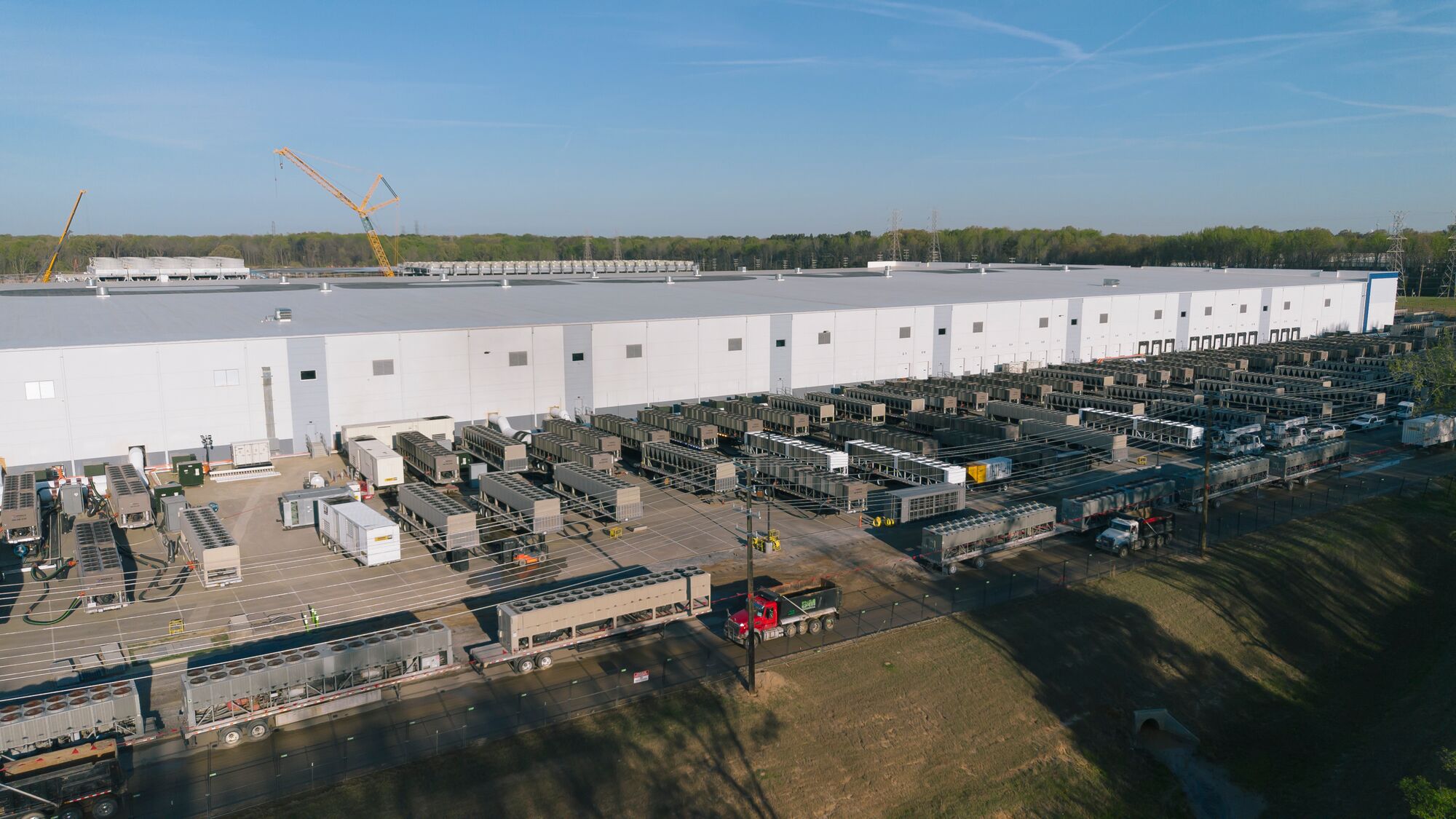
The turbine count depends on who you ask. xAI installed 27 gas turbines at a location across state lines in Southaven, Mississippi, according to the NAACP's notice (naacp.org). By July, Mississippi regulators counted 69 temporary gas turbines at the site, more than double the number the company had previously acknowledged (scientificamerican.com). Some outlets cite other totals. The court's order covers the 27 that the complaint names.
From notice letter to two dismissal fights
The order sets the installation window. The legal pressure followed fast.
- April 14, 2026: The NAACP and its Mississippi State Conference filed the case (lifenewsagency.com).
- The Department of Justice also filed a motion to join the case (mississippitoday.org).
Two rulings, eleven days apart
Don't blur these. The first ruling dealt with Washington. The judge ruled that the Trump administration could intervene but blocked the federal government's attempt to dismiss the case (mississippitoday.org). The second dealt with xAI's own arguments on the merits of the permitting question.
Either one alone would have kept the case alive. Together they remove the two exits the defense had built. One was a federal off-ramp. The other was a legal theory that trailer-mounted equipment sits outside the permit regime.
One more thing on timing. The NAACP has also asked the court for a preliminary injunction to halt the turbines while the case proceeds (startupfortune.com). That motion is the next real decision point.
Both positions, in their words
The defense: mobile, no standing, unconstitutional
xAI made three arguments. xAI had argued that the turbines did not need permits because they were mobile, and that the plaintiffs had no standing to bring the case (lifenewsagency.com). They also argued that suits by community groups under the Clean Air Act were unconstitutional (cnbc.com).
The state backed the mobile theory. "MDEQ has determined that portable/temporary turbines do not require an air permit," the agency told reporters (technology.org).
The federal government went a different way. The Trump administration argued that it could dismiss the case because a federal agency, the Environmental Protection Agency, enforces the Clean Air Act (mississippitoday.org). The Justice Department also argued that shutting down the power source for Colossus 2 would threaten AI innovation and national security (scientificamerican.com). Judge Brown said those national security arguments did not bear on whether the government had the power to dismiss the lawsuit (desotocountynews.com).
The plaintiffs: a loophole doesn't exist
The NAACP's theory is about aggregation. The suit hinges on whether scores of portable machines operating together constitute a single stationary source (scientificamerican.com). The lawyers argue they do. Lawyers at the Southern Environmental Law Center have long maintained that the temporary-turbine loophole doesn't exist (mississippitoday.org).
Here is the NAACP's one-line position, from its director of environmental and climate justice:
"xAI cannot operate gas turbines without the required permits."
Abre' Conner, NAACP Director of Environmental and Climate Justice
That sentence is cited to the Southern Environmental Law Center's release on the ruling (selc.org).
The judge's words
Brown's order answers all three defense arguments in one sentence. She wrote that the plaintiffs have statutory standing, the turbines are not "mobile sources" under Mississippi's SIP, and the citizen suit provision does not violate Article II or the private nondelegation doctrine, so the claims will proceed (cnbc.com).
On the exemption, the court was blunt. The Court held that because the Plant is not a "mobile source" under the federal regulations, it was not exempted from permitting requirements (selc.org). That is the line other developers will read closely.
Positions at a glance
| Question | xAI / DOJ | NAACP | Court (so far) |
|---|---|---|---|
| Are the turbines "mobile sources"? | Yes, so no permit | No, one stationary plant | Not mobile sources |
| Can the NAACP sue? | No standing | Citizen suit allowed | Standing exists |
| Can DOJ end the suit? | Yes, EPA enforces | No | No |
| Is the suit constitutional? | No | Yes | Yes |
What changes and when
Immediately: nothing on the ground
A motion to dismiss tests whether the claims are legally viable. It doesn't test whether they're true. The ruling doesn't decide whether xAI broke the law (startupfortune.com). The plant is operating today.
Until a judge rules on the injunction request, the plant keeps running, and so does the exhaust (startupfortune.com). If you're looking for a shutdown date, there isn't one. The next filing to watch is the ruling on that injunction motion.
What's now on the table
The relief the NAACP wants is concrete. It is asking the court to declare that xAI violated the Clean Air Act, force it to stop operating unpermitted turbines at Southaven, order the best available control technology, and assess financial penalties for every day of violation (naacp.org).
The money matters too. The case is now in discovery territory, where the turbine counts, run times and emissions data get tested against the state's version.
The permanent plant doesn't moot this
xAI isn't empty-handed. xAI later received a permit for 41 permanent turbines at the same site, with a total capacity of around 1,200 megawatts (scientificamerican.com). That permit is under challenge separately. The SELC sent MDEQ an appeal of the state's decision to award air permits for the 41 permanent gas turbines (mississippitoday.org).
The plaintiffs argue the permit is flawed. Because the Memphis Metropolitan Area is failing to meet federal standards for smog, they say MDEQ was required by its own rules to include offsets in the permit (naacp.org).
So two tracks run in parallel. One asks whether past and present temporary operation was lawful. The other asks whether the permanent replacement is.
The precedent clock
There's a wider consequence. The mobile-source theory is central to how AI companies secure power quickly while waiting for grid connections and permanent plants (runtimewire.com). If it fails in the Southaven case, other data center builders using interim gas generation face a clearer permitting obligation before they switch turbines on.
The order is a district court ruling at the dismissal stage. It binds nobody outside this case. But it will get cited.
An appeal is the obvious next move for the defense. Watch whether xAI seeks one before the injunction hearing.
What this means
For data center builders
Hot take: the "temporary turbines" playbook just lost its best shield. It was never a legal doctrine. It was a state agency's interpretation, and a federal judge has now read the federal rules differently.
That doesn't make every trailer-mounted unit illegal. The court ruled on this plant, with these facts. But the reasoning is about aggregation. Scale is what triggers it.
For the state-versus-federal question
The state said portable units needed no permit. The court said the Clean Air Act doesn't care. That puts MDEQ's earlier determination under a cloud, and it gives other state regulators a reason to ask for federal sign-off before they hand out similar letters.
Notice the odd alignment too. The federal government tried to kill a citizen suit that enforces a federal statute, and the judge told it no. Citizen suits exist so enforcement doesn't depend on whichever administration holds the EPA. This ruling leaves that mechanism intact.
For xAI's timeline
The company's real exposure is operational, not rhetorical. An injunction would threaten power for Colossus 2, which is where the company is training Grok, its chatbot (scientificamerican.com). That's why the pending injunction motion matters more than anything decided so far.
Penalties are the other lever. The statutory figure is per day, and the clock has been running since the turbines went in. Settlement pressure goes up each week the case stays alive.
What's still unproven
Be careful with the headline numbers. Counts of 27, 33 and 69 turbines all circulate, and they describe different dates and different filings. The NAACP's emissions figures are projections from its injunction motion, not measured results. Liability hasn't been decided.
What to watch next
- The ruling on the preliminary injunction motion.
- MDEQ's handling of the appeal of the 41-turbine permit.
- Whether other data center projects change how they describe interim generators in permit filings.
Read the order itself if you build or permit gas generation. It is short on rhetoric and specific on the mobile-source reasoning.
Stories like this, before they trend.
One email a day. Sources listed. Free.
Join 3,568 builders reading daily.
Sources
- naacp.org — NAACP, SELC, Earthjustice threaten Lawsuit over xAI’s Unpermitted Gas Turbines in Mississippi · Primary source
- scientificamerican.com — SpaceXAI’s Colossus data center is fueling a massive backlash
- fourweekmba.com — Judge Lets NAACP Suit Over xAI's 27 Gas Turbines Proceed - FourWeekMBA
- earthjustice.org — NAACP Asks Court for Emergency Action to Stop Illegal Air Pollution from xAI’s Data Center Power Plant - Earthjustice
- technology.org — xAI Ran 59 Unpermitted Gas Turbines for Colossus 2 Near Memphis - Technology Org
- lifenewsagency.com — US Judge Lets NAACP Clean Air Act Lawsuit Against xAI Over Data Centre Turbines Go Ahead - Life News Agency
- ua.news — Mississippi court keeps NAACP lawsuit against SpaceX AI unit — CNBC
- mississippitoday.org — Judge rejects Trump DOJ request to dismiss NAACP xAI lawsuit - Mississippi Today
- startupfortune.com — Judge Lets NAACP's Pollution Lawsuit Against Elon Musk's xAI Proceed - Startup Fortune
- desotocountynews.com — Judge Denies xAI Bid to Toss Southaven Turbines Lawsuit
- cnbc.com — SpaceX loses bid to toss NAACP lawsuit over Memphis data center air pollution
- desotocountynews.com — Judge Lets NAACP Lawsuit Over Southaven xAI Turbines Proceed
- mississippitoday.org — NAACP sues xAI over data center turbines in Southaven - Mississippi Today
- selc.org — Court tosses request to block Clean Air Act lawsuit against Musk’s xAI - Southern Environmental Law Center
- naacp.org — NAACP Sues xAI for Illegal Pollution from Data Center Power Plant · Primary source
- naacp.org — NAACP and Advocacy Groups Appeal Air Permit for xAI’s Personal Power Plant in North Mississippi · Primary source
- runtimewire.com — Judge lets NAACP Clean Air Act lawsuit over xAI's Southaven turbines proceed