The stories worth reading. Updated all day.
Apple has settled a class-action lawsuit over its marketing of AI features for the iPhone 16, agreeing to pay out $250 million. The plaintiffs argued that Apple overstated Siri's capabilities and misled buyers into thinking they were getting cutting-edge AI tools when purchasing iPhones between June 10, 2024, and March 29, 2025. This settlement highlights the risks of aggressive marketing in tech, especially as companies compete to tout AI advancements.
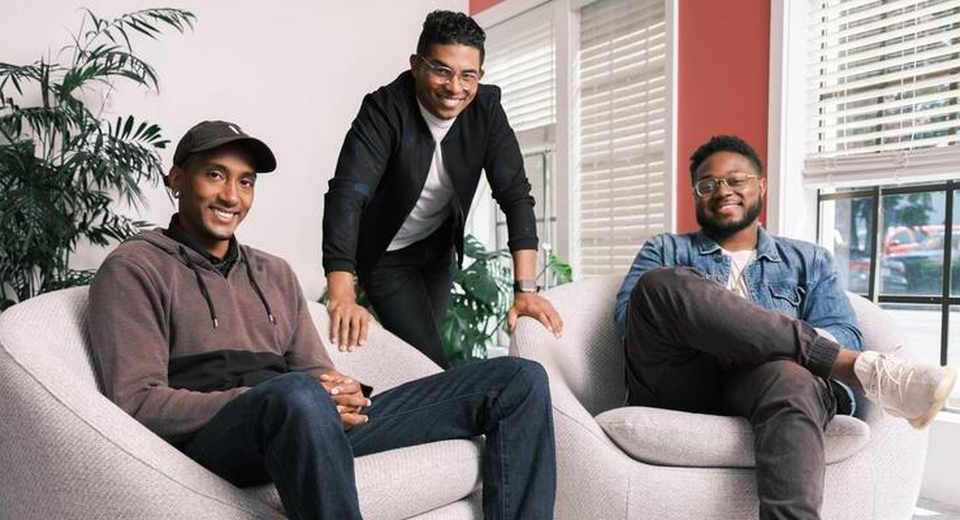
Ethos has secured $22.75M in a Series A funding round from a16z and others, aiming to improve expert matching for projects through AI-driven voice interviews. This approach captures deeper insights than traditional platforms like LinkedIn or GLG, which rely on shallow signals such as job titles. Ethos's voice-powered onboarding process allows experts to provide detailed information about their knowledge in various domains, enabling better matches based on natural language queries and curated questions. The company is already working with top hedge funds, private equity firms, and AI labs.
Aurora Innovation announced it will haul loads in driverless trucks for McLane, starting with the route between Dallas and Houston. The commercial agreement involves operating autonomously without a human safety driver on board, though an observer is present. This marks Aurora's transition from pilot programs to full-scale commercial operations. By year-end, Aurora plans to expand its routes across the U.S. Sun Belt. If you're in logistics or trucking, this shift towards autonomous haulage could change how goods are transported.
Blink has unveiled its latest additions to the security camera lineup: the Blink Wired Doorbell 2K+ priced at $49.99 and the Battery Doorbell 2K+, available in white or black, costing $69.99 if you already have a sync module or $79.99 bundled with one. These new models join Blink's existing 2K camera family and come equipped with AI-powered video descriptions that send text summaries of events captured by the cameras to users' smartphones. The wired version is Blink's first model without the need for a Sync Module, making it more accessible for those looking to upgrade their security setup without additional hardware costs. Why should you care? If you're in the market for an affordable yet feature-rich doorbell camera, these new models from Blink are worth considering. The Wired Doorbell 2K+ is one of the cheapest options available at $50, compared to Wyze's and Ring's offerings priced at $60 and $79.99 respectively. With smart video descriptions powered by AI, you can get alerts with detailed text summaries of events captured by your doorbell camera, enhancing security without requiring constant monitoring. The Basic AI subscription for Blink’s new models starts at $49.99 for the first year ($6.99/month thereafter) and covers one device, while the Plus tier costs $149.99 for the first year ($19.99/month thereafter), providing access to all cameras.
Samsung just crossed the $1 trillion mark, thanks to soaring demand for its memory chips used in AI systems. This isn't just about Samsung's success; it signals a broader shift where every company building AI needs these chips. The supply struggle is real: prices are rising as companies like SK Hynix and Micron race to meet demand, but falling behind. If you're an engineer working on AI projects, this means your chip costs could be going up soon.
Half of surveyed kids believe they can easily circumvent age verification checks designed to protect them online. This awareness is leading to real-world attempts like drawing mustaches on faces for webcam checks. With half of U.S. states implementing such laws and companies scrambling to comply, the effectiveness and security implications are under scrutiny.
Get it daily. 7am. Free. Reads in 5 minutes.
Google is updating its AI Search to include 'Expert Advice' sourced directly from social media, Reddit, and other web forums. This feature aims to provide users with advice and insights from trusted communities relevant to their queries. For example, photography enthusiasts might find tips on exposure settings for northern lights photos. The update also adds related links and topics at the end of AI responses to encourage further exploration. If you rely on Google Search for professional or personal guidance, these changes could significantly alter how you interact with search results.
Apple's iPhone 13 Mini is still in circulation despite being an underdog phone that Apple tried selling twice without success. The device measures only 131.5mm tall and was already over a year old when it hit the market again in 2023. Despite its age, the iPhone 13 Mini packs features like MagSafe, an ultrawide camera, and a physical SIM tray that make it useful for specific workflows. However, its small size means it struggles with daily use, barely making it through a full day on battery even when using Wi-Fi. The phone's Lightning port can be inconvenient but is still functional.
Cerebras Systems filed updated paperwork for a Nasdaq IPO, planning to sell 28 million shares at $115 to $125 to raise up to $3.5 billion. The wafer-scale AI chip startup is targeting a valuation of $26.6 billion or more, the largest AI hardware listing of the year.
After 18 months in stealth, Rhoda AI publicly launched with $450 million in Series A funding, unveiling its FutureVision platform — a robotic intelligence system built on video-predictive control. The company aims to bring foundation-model reasoning to physical robots.
Voice-AI company ElevenLabs closed a $500 million Series D, reaching an $11 billion valuation. The round funds expansion into agentic voice products and enterprise deployments across media, gaming, and accessibility.
New York–London insurance tech startup Reserv closed a $125 million Series C led by KKR. Its platform uses generative AI to automate claims processing for insurers, cutting cycle times and adjuster workload.