🧬Cells Repair Up to 100,000 DNA Breaks Daily, and Gene Editing Borrows That Machinery
Your gene-editing pipeline depends on this repair machinery
TL;DR
Cells absorb up to 100,000 DNA damage events daily and repair most of them fast. Double-strand breaks are the dangerous ones. Gene editors work by hijacking the same repair pathways, so their efficiency depends on which pathway a cell picks.
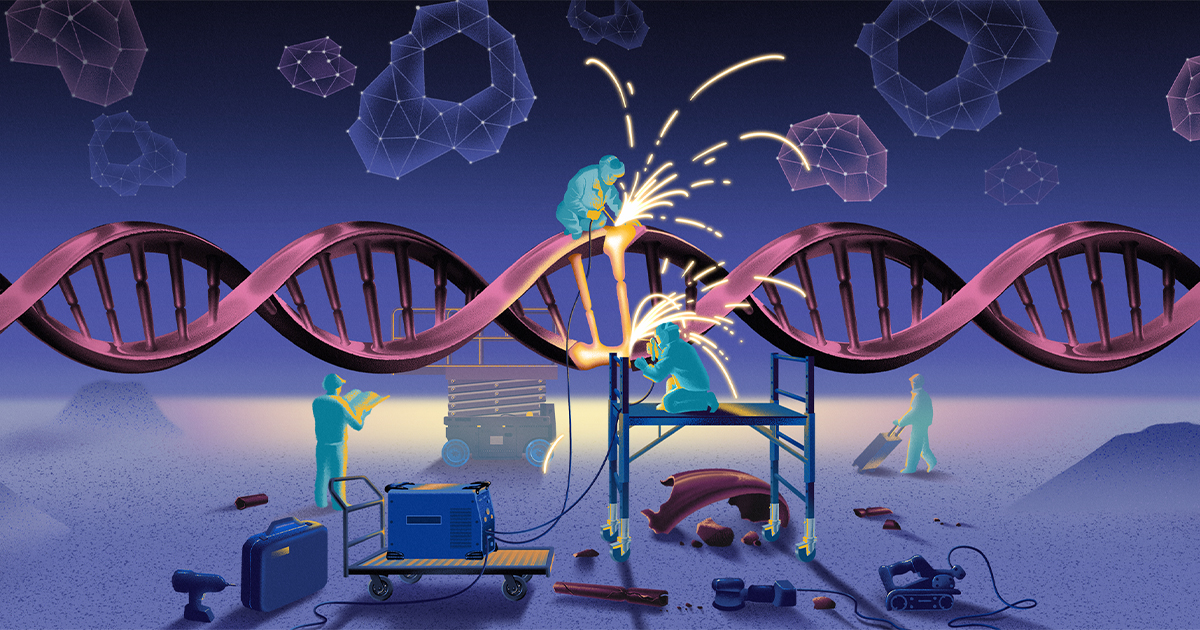
Cells are taking a beating, and most of the time they're fine. Some cells endure up to 100,000 DNA damage events every day, and most of those lesions get patched quickly by native repair mechanisms. That's the default state of affairs, not an emergency. Why should developers care? Because every gene-editing tool, from CRISPR workflows to therapies in trials, works by exploiting these same repair pathways. Intentionally introducing a double-strand break can push a cell to repair the injury with a new gene sequence you supply. If you're designing an edit, you're really designing around nonhomologous end joining or homologous recombination, whichever the cell chooses. The numbers: the DNA damage response involves more than 500 proteins. Nonhomologous end joining is the simpler, more common pathway in human cells. Homologous recombination is more accurate but only available during cell division. The catch? A double-strand break severs both copies of the code, and a cell may self-destruct rather than risk perpetuating serious mutations. That's the tradeoff every editor lives with.
Key Points
Some cells endure up to 100,000 DNA damage events every day, and most lesions get repaired quickly by native enzymes before they cause lasting dysfunction in the cell.
Keep reading — it's free
Enter your email to keep reading — plus the best of AI & tech, daily. Free, forever.
Already a member? Sign in
Comments
Be the first to comment