💥Chicxulub Impact Created Hydrothermal System for 8 Million Years
Life may have thrived in the aftermath of the asteroid strike
TL;DR
New research shows the Chicxulub impact created a hydrothermal system that lasted 8 million years, offering a longer window for life to develop. The system, located on the Yucatan Peninsula, was previously thought to have existed for only 2 million years.
The Chicxulub asteroid impact, which occurred 66 million years ago, created a hydrothermal system that persisted for 8 million years, much longer than previously thought. This extended period of hydrothermal activity could have provided a conducive environment for prebiotic chemical reactions and the development of life. The system was located at the bottom of the ocean, on the partially submerged Yucatan Peninsula. Researchers used potassium-argon dating to determine the age of the rock samples, showing the system remained heated from 66 million years ago to 58 million years ago. The system had enough heat and nutrients for life to colonize for at least 8 million years, potentially offering a longer window for life to develop post-impact.
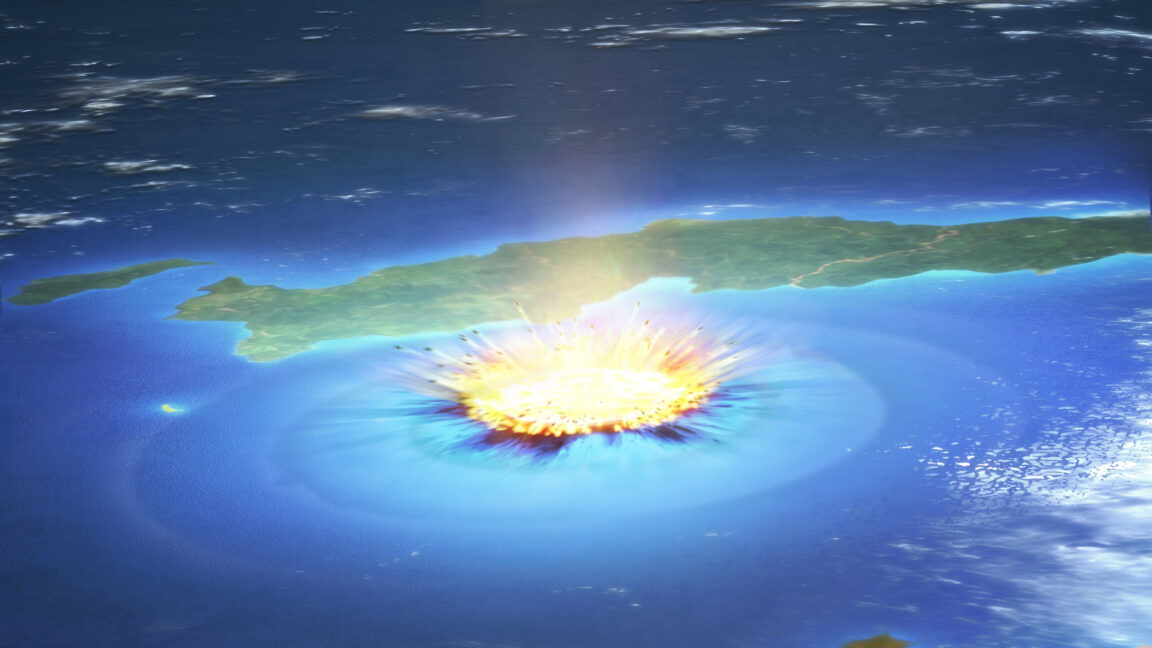
Key Points
Chicxulub impact created a hydrothermal system that lasted 8 million years, not 2 million as previously thought.
The system was located on the partially submerged Yucatan Peninsula, at the bottom of the ocean.
Researchers used potassium-argon dating to determine the age of the rock samples, showing the system remained heated from 66 million years ago to 58 million years ago.
The system had enough heat and nutrients for life to colonize for at least 8 million years, potentially offering a longer window for life to develop post-impact.
Computer simulations suggest cooling to 90° C (194° F) took between 1.5 and 2.3 million years after the impact, and cooling to below 50° C (122° F) took up to 5 million years.
Why It Matters
The Chicxulub impact created a hydrothermal system that lasted 8 million years, offering a longer window for life to develop. Researchers used potassium-argon dating to determine the system's duration, showing the system remained heated from 66 million years ago to 58 million years ago. The system had enough heat and nutrients for life to colonize for at least 8 million years, potentially offering a longer window for life to develop post-impact.
Comments
Be the first to comment
Enjoyed this article?
Get it daily. 7am. Free. Reads in 5 minutes.
Join 3,564 builders reading daily.