✨Cloudflare Shrinks Load-Balancing Memory by Over 100 TB
Cloudflare slashes memory usage in load-balancing
TL;DR
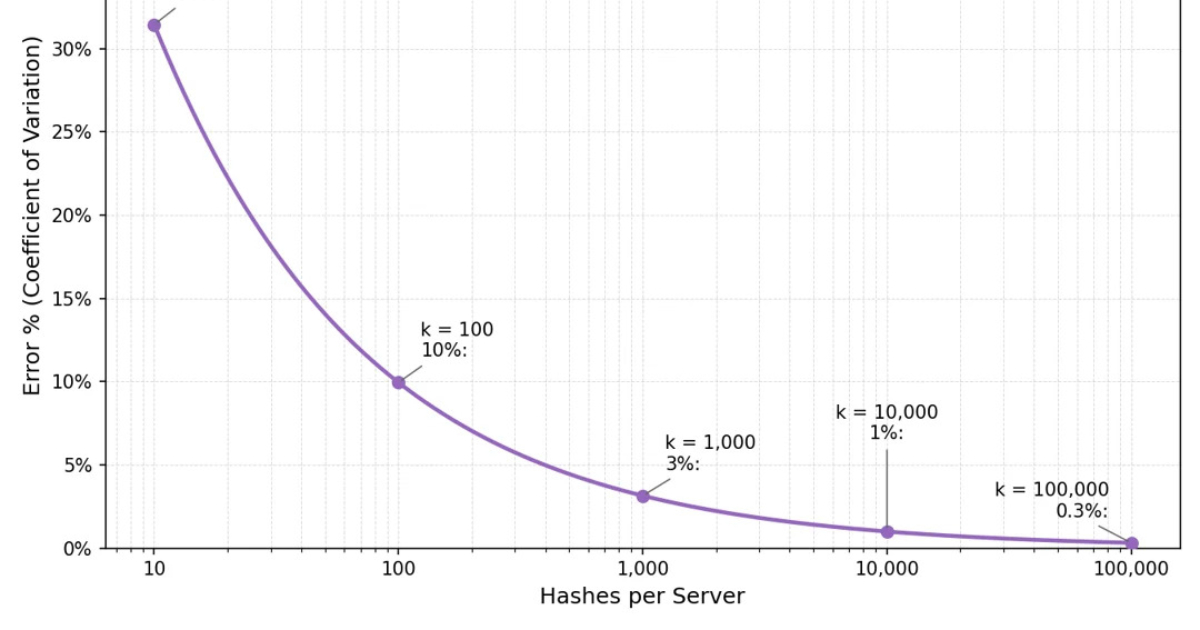
Cloudflare optimized its load-balancing service, reducing memory usage by over 100 TB. The changes, made to the Rust implementation of consistent hashing, cut the number of hashes per backend by 90% while maintaining accuracy.
Cloudflare just slashed the memory footprint of its internal load-balancing service by over 100 TB. This is a big deal for anyone running large-scale distributed systems, as it directly impacts memory usage and performance. By optimizing the Rust implementation of consistent hashing in pingora-ketama, the team reduced the number of hashes per backend by about 90% while preserving load-balancing accuracy. The changes compacted hash-ring entries and used statistical analysis of hash distribution and collision rates, ensuring that the reduction in memory didn't compromise system reliability. This optimization is particularly relevant for teams dealing with high traffic and large datasets.
Key Points
Cloudflare reduced the memory footprint of its load-balancing service by over 100 TB.
The team optimized the Rust implementation of consistent hashing in pingora-ketama.
The number of hashes per backend was reduced by about 90%.
The changes preserved load-balancing accuracy while cutting memory usage.
The optimization was rolled out gradually to limit cache churn and traffic spikes.
Why It Matters
If you're running a distributed system with high traffic and large datasets, Cloudflare's memory optimization in load-balancing is a game-changer. By reducing the number of hashes per backend by 90% while maintaining accuracy, this change can significantly lower memory usage and improve performance. However, the optimization only pencils out for systems with high traffic volumes; smaller setups may not see the same benefits.
Comments
Be the first to comment
Enjoyed this article?
Get it daily. 7am. Free. Reads in 5 minutes.
Join 3,565 builders reading daily.