🧬New Challenges in Synthetic Biology and Genetic Engineering
Synthetic biology just got a lot harder
TL;DR
Synthetic biology and genetic engineering face new challenges, including creating self-replicating RNA cells and cryopreserving mice with high viability. These challenges push the boundaries of what's possible in biotech.
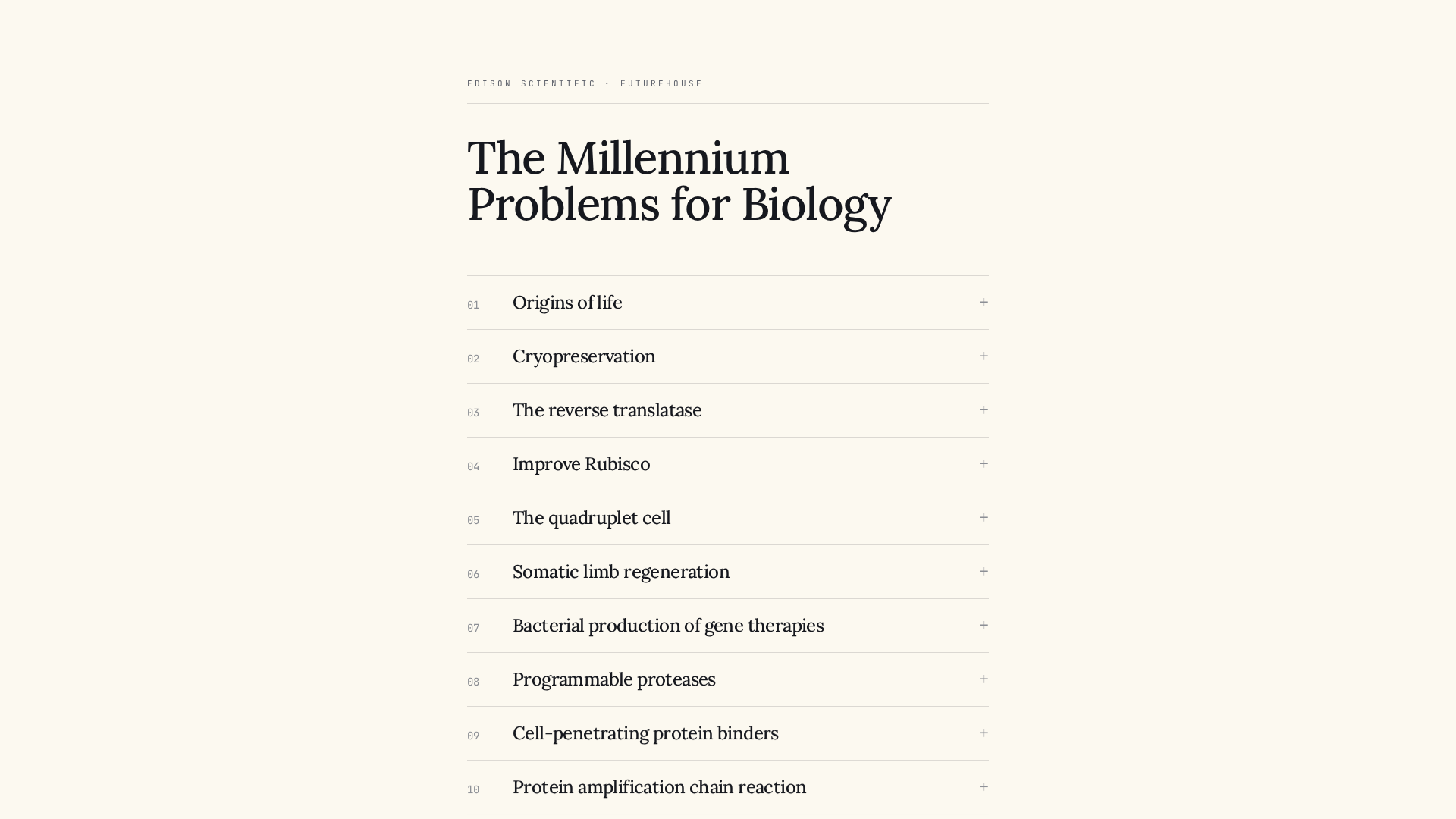
Synthetic biology and genetic engineering have been given a new set of challenges that push the boundaries of current capabilities. The origins of life challenge requires demonstrating the emergence of self-replicating RNA cells from a plausible primordial soup, with cells needing to increase their abundance by a factor of 10⁶. The cryopreservation challenge involves cryopreserving and recovering live wild-type mice with >99% viability after at least 24 hours of freezing. These challenges are not just theoretical; they impact real-world biotech research and development. The specificity and efficiency of enzymes and the ability to produce gene therapies in bacterial hosts are also under scrutiny, with strict criteria for success. Researchers and developers must now focus on these complex and demanding tasks to advance the field.
Key Points
Origins of life challenge: cells must increase abundance by 10⁶ when provided with primordial soup and energy.
Cryopreservation challenge: mice must remain frozen for at least 24 hours and recover with >99% viability.
Reverse translatase challenge: enzyme must processively read polypeptide and synthesize nucleic acid strand.
Improve Rubisco challenge: enzyme must have specificity and turnover similar to Galdieria Partita and maize Rubisco.
Bacterial gene therapy challenge: particles must contain pre-specified viral genome with ratios similar to mammalian cell culture.
Why It Matters
The origins of life challenge impacts research on RNA and protein-based cells, requiring a 10⁶ increase in abundance. The cryopreservation challenge affects cryobiology, aiming for >99% viability in frozen mice. These challenges push the boundaries of biotech research, impacting specific labs and teams working on advanced genetic engineering and synthetic biology projects.
Comments
Be the first to comment
Enjoyed this article?
Get it daily. 7am. Free. Reads in 5 minutes.
Join 3,484 builders reading daily.