✨Roman Space Telescope Set to Unveil Cosmic Mysteries
Roman Telescope to Revolutionize Infrared Astrophysics
TL;DR
NASA's Roman Space Telescope, with a 2.4m mirror, promises to settle cosmic questions in dark energy, exoplanets, and infrared astrophysics. Its Wide Field Instrument offers a 100x larger field of view than Hubble's infrared instrument.
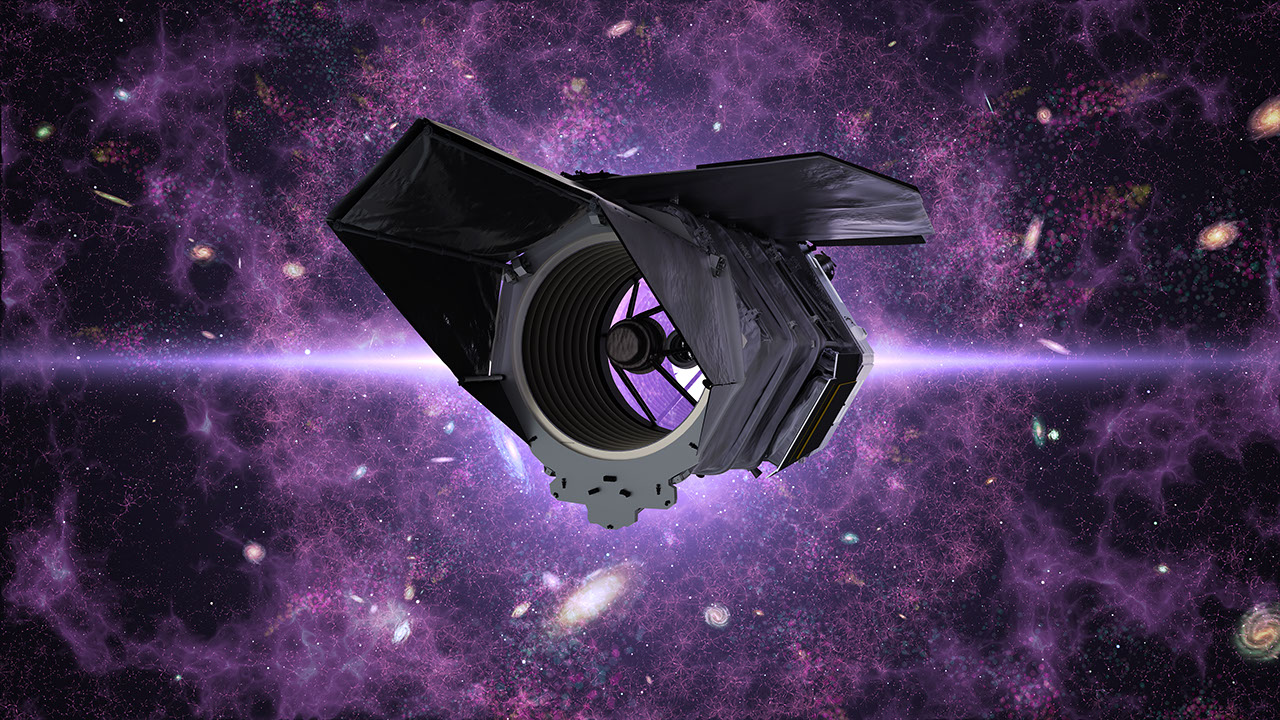
NASA's Nancy Grace Roman Space Telescope is set to revolutionize our understanding of the cosmos. With a primary mirror measuring 2.4 meters in diameter, the telescope boasts a Wide Field Instrument that provides a field of view 100 times greater than Hubble's infrared instrument. This means it can capture more of the sky in less time, making it a game changer for researchers studying dark energy, exoplanets, and infrared astrophysics. The telescope's enhanced capabilities will enable scientists to gather unprecedented data, potentially leading to breakthroughs in our understanding of the universe. NASA updates can be received by visiting nasa.gov/roman or signing up for the newsletter.
Key Points
NASA's Nancy Grace Roman Space Telescope features a primary mirror with a 2.4-meter diameter.
The Wide Field Instrument provides a field of view 100 times greater than Hubble's infrared instrument.
The telescope is designed to settle questions in dark energy, exoplanets, and infrared astrophysics.
Updates on the Roman Telescope can be received by visiting nasa.gov/roman or signing up for the newsletter.
The Roman Telescope aims to capture more of the sky with less observing time, enhancing research efficiency.
Why It Matters
If you're studying dark energy, exoplanets, or infrared astrophysics, the Roman Space Telescope's enhanced capabilities will significantly impact your research. With a 2.4-meter mirror and a Wide Field Instrument offering a 100x larger field of view than Hubble's infrared instrument, the telescope promises to deliver unprecedented data, potentially leading to breakthroughs in our understanding of the universe.
Frequently Asked Questions
Why does this matter?
If you're studying dark energy, exoplanets, or infrared astrophysics, the Roman Space Telescope's enhanced capabilities will significantly impact your research. With a 2.4-meter mirror and a Wide Field Instrument offering a 100x larger field of view than Hubble's infrared instrument, the telescope promises to deliver unprecedented data, potentially leading to breakthroughs in our understanding of the universe.
What happened?
NASA's Roman Space Telescope, with a 2.4m mirror, promises to settle cosmic questions in dark energy, exoplanets, and infrared astrophysics. Its Wide Field Instrument offers a 100x larger field of view than Hubble's infrared instrument.
Comments
Be the first to comment
Enjoyed this article?
Get it daily. 7am. Free. Reads in 5 minutes.
Join 3,424 builders reading daily.