📐Stacks Project Algebraic Geometry Text Now Fully Machine-Checked in Lean
Your AI proofs can now cite verified algebraic geometry
TL;DR
The Stacks Project, a 7,500-page open-source algebraic geometry reference, is now fully formalized in Lean as one machine-checked library. Researchers and AI agents can import its theorems directly into new proofs. For anyone building formal verification tools, that's a verified foundation you can actually build on.
The entire Stacks Project, a roughly 7,500-page open-source reference for algebraic geometry, is now a single machine-checked Lean library. Every theorem, with its proof and tag dependencies, can be imported straight into new formal work. The mathematics was already written down. What was missing was the Lean infrastructure, and that's the gap this closes. Why should you care if you don't do math for a living? Because AI systems are starting to produce proofs faster than humans can check them by hand. Verification stops being a nice-to-have and becomes the only way to trust the output. If you're building or evaluating AI agents for formal reasoning, this gives you a verified base of definitions to build on instead of re-deriving everything from scratch. The numbers are big. The project spans about 16 million lines of code and began in 2005 under a Columbia University mathematician, then grew through hundreds of contributors over two decades. The formalization was done by coordinated swarms of AI agents translating, proving, and integrating thousands of theorems in parallel. Permanent Stacks tags map every Lean declaration back to the canonical text, so you can trace any result to its source.
Key Points
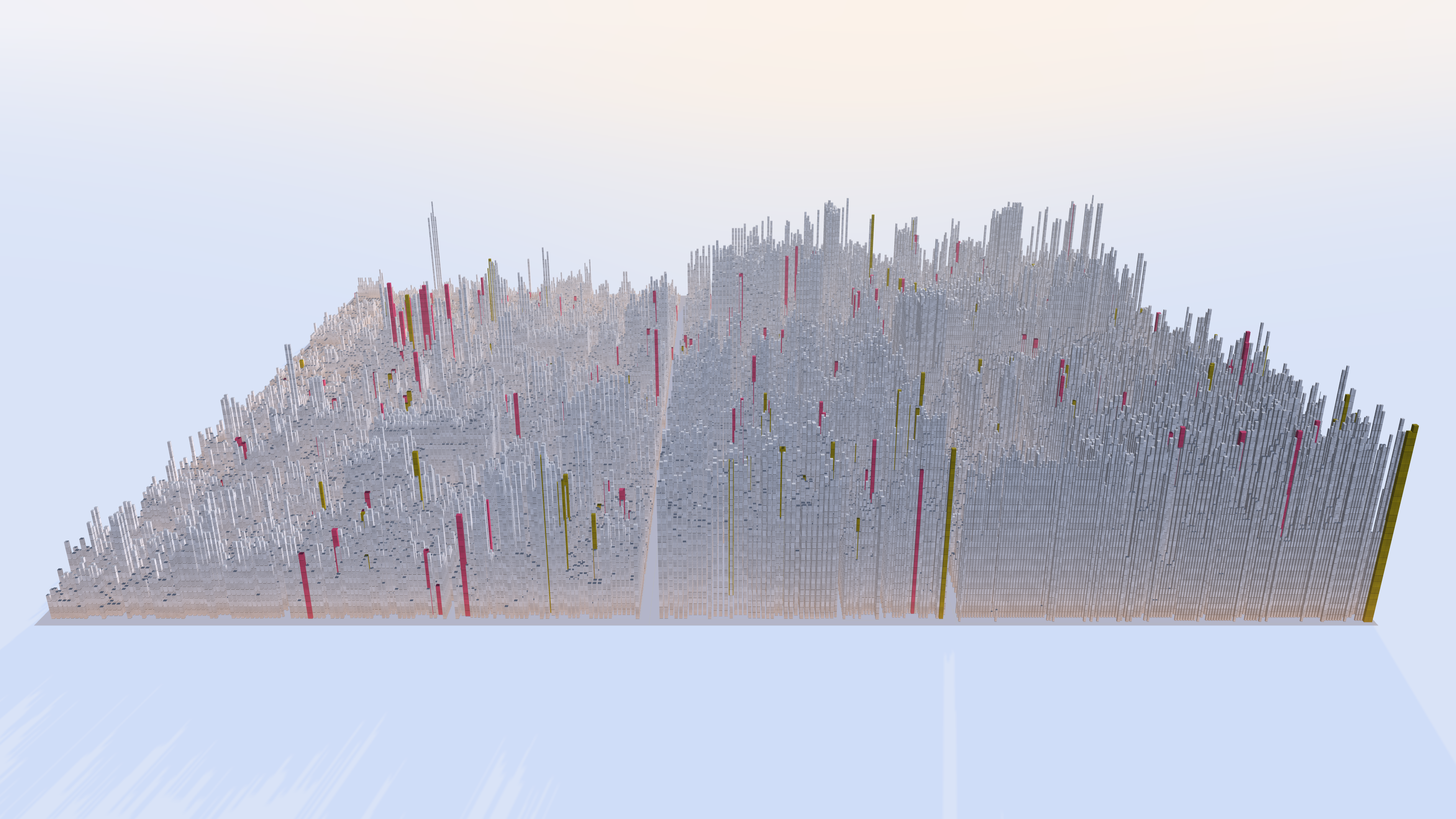
The Stacks Project spans roughly 16 million lines of code and about 7,500 pages of algebraic geometry reference material, all now formalized in Lean.
Keep reading — it's free
Enter your email to keep reading — plus the best of AI & tech, daily. Free, forever.
Already a member? Sign in
Comments
Be the first to comment