🦋Tartu's Robo-Moth Grows Its Own Sensors Using Artificial Blood and UV Light
Robots that regrow their own sensors are closer than you think
TL;DR
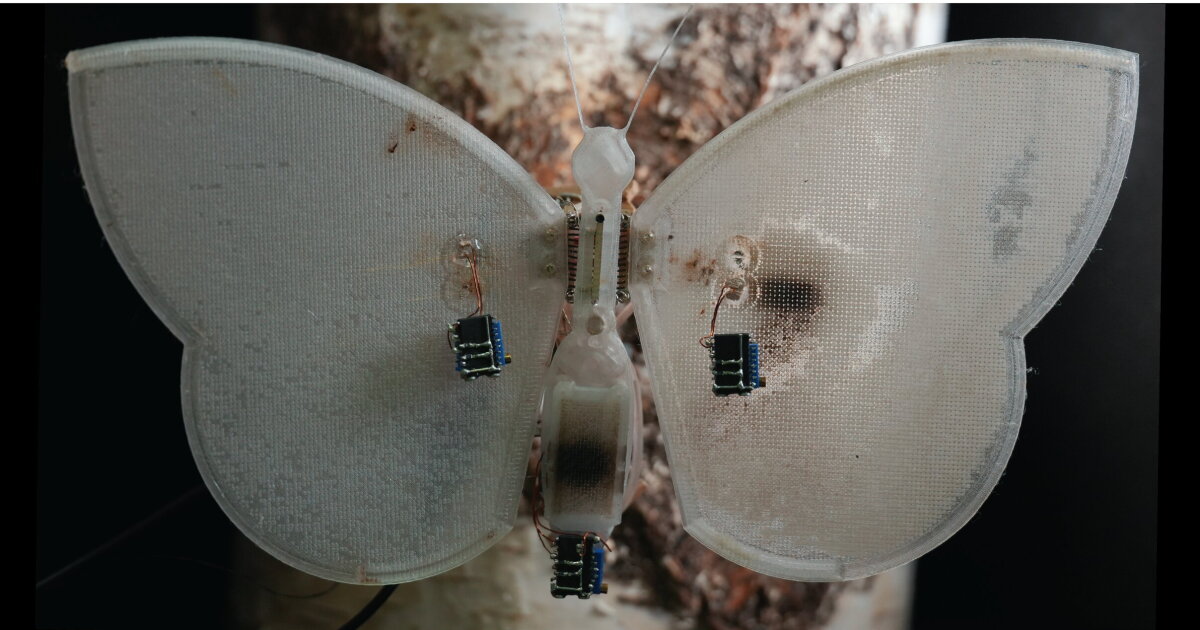
A 3D-printed moth robot from Tartu University grows new sensors by pumping pyrrole through its wing veins and hitting them with UV light. The sensor gets more sensitive with each exposure. It can't fly yet, but self-repairing hardware just got a real prototype.
A research team built a moth-shaped robot that grows its own sensing material. Pyrrole flows through veins printed into the wings, and UV light turns it into conductive polypyrrole wherever a stencil exposes the wing. The patch turns black, and that's the sensor. Why should you care? Because the wiring never changes. Gold wires pick up the change, so the robot grows the sensing layer, not the circuit. If you build hardware that lives in the field, that's a new pattern: sensors that get added or refreshed without a rebuild. Hot take: the same circulatory idea could carry other reversible chemicals, which opens the door to swapping functions on the fly. The numbers are modest. The pump moves about 3 ml of fluid, and the sensor still worked after four months in storage. It takes roughly five minutes to settle after each UV flash. The catch? The robot can't fly, its wings are bent by a nitinol wire, and the real limit is how much of the body light and fluid can reach. Worth watching: whether they can gather precursors from the environment instead of carrying them.
Key Points
The moth's sensing material is polypyrrole, formed when UV light hits pyrrole carried through printed veins in the wings.
Keep reading — it's free
Enter your email to keep reading — plus the best of AI & tech, daily. Free, forever.
Already a member? Sign in
Comments
Be the first to comment