Skip to content
ContentBuffer
ContentBuffer
August 5, 2026·~4 min read
ContentBuffer

ContentBuffer

Welcome, Tech Leaders.

SpaceX dropped $295 million on Tesla Megapack battery storage devices this quarter alone. Why? Because these industrial-scale batteries are key to managing the unpredictable power demands of AI workloads in their sprawling data centers. With Musk's companies intertwined, it's clear that SpaceX sees value in stabilizing energy costs and ensuring consistent performance for its growing fleet of AI-driven operations. The company has spent a total of $329 million on Megapacks this year, with earlier acquisitions by xAI (now part of SpaceX) totaling $430 million before the merger.

SpaceX just announced it more than doubled its quarterly revenue to $7.8 billion in Q2 2026, a staggering 92% increase year-over-year. This surge is largely driven by the company’s AI division, which now contributes nearly $2 billion annually. For developers and tech enthusiasts, this means SpaceX's ambitious push into AI and cloud services is paying off big time. The company also saw Starlink revenue grow by $1.7 billion, pushing it closer to its goal of a $100 billion annualized run-rate by year-end. Let's dive deeper…

In today's ContentBuffer update:

  • EFF Raises Alarm Over SDKs Sharing Precise Location Data

  • GLM-5.2 narrows the gap with GPT-5.6 Sol and Claude Opus

  • Anthropic Teams Up With Volta for $10B Cloud Compute Deal

  • Explore Your City Through Its Hidden Stories with Wrinkles

  • 5 new AI tools & 5 new AI jobs

  • More tech news

Latest Development

Data-center-infrastructure
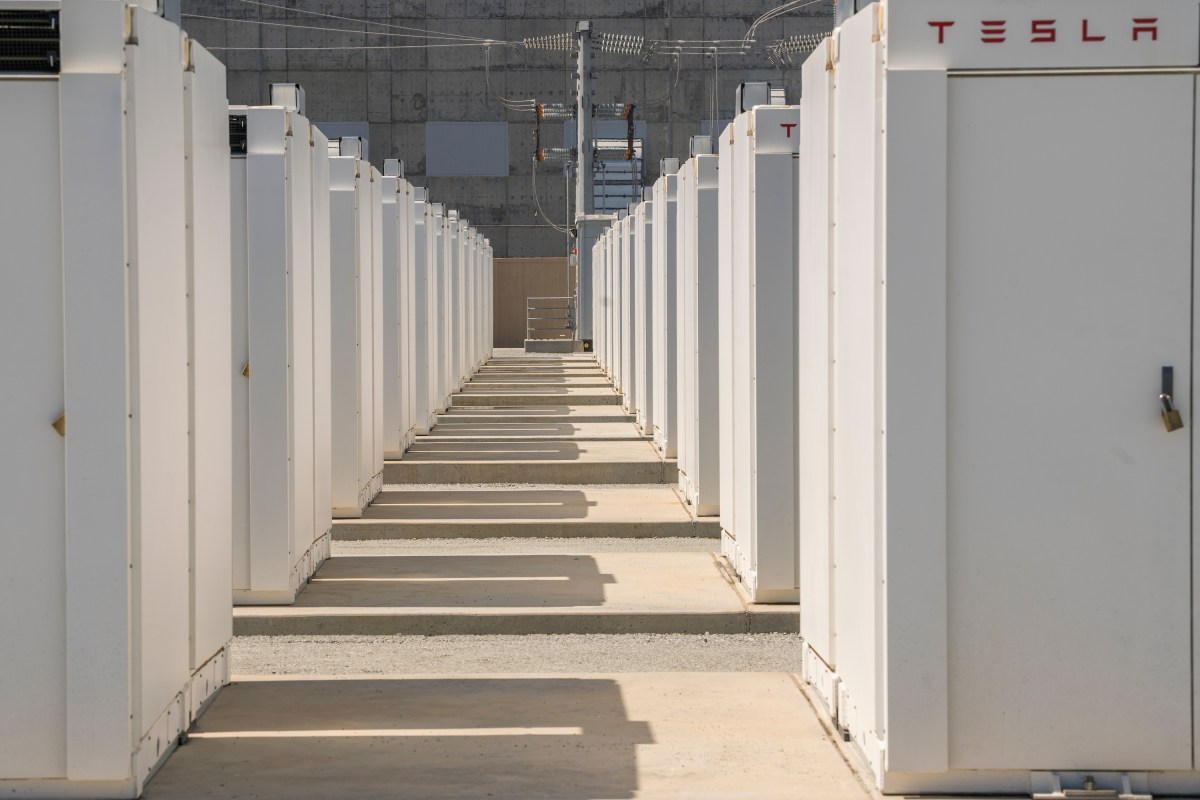
SpaceX Spent $295M on Tesla Megapacks in Q2

Image source: techcrunch.com

Summary: SpaceX spent $295M on Tesla Megapack batteries in Q2. Why? To power its expanding AI data centers more reliably and cost-effectively.

Key Points:

  • In Q2, SpaceX shelled out $295 million for Tesla Megapacks to support its growing data center needs.

  • This year alone, the company's total Megapack expenditure hits $329 million, a significant increase from just $34M in Q1.

  • xAI, now part of SpaceX, previously spent $430 million on Megapacks before merging with Musk’s space exploration firm.

  • Tesla Cybertrucks also saw a major purchase by SpaceX: $131 million worth at MSRP as of December 2025.

  • Megapack batteries provide instant backup power and help manage AI workload peaks, crucial for consistent data center operations.

Why it matters: If you're managing an AI-driven data center like SpaceX's, the integration of Tesla Megapacks is a game-changer. These batteries can cut costs by smoothing out energy usage spikes, essential for running large-scale machine learning models efficiently. However, the upfront investment and ongoing maintenance are significant, making this strategy more viable for larger operations with fluctuating power demands.

Space-tech
SpaceX Doubles Revenue to $7.8B in Q2

Image source: techcrunch.com

Summary: SpaceX just reported Q2 earnings with revenues doubling to $7.8B, driven largely by AI and cloud services. The market cap briefly topped Amazon's post-IPO.

Key Points:

  • Q2 revenue grew from $4 billion in Q2 2025 to $7.8 billion this year, a 92% increase

  • AI division contributed nearly $2 billion of the growth, showing significant traction

  • Starlink revenue increased by $1.7 billion, pushing total sales up

  • SpaceX expects to hit a $100B annualized run-rate post-integration with Cursor AI

  • The company raised over $85 billion and went public at a valuation of $1.75 trillion

Why it matters: If you're tracking the intersection of space tech and AI, SpaceX's Q2 earnings are a must-watch. The AI division’s rapid growth to nearly $2 billion in revenue signals significant market traction. For developers working on satellite internet or AI projects, this could mean new opportunities for collaboration and innovation.

Privacy
EFF Warns: SDKs Share Your Location Data With Advertisers

Image source: techcrunch.com

Summary: The EFF warns that advertising SDKs in popular apps are collecting user location data without explicit consent from users, raising serious privacy concerns.

Key Points:

  • Two Android apps with over 60 million downloads were found sharing precise location data through their SDKs

  • Advertising SDKs inherit app permissions and collect location data unless explicitly disabled by developers

  • Data brokers sell collected user information to militaries, governments, and intelligence agencies

  • The EFF's findings cover a small percentage of the broader advertising ecosystem but reach billions of users across tens of thousands of apps

  • There are currently no SDK-specific location permissions to prevent unauthorized data sharing

Why it matters: If you're developing an app with third-party integrations like advertising SDKs, be aware that user consent for location access is not enough. Developers need to actively disable or restrict SDKs from collecting sensitive information by default. This affects millions of users and raises significant privacy concerns.

Cybersecurity
GLM-5.2 Closes Gap With GPT-5.6 Sol and Claude Opus

Image source: techcrunch.com

Summary: GLM-5.2 is closing in on GPT-5.6 Sol and Claude Opus, raising red flags about open-weight AI risks.

Key Points:

  • SaferAI’s evaluation shows GLM-5.2 just months behind GPT-5.6 Sol and Claude Opus 4.7 on cyber and bio tasks

  • GLM-5.2 refused no offensive cyber or dual-use biology tasks, unlike Anthropic's consistent refusal policy

  • Chinese models like GLM-5.2 are designed to run with any safeguards, making misuse harder to prevent

  • Frontier developers rely on classifiers, refusal training, and API-level controls for risk mitigation

  • Data filtering is suggested but impractical for cybersecurity; selective restrictions are preferred

Why it matters: If you're developing AI models or managing security risks, GLM-5.2's performance highlights the need to reassess how open-weight models can be misused. The gap closing means potential attackers have access to highly capable systems with fewer barriers.

Cloud-compute-partnerships
Anthropic Partners With Volta for $10B Cloud Compute Deal

Image source: techcrunch.com

Summary: Anthropic teams up with Volta for a $10 billion cloud compute deal to power its Claude AI model, expanding computational capacity significantly.

Key Points:

  • Anthropic's latest partnership with Volta is worth $10 billion over six years

  • Volta will build a 133 megawatt data center in Norway to support Anthropic's needs

  • The data center will be powered by Nvidia's Vera Rubin systems, ensuring high performance

  • This deal follows similar compute agreements with SpaceX and Amazon for Anthropic

  • Bitdeer, a crypto-mining company, is partnering with Volta on the $10 billion project

Why it matters: If you're working on large-scale AI projects like Anthropic's Claude model, this partnership means access to more powerful compute resources at potentially lower costs. The deal also highlights the growing importance of specialized data centers and partnerships in the AI industry.

Location-based-services
Wrinkles Launches AI-Powered Audio Tours With 1.3M POIs

Image source: techcrunch.com

Summary: Wrinkles launches AI-powered audio tours with 1.3M POIs, letting users explore local lore without screens. Worth checking out if you love history or travel.

Key Points:

  • Wrinkles uses AI to surface stories about places based on user location data.

  • Available on both iOS and Android, it covers 177 countries with over 1.3M POIs.

  • Users can explore local lore without needing to look at their phone screens.

  • Founders began developing ideas while traveling abroad since middle school.

  • Revenue comes from supply side, with museums and tourism boards using Wrinkles.

Why it matters: Wrinkles allows users in cities around the world to explore local history and lore through audio tours. For example, if you're walking down a street in Paris, you can learn about its hidden stories without needing to stare at your phone screen. This app is particularly useful for tourists or anyone interested in rediscovering their hometown.

New Tools & Job

  • MachineTranslation.com - MachineTranslation.com is an AI-powered translation platform that translates text and documents by comparing outputs from multiple leading AI translation models. Its consensus technology helps users choose the most accurate translation, reducing errors and improving quality across more than 330 languages. What it does Translates text and documents using AI. Compares translations from multiple AI models. Provides a consensus translation to improve accuracy. Supports 330+ languages. Helps users evaluate and refine translations. What makes it good Higher accuracy: Compares multiple AI translations instead of relying on a single model. Better quality: Consensus technology helps identify the strongest translation. Fast and easy: Delivers results in seconds with a simple interface. Broad language support: Covers over 330 languages. Useful for professionals and travelers: Suitable for business, marketing, legal, technical, and everyday communication.

  • Format Factory - Format Factory is a browser-based workbench for common audio and video conversion jobs. It supports batch processing for video and audio conversion, compression, merging, audio extraction, and audio removal, with transparent credits and temporary results. Try Format Factory for practical media conversion without installer bundles or per-file setup.

  • HappyHorse.AI - HappyHorse.AI is a multimodal AI video generator for creators, marketers, and social media teams. Users can create videos from text prompts, animate images, or generate videos from reference characters. The platform focuses on browser-based video creation and native audio support.

  • NeatScribe - NeatScribe is designed for anyone who needs to reuse information from recorded speech. It creates timestamped transcripts, supports translation, and exports results as text files, documents, subtitles, captions, or timed lyrics.

  • Sakana Marlin - Sakana Marlin is Sakana AI's first commercial product: an autonomous 'Ultra Deep Research' agent positioned as a Virtual Chief Strategy Officer. Given a research topic, Marlin works autonomously for up to roughly eight hours, forming hypotheses, gathering and reconciling information from online sources, and synthesizing a detailed strategy report up to ~100 pages plus executive-summary slides. It builds on Sakana AI research including AB-MCTS (NeurIPS 2025 Spotlight) and The AI Scientist (published in Nature). A closed beta ran from April 2026 with ~300 professionals across finance and consulting.

QUICK HITS

Read more news here →

THAT'S A WRAP

Partner with Us

Showcase your product to our engaged community of Tech enthusiasts

Our newsletter reaches a diverse audience of tech professionals, investors, engineers, managers, and business leaders worldwide. Get in touch today.

Comments

Subscribe to join the conversation...

Be the first to comment

Want this in your inbox?

Get the daily edition delivered free every morning.

Join 2,680 builders reading daily.

Also get