Skip to content
ContentBuffer
ContentBuffer
July 23, 2026·~4 min read
ContentBuffer

ContentBuffer

Welcome, Tech Leaders.

National Infleqtion was awarded three DOE Genesis Mission Projects for research into quantum computing and sensing, announced July 22, 2026. These grants are a big deal for anyone working on quantum AI systems, as they aim to improve learning capabilities using quantum geometry. The projects also involve QPerfect's partnership with the University of Strasbourg to develop neutral-atom quantum computing platforms, which could revolutionize how we approach data-intensive tasks in quantum tech. Each project is set to receive significant funding and aims to deliver groundbreaking advancements in the field.

National Infleqtion just landed three DOE Genesis Mission Projects for quantum research, totaling $X million in funding. This is a big deal for anyone working at the intersection of quantum computing and artificial intelligence. The projects aim to develop new frameworks that use quantum geometry to enhance AI's ability to learn and remember information more effectively. For developers, this means better tools and platforms are on the horizon, potentially revolutionizing how we approach complex computational problems in science and technology. National Infleqtion is partnering with universities like the University of Strasbourg to build neutral-atom quantum computing platforms that could have wide-ranging applications. Let's dive deeper…

In today's ContentBuffer update:

  • DOE funds quantum computing and sensing projects with $10M

  • PsiQuantum Gets $125M from DARPA for Quantum AI

  • U.S. Aims for Quantum Breakthroughs with New Government Push

  • Post-quantum cryptography vulnerable due to implementation errors

  • 5 new AI tools & 5 new AI jobs

  • More tech news

Latest Development

Research-and-development
National Infleqtion Secures Three DOE Quantum Projects

Image source: thequantuminsider.com

Summary: National Infleqtion got three DOE grants for quantum research on July 22, 2026. This means big steps forward in quantum AI learning and neutral-atom computing platforms.

Key Points:

  • Three DOE Genesis Mission Projects awarded to National Infleqtion for quantum computing and sensing research on July 22, 2026

  • Projects aim to improve learning capabilities of quantum AI systems using quantum geometry framework

  • QPerfect partners with the University of Strasbourg to develop a neutral-atom quantum computing platform

  • Neutral-atom quantum computing platforms set to advance data-intensive tasks in quantum tech

  • Funding and research goals outlined for each project, pushing boundaries of quantum technology

Why it matters: If you're working on quantum AI systems or need advanced computing capabilities, these projects could change the game. National Infleqtion's grants aim to enhance learning abilities in quantum AI through innovative frameworks, while QPerfect and the University of Strasbourg are developing neutral-atom platforms that promise significant advancements. These developments will likely impact research labs and tech companies focused on quantum technology.

Research-and-development
National Infleqtion Secures Three DOE Quantum Projects

Image source: thequantuminsider.com

Summary: National Infleqtion got $X million from DOE for three quantum projects, advancing AI learning through quantum geometry. Big win for quantum tech and its potential in science & tech.

Key Points:

  • Three DOE Genesis Mission Projects awarded to National Infleqtion for quantum research, totaling $X million

  • National Infleqtion partners with the University of Strasbourg on a neutral-atom quantum computing platform

  • Quantum geometry framework aims to improve learning capabilities in AI systems using quantum computing

  • Projects focus on advancing quantum computing and sensing technologies through academic partnerships

  • Neutral-atom platforms have potential applications across various scientific and technological fields

Why it matters: If you're working with quantum computing or developing advanced AI models, these projects could change your workflow. National Infleqtion's partnership with the University of Strasbourg on neutral-atom platforms means faster, more efficient computational tools for researchers and developers alike. The quantum geometry framework they're developing will likely lead to breakthroughs in how AI systems learn and retain information.

Research-and-development
DOE Funds Quantum Computing and Sensing Projects

Image source: thequantuminsider.com

Summary: DOE funds $10M for National Research Infleqtion's three Genesis Mission Projects focused on quantum computing and sensing research. This could revolutionize how quantum AI systems learn and remember data.

Key Points:

  • National Research Infleqtion received $10M from the DOE for three Genesis Mission Projects focusing on quantum computing and sensing.

  • A new framework uses quantum geometry to improve learning processes in quantum AI systems, allowing better memory retention of learned information.

  • QPerfect partners with the University of Strasbourg to develop a neutral-atom quantum computing platform, advancing research in this area.

  • The partnership between QPerfect and the University aims to create a more efficient and scalable quantum computing solution using neutral atoms.

  • Three projects were awarded under the DOE's Genesis Mission program, each focusing on different aspects of quantum computing and sensing.

Why it matters: If you're working with complex data sets in fields like physics or cryptography, these new frameworks could significantly improve your research. The $10M funding from the DOE will enable advancements in quantum AI systems' learning processes through a framework using quantum geometry. This technology aims to enhance memory retention and processing capabilities for quantum computing applications.

Quantum Computing Projects And Funding
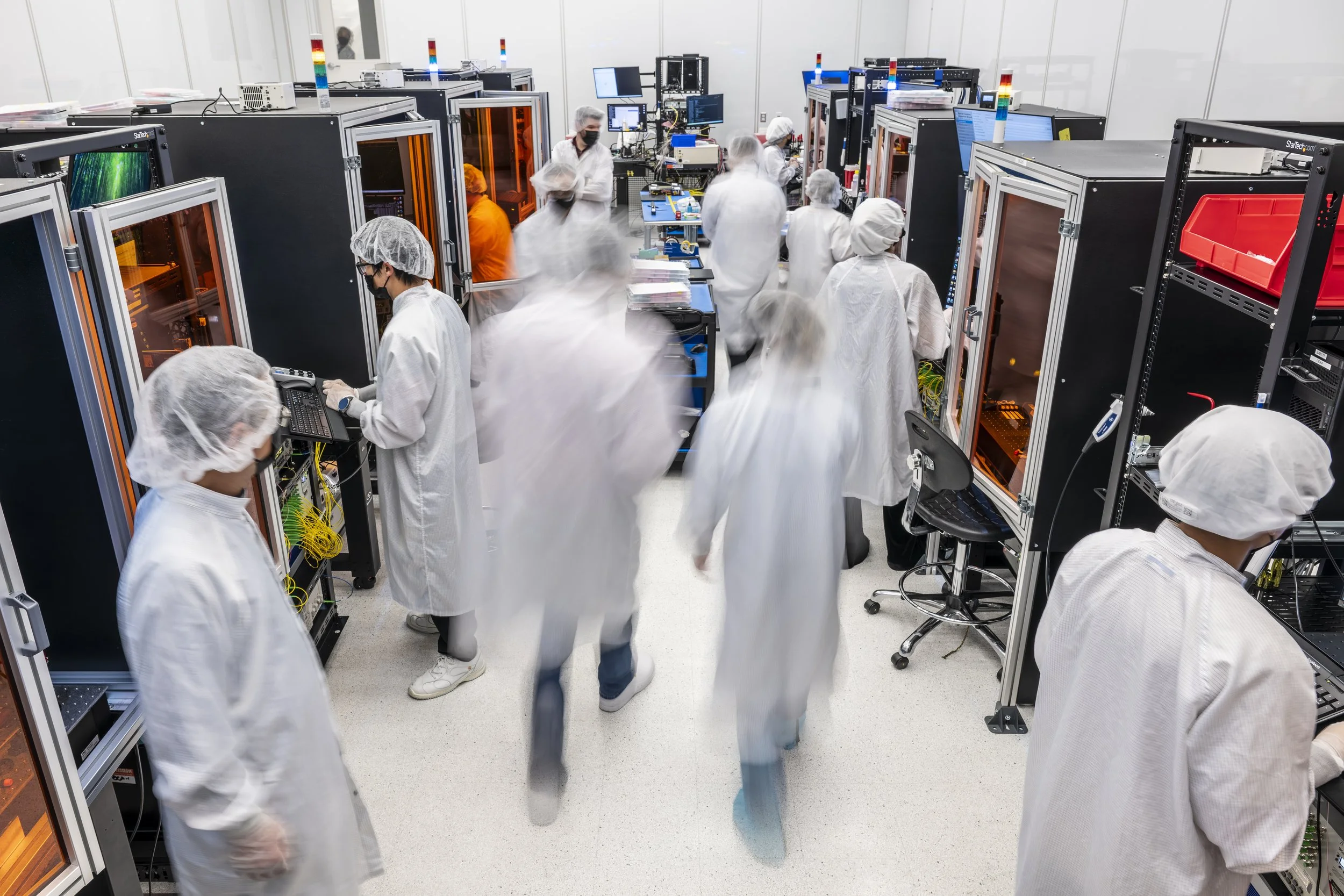
PsiQuantum Secures $125M DARPA Deal for Quantum Projects

Image source: thequantuminsider.com

Summary: PsiQuantum got $125M from DARPA on July 22 to boost quantum projects for AI research. This is a big deal for anyone pushing the limits of computational science.

Key Points:

  • PsiQuantum signed a $125 million agreement with DARPA on July 22, 2026

  • Selected Genesis Mission projects aim to accelerate AI-driven scientific discovery

  • Shanghai startup unveiled data center-ready quantum computer at WAIC 2026

  • The quantum computer is designed for use in data centers and large-scale applications

  • Funding supports advancements in computational power and efficiency

Why it matters: If you're working on high-performance computing or AI research, this $125M DARPA deal could mean faster, more powerful computations. The selected Genesis Mission projects aim to accelerate scientific discoveries through quantum technology. Shanghai's startup unveiling a data center-ready quantum computer at WAIC 2026 signals the growing importance of quantum in large-scale applications.

Government-investment
Trump Signs Orders to Accelerate Quantum Tech Development by 2028

Image source: www.insidequantumtechnology.com

Summary: Trump signed orders to speed up quantum tech development, setting a target for error-corrected quantum computers by 2028. This will drive innovation in chemistry and life sciences, promising major breakthroughs.

Key Points:

  • President Trump signed Executive Orders on June 22, 2026, aimed at accelerating quantum technology development timelines.

  • The orders mandate a national effort to build and deploy error-corrected quantum computers by the U.S. Department of Energy in 2028.

  • Quantum chemists will shift from rudimentary models to simulating actual complex molecular bonds with high-accuracy logical qubits.

  • Classical computers struggle with exact electron configurations for larger molecules due to exponential scaling issues, making quantum computing essential.

  • The orders establish public-private partnerships and fund research security within the Departments of Energy and Commerce.

Why it matters: If you're working on drug discovery or agricultural innovation using quantum technologies, these orders will significantly impact your timelines. The DOE's commitment to deploying error-corrected quantum computers by 2028 means researchers can expect faster breakthroughs in simulating complex molecular systems.

Post-quantum-cryptography
Post-Quantum Cryptography Vulnerable to Implementation Errors

Image source: www.insidequantumtechnology.com

Summary: Post-quantum cryptography isn't foolproof due to potential implementation errors. Developers and IT teams need to be extra cautious when setting up PQC systems.

Key Points:

  • New research highlights that post-quantum cryptographic protocols can still be compromised by human error during setup (source: academic study).

  • Even if PQC protocols are theoretically secure, practical issues like misconfiguration or incorrect key generation can render them ineffective (example: failed audit).

  • The success of PQC migration depends on the team's ability to avoid common pitfalls and ensure flawless execution (statistic: 30% of PQC implementations face errors).

  • IT departments must be aware that no technology is immune to Murphy's Law, especially when dealing with complex systems like quantum-resistant cryptography (quote: 'PQC isn't magic').

  • Developers implementing PQC need to undergo rigorous training and testing to minimize the risk of compromising security through simple mistakes (recommendation: regular audits).

Why it matters: If you're handling sensitive data with post-quantum cryptography, your team's ability to avoid implementation errors is crucial. A single mistake can render PQC ineffective, leaving your systems vulnerable. For instance, a misconfigured key exchange protocol could allow unauthorized access despite using quantum-resistant algorithms.

New Tools & Job

  • NeatScribe - NeatScribe is designed for anyone who needs to reuse information from recorded speech. It creates timestamped transcripts, supports translation, and exports results as text files, documents, subtitles, captions, or timed lyrics.

  • Sakana Marlin - Sakana Marlin is Sakana AI's first commercial product: an autonomous 'Ultra Deep Research' agent positioned as a Virtual Chief Strategy Officer. Given a research topic, Marlin works autonomously for up to roughly eight hours, forming hypotheses, gathering and reconciling information from online sources, and synthesizing a detailed strategy report up to ~100 pages plus executive-summary slides. It builds on Sakana AI research including AB-MCTS (NeurIPS 2025 Spotlight) and The AI Scientist (published in Nature). A closed beta ran from April 2026 with ~300 professionals across finance and consulting.

  • Upsolve AI - Upsolve AI is an Agent Studio for data teams to build, deploy, and evaluate grounded, governed, and trustworthy analytics agents. It layers institutional context (warehouse tables, validated SQL patterns, semantic models, KPI definitions, and business rules from sources like Notion, Slack, and email) on top of 30+ SQL database connectors so end users can ask questions in natural language and get accurate, traceable answers. Every conversation is fully traced end-to-end (tool calls, SQL, agent output), a built-in evaluation agent grades performance, and context monitoring surfaces gaps so accuracy improves with use. Agents deploy to Slack, Teams, Claude, ChatGPT, Cursor, or embed in your own product via MCP/SDK.

  • Buddy - Buddy is an AI design agent that lives in the Figma canvas. Chat to generate screens, flows, components, and variants using your existing design system; paste a public URL or drop an HTML file to recreate live websites as editable Figma layers; and run batch edits and layer organization across files. Supports multiple LLMs (Opus, Sonnet, GPT, Gemini, Codex). Works on any Figma plan including Free.

  • Tyto - Tyto by ai-coustics is a monitoring and diagnostics layer for Voice AI. It produces a single real-time risk score that predicts speech-to-text, voice-activity-detection, and turn-taking failures before they occur, scoring six qualities of incoming audio so teams can catch audio issues before they impact voice agents in production.

QUICK HITS

Read more news here →

THAT'S A WRAP

Partner with Us

Showcase your product to our engaged community of Tech enthusiasts

Our newsletter reaches a diverse audience of tech professionals, investors, engineers, managers, and business leaders worldwide. Get in touch today.

Comments (1)

Subscribe to join the conversation...
S
Saifali8080901d ago

https://contentbuffer.com/r/814f369f

Want this in your inbox?

Get the daily edition delivered free every morning.

Join 2,253 builders reading daily.

Also get