✨Venus' Lower Haze Origin Revealed by Cosmic Dust
Venus' mystery haze solved by space dust
TL;DR
Researchers at Tohoku University solved Venus' lower haze mystery, proving it's formed by cosmic dust particles, not volcanic ash. This has implications for understanding planetary climates and haze formation on other planets.
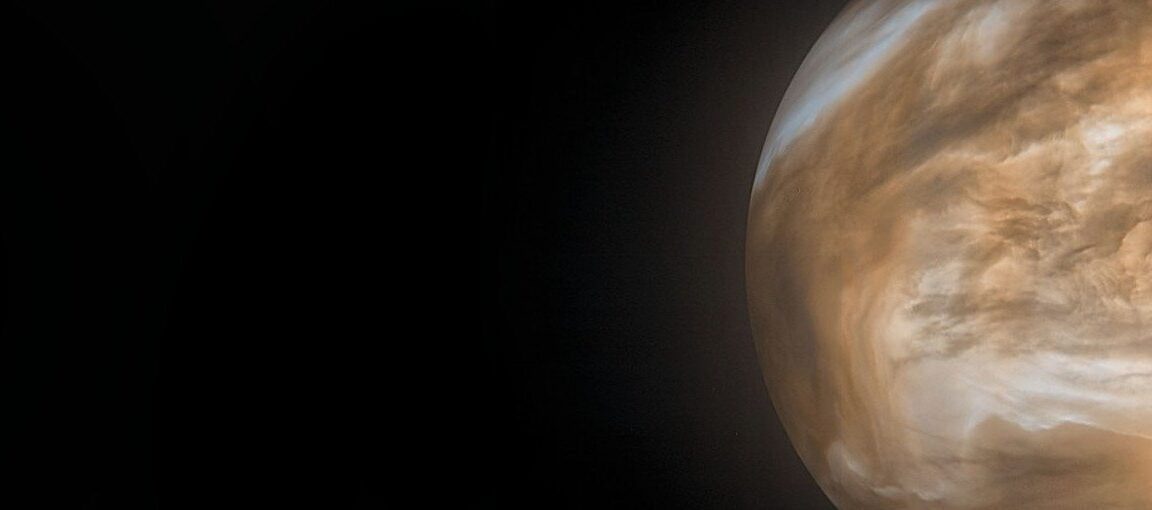
Planetary scientists at Tohoku University have cracked the decades-old mystery of Venus' lower haze layer, proving it's formed by cosmic dust particles, not volcanic ash as previously thought. This discovery is a big deal for anyone studying planetary atmospheres and cloud formation. The microphysical model used to solve this puzzle could help us understand similar processes on other planets, like Jupiter and Saturn. The research, published in the Journal of Geophysical Research, reveals that cosmic dust particles interact with sulfuric acid in Venus' atmosphere to form haze particles, which act as efficient condensation nuclei for cloud formation.
Key Points
The lower haze layer was discovered by Venera and Pioneer Venus probes in the 1970s.
Cosmic dust particles interact with sulfuric acid to form haze particles, acting as condensation nuclei.
The continuous influx of cosmic dust sustains the lower haze layer with observed particle size distribution.
Iron compounds in meteorites were previously thought to absorb UV rays, but magnesium and silicon are poor absorbers.
The discovery sheds light on how cosmic dust promotes cloud and haze formation on planets like Jupiter and Saturn.
Why It Matters
If you're studying planetary atmospheres, this discovery changes the game. The microphysical model used to solve Venus' lower haze mystery could help us understand similar processes on other planets. The research reveals that cosmic dust particles, not volcanic ash, form the haze layer, which has implications for understanding planetary climates and cloud formation.
Comments
Be the first to comment
Enjoyed this article?
Get it daily. 7am. Free. Reads in 5 minutes.
Join 3,564 builders reading daily.