🖥️Virginia Tech's Mac Supercomputer System X Hit No. 3 Worldwide in 2003
Cheap off-the-shelf hardware can beat the big iron
TL;DR
Virginia Tech built System X from 1,100 Power Mac G5s for $5.2 million in 2003, ranking third fastest in the world. The lesson: commodity parts plus smart clustering can rival purpose-built supercomputers, and that playbook still runs today.
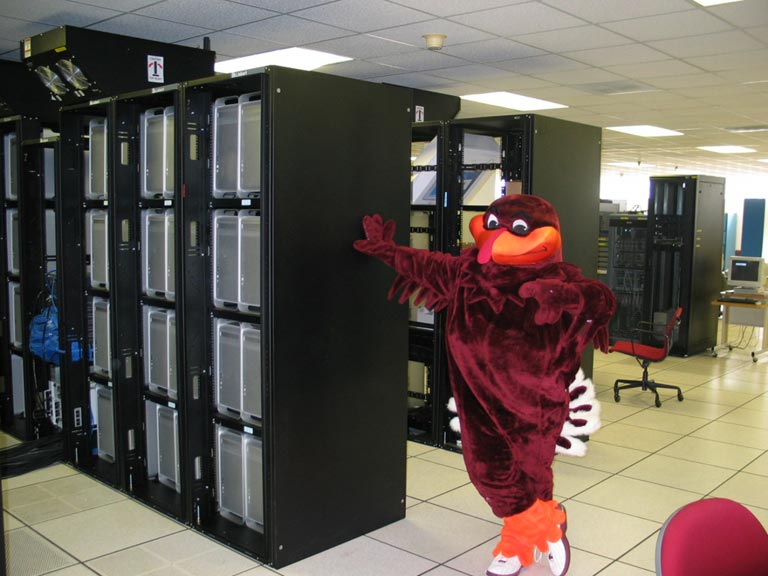
Virginia Tech wired together 1,100 Power Mac G5s in 2003 and got a machine ranked the third-fastest computer on Earth. Not the third-fastest university machine. The third-fastest, period. Total cost: $5.2 million. Why should you care? Because the core move hasn't changed. Bader's 1998 Linux cluster and System X both proved that commodity hardware, networked well, can crush expensive proprietary systems. If you're building GPU clusters or scheduling distributed jobs today, the networking and cooling decisions Virginia Tech made are still your decisions. The numbers: each G5 shipped with 4 GB of DDR400 RAM, a 160 GB Serial ATA drive, and a Mellanox InfiniBand card. The machines arrived in six shipments over seven days, and InfiniBand cabling took five people 10 days. Apple's Xserve G5 followed in January 2004 with up to 8GB ECC memory, which the Power Mac G5 lacked. The catch? Power Mac G5s didn't support ECC memory, so reliability at that scale was a real gamble.
Key Points
Virginia Tech's System X used 1,100 Power Mac G5s and ranked as the world's third-fastest computer in 2003, the fastest at any academic institution.
Keep reading — it's free
Enter your email to keep reading — plus the best of AI & tech, daily. Free, forever.
Already a member? Sign in
Comments
Be the first to comment